
Music
About Music
Our Program and Courses
A major in music is designed to allow you — no matter your musical background — to thrive and carve your own individual path. The majority of our courses are open to students with no formal background in music, but there are many academic and performance opportunities for those with a musical background. You can perform with your talented peers in our ensembles and take private vocal or instrumental lessons with our highly renowned professors. The grand finale of your F&M music experience is a recital, research project, or creative project of your choosing.
By the time you graduate, you will have:
- Become proficient in recognizing and performing many styles and genres of music from throughout the world
- Gained a comprehensive understanding of music theory: melody, harmony, rhythm, and form
- Developed competence in speaking and writing about music
- Become proficient in musical composition
- Gained competency in ear-training by way of sight-singing and melodic, harmonic, and rhythmic dictation
- Developed skill with a variety of music analytical techniques and practices
- Built an understanding of performance protocols and stage etiquette
- Honed your technical skill and expressive capacity as a solo and ensemble performer
- Developed competence in working with primary and secondary source materials (i.e. information literacy)
Learning Outside the Classroom
Research Opportunities
Do you dream of conducting an orchestra that’s performing your original composition? Or maybe you feel a pull toward the history of music and want to venture deeper by researching musical archives. You won’t have to wait until graduate school to dive in. Every student at F&M has extraordinary opportunities to engage in independent or faculty-led research.The music department offers research funds through F&M’s own Nolt Music Award, which is awarded to students undertaking musically enriching projects.
Explore research at F&M
Off-Campus Study
Study music performance in Vienna, the enchanting city that was home to legendary composers Mozart, Beethoven, Brahms, Haydn, and more. Spend a semester in Italy, a country known for being at the forefront of musical innovation. Cross the globe to study among instrumentalists, vocalists, composers, and performers in New Zealand. Off-campus study experiences aren’t simply time away from campus; they’re meaningfully woven into your entire academic journey. You will work with your academic adviser and your off-campus study adviser for a full year to craft an experience that complements your F&M degree and goals.Explore off-campus study at F&M
Internships
Gain experience now and a competitive advantage later. Internships allow you to explore careers of interest and build your portfolio while shaping and inspiring your path after graduation. Our Center for Career and Professional Development will help you discover and secure these positions, guiding you through the internship search, application, and interview processes, and facilitating connections with F&M alumni, parents and friends of the College for potential opportunities.Explore internships at F&M
Studio Lessons
Students can take private studio lessons (vocal or instrumental) on a credit-bearing or non-credit basis.
Music Ensembles
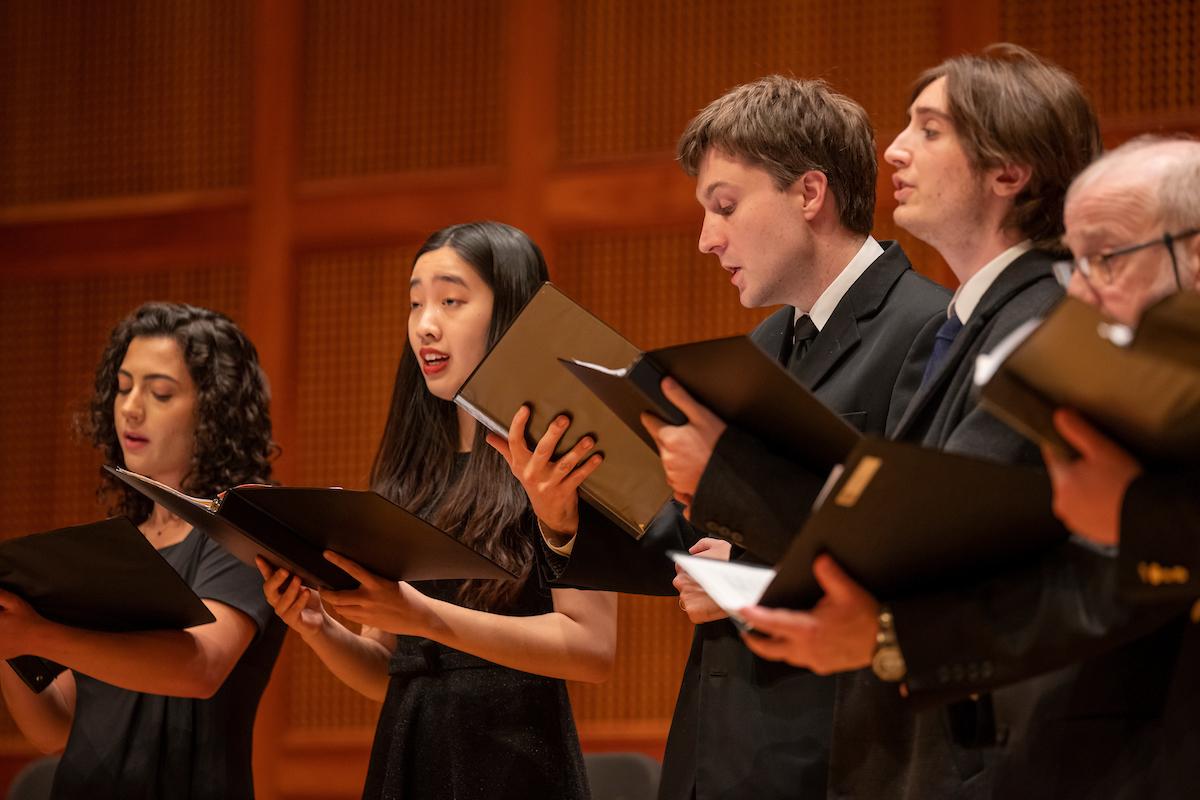
If you major in music, you’re encouraged to participate in one of the College’s many instrumental or choral ensembles. By doing so, you’ll not only enjoy extraordinary artistic opportunities each semester, but develop an appreciation of the creative endeavor related to music and musical performance.
Competitions, Contests, and Awards
The Adams & Gustafson Music Achievement Award
The Adams & Gustafson Music Achievement Award is offered to rising sophomores who have shown distinction and exhibit potential in their music studies at F&M. The award is $1,250 per semester ($2,500 per year) and is renewable for a total of six semesters pending eligibility. The award is named in honor of Courtney Adams and Bruce Gustafson, two of the founders of the modern-day F&M Music Department. This award is designed to recognize students who exemplify the passion for and intellectual commitment to music that Professors Adams and Gustafson epitomized.The Nolt Music Award
The Nolt Music Award is a grant of up to $3,000 enabling F&M student musicians to undertake musically enriching projects. Possible projects include:- Taking lessons with a member of a major orchestra or opera company resulting in a recital
- Attending a summer music festival in the U.S. or abroad
- Funding the premiere of a student composition
- Undertaking a research or field-work trip
- Going to a major metropolitan area to attend/critique a series of concerts or operas
- Funding a tour by the Nolt Scholar's chamber ensemble
Any enrolled F&M student may apply; however, projects must be completed prior to the student's graduation.
Competitions, Contests & Recitals
In addition to the opportunities above, the music department also offers:- Solo and concerto competitions for singers and instrumentalists
- Music composition contests
- Senior recitals
- Achievement awards via honors in music
Our Facilities
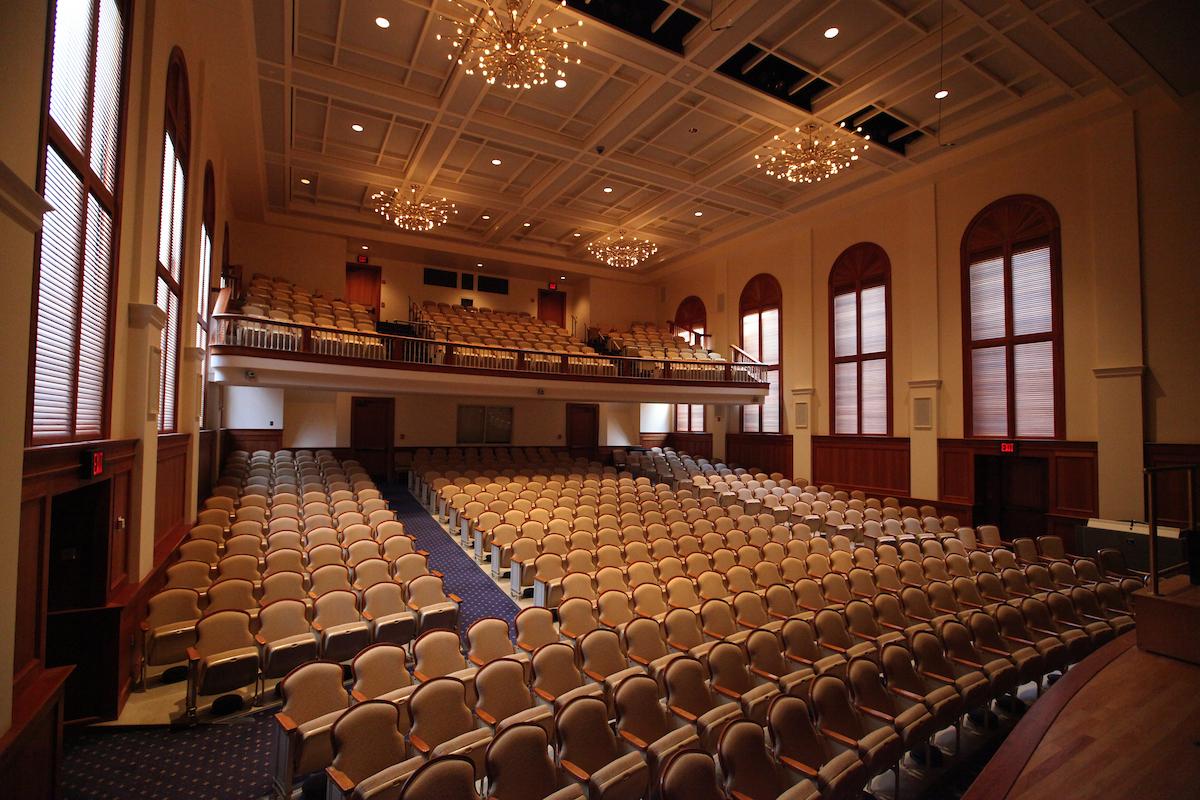
The Ann & Richard Barshinger Center provides a world-class concert hall to serve as the centerpiece of F&M’s thriving music program. Adjoining the Barshinger Center is Meyran Hall, a building that serves as home for the music department, as well as others. Our concert hall features an expanded stage designed to handle a full 70-piece orchestra or a full chorus with up to 135 performers. Seating accommodates just over 500, all with a first-rate view of the stage. The elegant setting was designed by a team that led the centennial renovations of Boston’s Symphony Hall, and the acoustics were designed by one of the world’s leading acousticians, creating an acoustically vibrant atmosphere.
Degree Partnerships
Through this shared initiative, up to 10 F&M graduates admitted to Heinz College’s master’s degree programs annually will receive scholarships that reduce tuition by at least 30% each semester. F&M graduates will also be eligible for consideration for additional merit-based scholarship support up to 100%.
The collaboration expands postgraduate pathways for F&M students seeking advanced degrees and will apply to all Heinz College master's degree programs, including:
The scholarship is effective for any F&M graduate seeking to apply to Heinz College in the Fall 2026 application cycle and beyond. The award will be made at the time of admission and no separate application is necessary.
Success Beyond F&M
The impact of an F&M education is reflected strongly in our graduates’ outcomes. Within six months after graduation, 92% of the Class of 2025 were either employed or furthering their education. This is higher than the national average, which is typically in the mid-80% range.
Many of our students complete a major or minor in music even if they do not intend to embark on a career in music. The writing, analytical, critical thinking, and creative skills you gain by studying music in F&M’s liberal arts environment can play a pivotal role in your post-college plans.
Graduate School
It’s not uncommon for F&M music majors to study in graduate programs in the U.S. and abroad. Students who have graduated with degrees in music have gone on to doctoral programs in musicology, ethnomusicology, and composition.Career Paths
Music graduates are prepared for a wide array of careers. They’ve built successful careers in performance and the music industry, and have also gone on to careers in medicine, law, and more. They hold positions such as:- Music Department Chair
- Associate Professor of Music
- Music Teacher
- Orchestra Director
- Music Director
- Audio Visual Technician
- Producer & Engineer
- Private Instrument Instructor
- Singer
- Arranger
- Freelance Musician
- Director of Marketing
- Law Partner
- Associate Attorney
- Research Technician
- Associate Scientist
- Director of National Accounts
- Senior Development Manager
- Pediatrician
Center for Career and Professional Development
F&M’s Center for Career and Professional Development offers targeted, expert guidance while you discover your professional calling and develop the skills you need to succeed. Our career guidance is structured through “career communities” – dynamic groups aligned with specific industries that transform your aspirations into clear options, meaningful opportunities, and a network of support. The Arts, Education & Social Impact career community in particular offers tailored resources for those drawn to making change through creativity.Explore F&M's Career Center
Special Application Opportunities for Musicians
If you plan to study or engage in music at F&M, you can further personalize your application showcasing your musical prowess.
Learn more »Alumni Spotlight
From F&M to Copacabana
Read More »
Student Spotlight
“I love being a part of F&M's musical community and find it incredibly meaningful to be part of something that is bigger than myself.”
— Eleanor Metz '27
Take Your Next Step
F&M Music in the Spotlight
March 31, 2026
Hundreds of Alumni, Parents Return to Campus for Historic Musical Anniversary Performances
Music professor Brian Norcross capped 40 years of service to Franklin & Marshall College as he led more than 215 musicians, including over 100 F&M alumni, in concerts and programming that brought hundreds of graduates, parents and community members to Lancaster.
February 12, 2026
Striking the Right Chord
Award-winning songwriter Bruce Sussman ’71 founded Franklin & Marshall’s first a cappella group on a whim in 1968. Alumni and current members reflect on the group’s origins and influence.
October 29, 2025
F&M Junior Merges Music and Medicine
What you care for most is what you influence. Esther Burlington ’27 is making an impact as both a singer and pre-medical student at F&M. The junior is co-president of The Poor Richards, the College’s longest-standing a cappella group.
Live at Barshinger Center
Ready to immerse yourself in music at F&M? When available, you can tune into live concerts at the Ann & Richard Barshinger Center, our world-class concert hall. You can also watch recorded concerts from previous academic years.
Watch now »Related Fields of Study
American Studies
Engage with the oldest multifaceted major at F&M. As a student of American Studies, you’ll enjoy a true liberal arts experience, exploring several disciplines to develop analytical skills and critical judgment and to examine the range and diversity of American experiences, identities and communities.
Arts for Social Change (Certificate)
This certificate will help you deepen your understanding of the arts as mediums for impacting culture, community, politics, education, and more. Arts for Social Change spans F&M’s dynamic arts disciplines, uniting the ethos of community-building with artistic practice that foregrounds innovation and action.
Theatre
Thrive in one of the oldest art forms in the world, and discover how global traditions permeate today. By studying theatre at F&M, you’ll explore the intersection of theory and performance; engage in craft, creativity, and critical thinking; and discover the importance of each role in production, developing a deep understanding that there truly are no small parts.