
Psychology
About Psychology
Our Program and Courses
Psychology is a major and minor at F&M. You’ll study current psychological theories and examine questions about behavior through
a variety of lenses, from neural and cognitive to developmental and social. A core
element of our program is hands-on learning, meaning you will apply the concepts you’ve
learned in real-world settings, such as faculty-led or independent research. You’ll
also be empowered to embrace the ampersand at the heart of F&M’s liberal arts model and explore other fields to develop your own unique perspective on psychology. Some
of the most common cross-department studies include biology, philosophy, and linguistics,
but psychology students also study neuroscience, animal behavior, moral psychology,
and cognitive science.
By the time you graduate, you will:
- Be a mature consumer of scientific knowledge
- Be a proficient producer of scientific knowledge through collecting data and/or formulating evidence-based arguments
- Be able to apply psychological knowledge to real-world problems and phenomena
- Be able to approach scientific phenomena from an integrative and conceptual mindset, moving away from a unidimensional, fact-focused perspective
- Be a mature and active participant in your own education
Wondering what psychology courses are like? Explore our course catalog to see what classes are available to you.
Learning Outside the Classroom
Psychology is about observing and understanding behavior — not just reading about it in a textbook. You’ll find ample opportunities to gain hands-on experience, converting theory into practice and applying what you’ve learned to the world around you.
Research Opportunities
As you delve into the complexities of psychology, you may find yourself developing
particular fascinations you want to explore. While most undergraduate institutions
reserve research opportunities for students in their graduate programs, at F&M we
want you to engage now — not later. In fact, F&M is ranked among leading national institutions that prioritize research activity.
F&M’s psychology department provides a diverse selection of research topics, including
personality, social and psychopathology; perception and physiology; development and
cognition; and evolution and adaptation. Students can also apply to become research
assistants in the Development and Experience (DAX) Center, two innovative labs on campus that study moral development. During these experiences,
you will not only actively seek answers to your questions about the mind and behavior,
but also learn proper research techniques from your professors, who are expert, published
researchers themselves. Many students have also presented their research findings
in professional journals and at conferences of national associations.
Explore research at F&M
Internships
Gain experience now and a competitive advantage later. Internships immerse you in
the day-to-day life of your field, helping you identify careers in psychology that
best fit your distinctive talents, goals, and interests. Our Center for Career and Professional Development will help you discover and secure these positions, guiding you through the internship
search, application, and interview processes, and facilitating connections with F&M
alumni, parents and friends of the College for potential opportunities.
Explore internships at F&M
Off-Campus Study
Spend a semester in Vienna, the city often regarded as the birthplace of modern psychology.
Study cross-cultural psychology while you authentically engage with a new culture
in Madrid. Travel to Paris for a summer observing and assisting in hospital, therapy,
or educational programs. When studying behavior, it’s crucial to look outside your
own experiences and learn from other people and cultures. Off-campus study experiences
at F&M are meaningfully woven into your entire academic journey, giving you extraordinary
opportunities to encounter, engage with, and understand perspectives around the world.
Explore off-campus study at F&M
Our Facilities
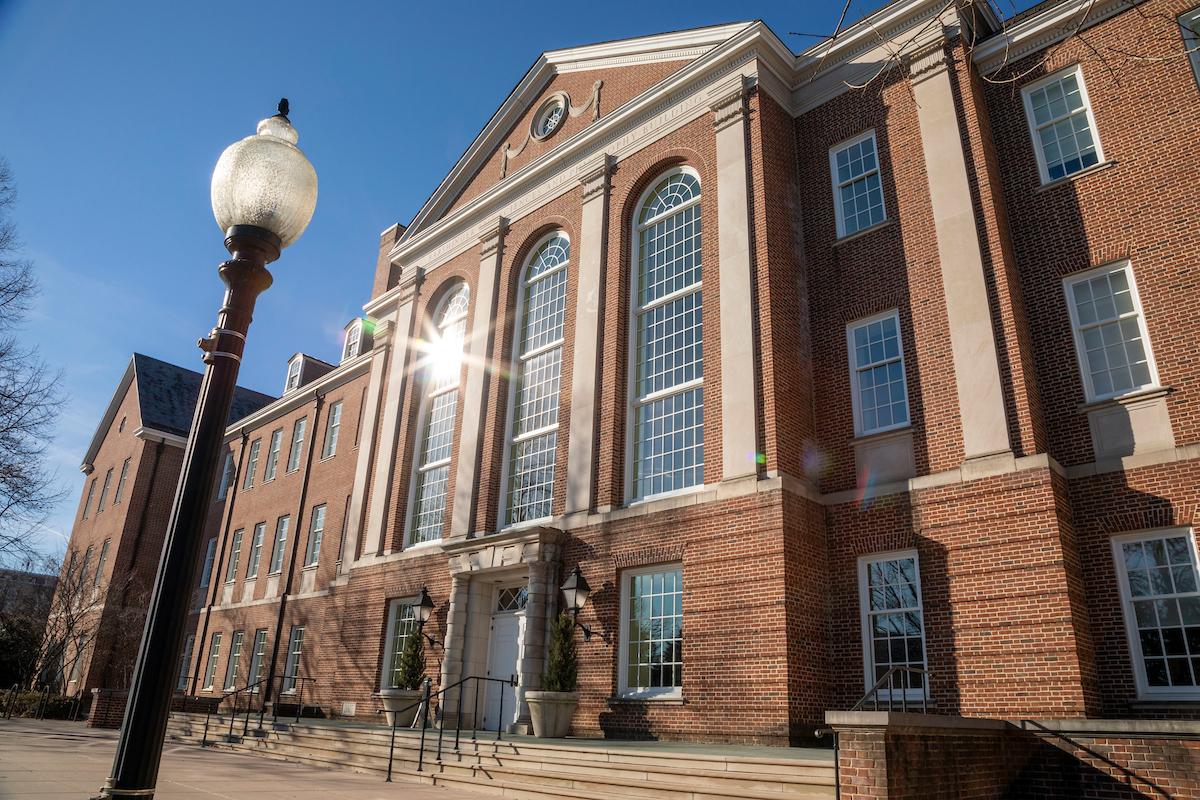
The Barshinger Life Sciences & Philosophy Building
The Barshinger Life Sciences & Philosophy Building gives students access to state-of-the-art
resources for studying the development of morality, animal welfare and problem-solving,
social belonging, drug addiction, infant learning, non-verbal communication, healthy
behaviors, responses to trauma, human rights, and more.
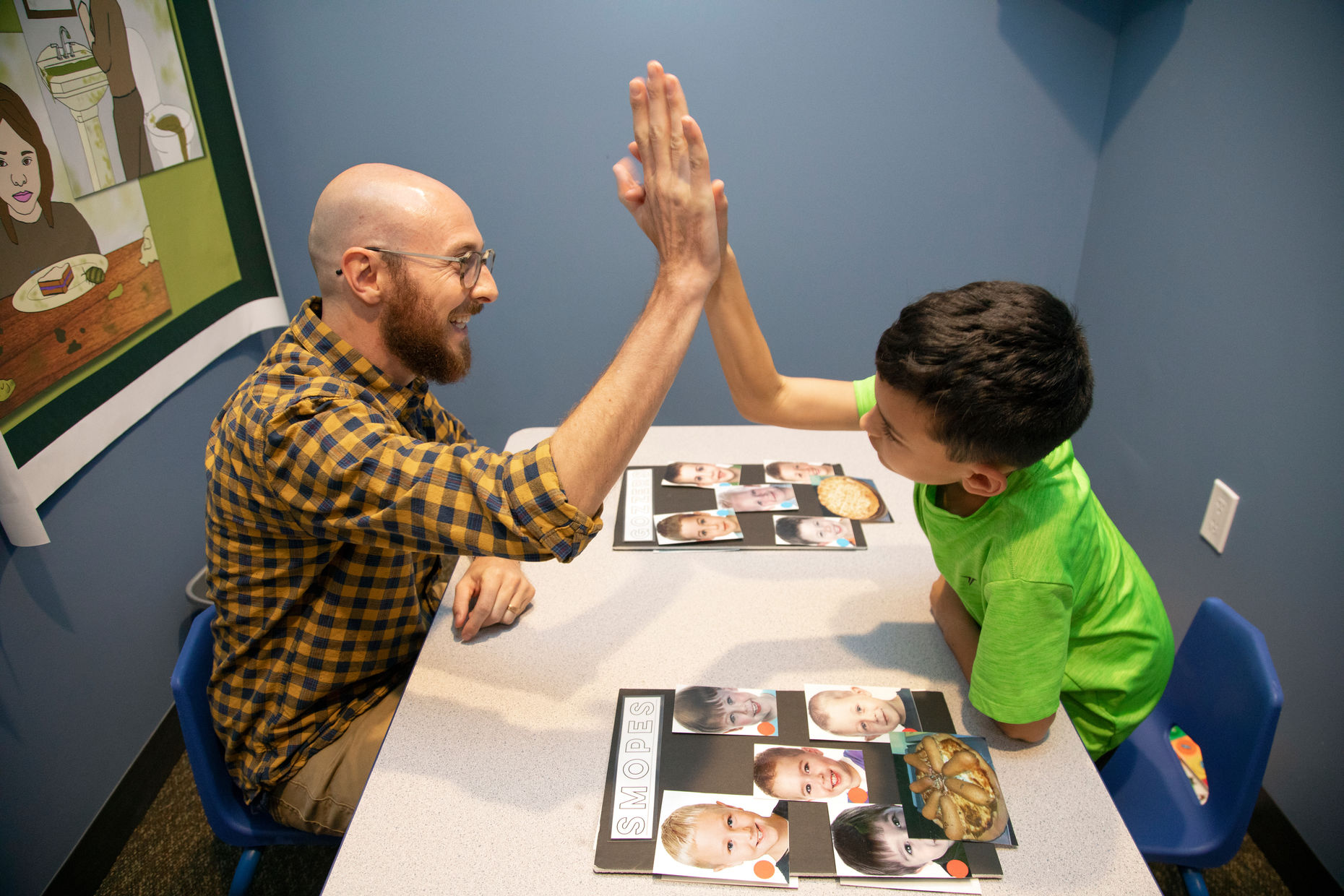
The Development and Experience Center
Housed in the Barshinger Life Sciences & Philosophy Building, the Development and
Experience (DAX) Center is home to two innovative child development research labs.
Students can apply to become research assistants in these labs at any point in their
college careers. As a student researcher, you would learn how to recruit and schedule
participants, serve as experimenters in running empirical studies, assist in data
analysis and interpretation, and become familiar with relevant psychological literature.
Research questions the lab investigates include:
- What leads children and adults to acquire new moral beliefs or to change existing moral beliefs?
- How extensive and variable are the contours of the moral domain?
- How and why do disgust and dirtiness reduce the scope of moral treatment?
- How do people allocate moral value to outgroup members, animals, and ecosystems?
Success Beyond F&M
At F&M, we prepare you to be world-ready. A degree from F&M prepares you for your
first destination after graduation and for a lifetime of career growth, opportunity,
and leadership.
The impact of an F&M education is reflected strongly in our graduates’ outcomes. Within six months after graduation, 92% of the Class of 2025 were either employed or furthering their education. This is higher than the national average, which is typically in the mid-80% range.
This success can be yours, too. The creative and intellectual activities that make
up the work of psychology — including analyzing, writing, collaborating with others,
and interpreting data — help you develop useful and productive skills, which are valuable
for any post-college plan.
Graduate School
With a breadth of study that is uncommon at other liberal arts colleges, our graduates are immediately prepared to pursue advanced degrees upon graduating from F&M. Past F&M psychology majors have entered graduate programs studying education, clinical psychology, speech and language pathology, social work, human development, quantitative psychology, social psychology, business, and public administration.
Career Paths
Psychology graduates enjoy a vast array of careers and have excelled in health care, social services, education, research, and more. They hold positions such as:
- Director of Human Resources
- Doctor
- General Counsel
- Lawyer
- Marriage and Family Therapist
- Pediatrician
- Professor
- Psychiatrist
- Psychologist
- Psychotherapist
- Registered Nurse
- Research Scientist
- School Psychologist
- Social Worker
- Therapist
Center for Career and Professional Development
F&M’s Center for Career and Professional Development offers targeted, expert guidance
while you discover your professional calling and develop the skills you need to succeed.
Our career guidance is structured through “career communities” – dynamic groups aligned
with specific industries that transform your aspirations into clear options, meaningful
opportunities, and a network of support. Among these, our health and STEM career communities
offer tailored support for those interested in medicine and sciences.
Learn more
One field of study engages in all sorts of questions about people, institutions, and
social structures: sociology. How does power operate in society? How do politics shape
our lives? How and why have family relationships changed over time? As a student of
sociology, you will explore these interactions to better understand how they shape
the world and cultures that we live in. Enjoy the distinct advantage of a business education rooted in the liberal arts. Study
Business, Organizations & Society (BOS) at F&M and gain a robust understanding of
business principles, management philosophies, and societal impact, all while building
the essential skills you need to think critically, lead effectively, and make real
change. Do you want to explore the fascinating connections between science and government?
Study public health at F&M and challenge assumptions and structures as you develop
a deep moral intelligence surrounding public health around the globe.Alumni Spotlight
Connecting Classroom Theory to Behavioral Reality in a Yale Laboratory
“My courses at F&M gave me a great foundation for understanding the biological and
psychological mechanisms underlying the studies I'm conducting, and my research experience
on campus helped me understand the research process and enter the internship with
strong data-analysis skills,” he said.
Read More »Alumni Spotlight
“F&M provided the space for me to grow and explore, making a difference in my life
in ways I never imagined.”
“F&M provided the space for me to grow and explore, making a difference in my life
in ways I never imagined,” she said.
One of Rump’s most unforgettable F&M experiences was a study-abroad program in Denmark
led by Senior Teaching Professor of Psychology Christina Abbott. With fewer than a
dozen students, the program offered Rump a chance to dive deeply into her studies
while exploring a new cultural landscape.
“It was this tight-knit little class about health psychology and then exploring it
in Danish culture,” she said. “I learned a lot about the health-care system and people’s
health behaviors.”
Read More »Take Your Next Step
Related Fields of Study
Sociology
Business, Organizations & Society
Public Health
Psychology in the Spotlight
April 15, 2026
NBA's Ali Narracci ’22 Shares Sports Industry Secrets
Working for the NBA is anything but typical. Ali Narracci ’22 wouldn't have it any other way. See the top five leadership lessons she’s learned as assistant manager of global marketing partnerships at the NBA.
March 19, 2026
The Human Connection: Balancing Psychology and Business in Student Philanthropy
For Gonzalo Gentou Arbizu ’26, his on-campus job as student philanthropy coordinator is a masterclass in human connection. “This role is all about building relationships with stakeholders. Fundraising is a community effort,” he said.
February 20, 2026
Work on the Wild Side with Lillian Basom '08, F&M Vivarium Director
Lillian Basom ’08 loved Franklin & Marshall’s vivarium so much that she never left. In fact, she has been the director of operations since 2011. The research facility houses a variety of rodents, reptiles, birds, fish, invertebrates and capuchin monkeys.