
Biology
About Biology
Our Program and Courses
As a biology major, you will learn how to tackle questions about both the known and the undiscovered as you study all forms of life through hands-on exploration, individualized instruction and a collegial learning atmosphere. This program will prepare you to evaluate and address important questions in one of the most rapidly expanding fields of knowledge. Your learning won’t take place in the classroom alone; you often will be designing, conducting and analyzing research in the field or laboratory. Whether focusing on your findings in the teaching lab or embarking on independent and collaborative research, you’ll be supported by F&M’s cutting-edge field, laboratory, and computing equipment.
By the time you graduate, you will:
- Learn concepts from across the breadth of biological disciplines, with depth in focused areas of interest.
- Utilize quantitative skills to develop and test novel research questions, ethically and in collaboration with others.
- Synthesize and expand upon existing scientific theories and models by critically and analytically engaging with literature.
- Hone skills as effective scientific communicators, through both writing and speaking.
Curious what biology classes are like? Take a look at our course catalog to see the depth and breadth of what’s available to you, including related majors in biochemistry and molecular biology, bioinformatics, neuroscience, animal behavior, earth and environmental science, environmental studies, and public health.
Our Facilities and Resources
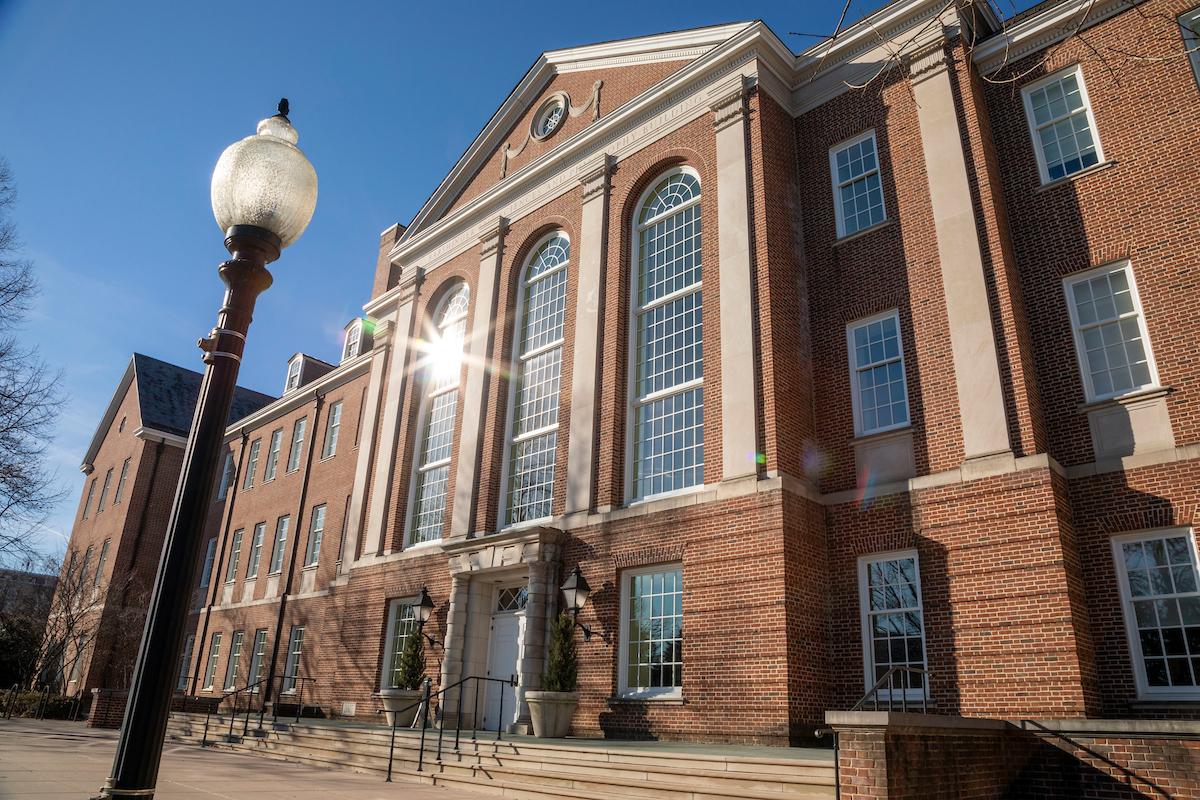
The Barshinger Life Sciences & Philosophy Building
The Barshinger Life Sciences & Philosophy Building features 12 student-faculty research laboratories, a greenhouse, and animal rooms. Specialized facilities and research equipment include a confocal microscope, preparative and ultracentrifuges, electrophoresis equipment, a dark room, a cold room, a quantitative thermal cycler, a plant growth facility, a vivarium, and controlled environment chambers. A variety of equipment is also available for terrestrial and aquatic field studies.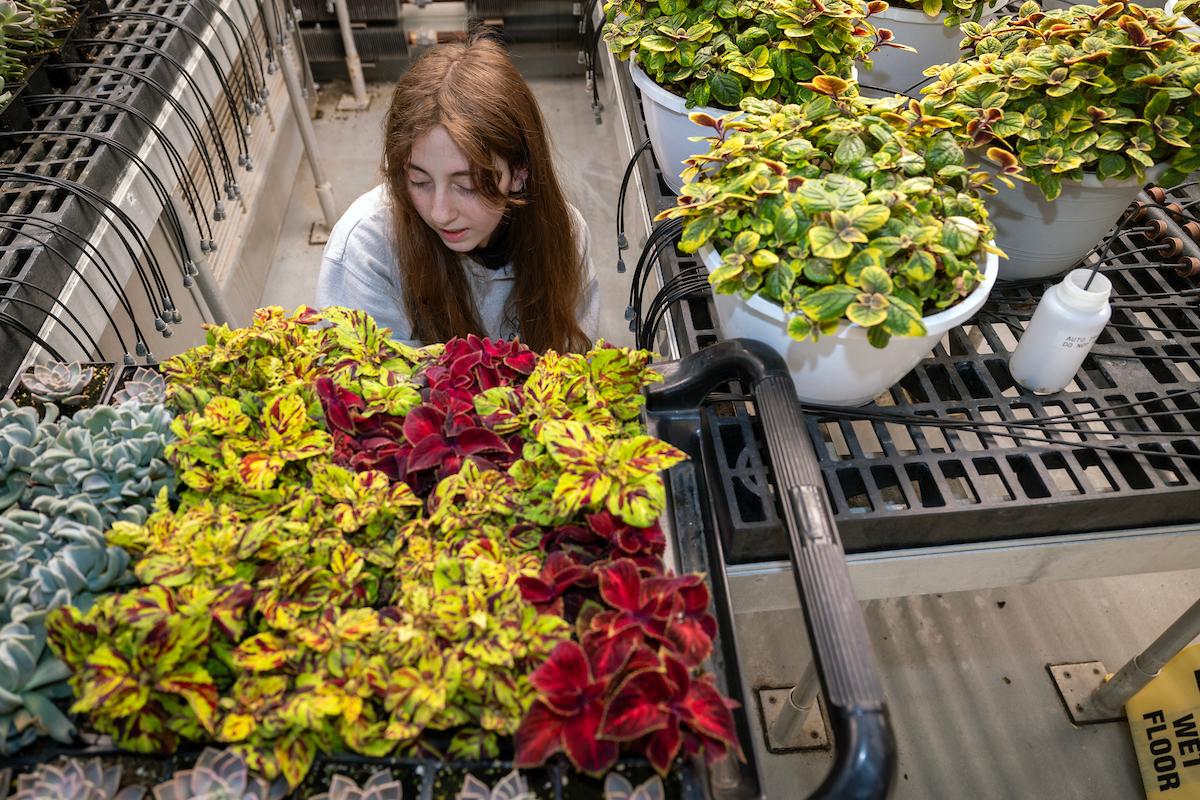
Greenhouse
F&M’s greenhouse sits atop the Barshinger Life Sciences & Philosophy Building on campus. In the greenhouse, you can learn how to plant, water, fertilize, trim, transplant, and assist in pest control of a variety of plants. Many of these plants are used in F&M courses, but some are also used to enliven College events, such as Commencement. If you have questions about the greenhouse, you can reach out to our greenhouse manager, Jim Engleman, at jenglema@fandm.edu.
Learning Outside the Classroom
At F&M, we want you to engage now — not later. You’ll find myriad opportunities to convert theory into practice and gain hands-on experience that will prepare you for your career or further studies.
Research Opportunities
F&M is ranked among leading national institutions that prioritize research activity. Whether through an independent study or faculty-led project, you’ll work and learn side-by-side with faculty to test your ideas—not just read or talk about them. These experiences not only empower you to delve into your curiosity, but also learn proper research techniques from your professors, who are expert, published researchers themselves. F&M biology faculty research topics include:
- Bioinformatics
- Biomechanics
- Cell Biology
- Developmental Biology
- Ecology
- Genetics and Genomics
- Immunology
- Limnology
- Marine Biochemistry
- Microbiology
- Molecular Genetics
- Muscle Physiology
- Neuroscience
- Ornithology
- Plant Development, Ecology, and Reproduction
- Public Health
- Sustainability
In the Field
F&M’s location provides the perfect landscape for studying biology. Lancaster County’s flourishing agricultural countryside, the nearby Susquehanna River, diverse nature preserves managed by the Lancaster Conservancy, and F&M’s Spalding Nature Conservancy provide exciting opportunities for field research.
You can also enjoy hands-on experience in our facilities in the Barshinger Life Sciences
& Philosophy Building on campus. The building features 12 student-faculty research
laboratories, a greenhouse, and animal rooms. Specialized facilities and research
equipment include a confocal microscope, preparative and ultracentrifuges, electrophoresis
equipment, a dark room, a cold room, a quantitative thermal cycler, a plant growth
facility, a vivarium, and controlled environment chambers. A variety of equipment
is also available for terrestrial and aquatic field studies.
Off-Campus Study
Study tropical biology in Central and South America, Australia, or Africa. Engage
in marine biology research in the Caribbean, Galapagos, Australia, or the South Pacific.
Complete research at various field courses across the U.S. Off-campus study experiences
aren’t simply time away from campus; they’re meaningfully woven into your entire academic
journey and give you extraordinary opportunities to encounter, engage with, and understand
perspectives around the world.
Explore off-campus study at F&M
Success Beyond F&M
At F&M, we prepare you to be world-ready. A degree from F&M prepares you for your
first destination after graduation and for a lifetime of career growth, opportunity,
and leadership.
The impact of an F&M education is reflected strongly in our graduates’ outcomes. Within six months after graduation, 92% of the Class of 2025 were either employed
or furthering their education. This is higher than the national average, which is
typically in the mid-80% range.
This success can be yours, too. Many F&M biology students go onto graduate school
or choose to embark on their chosen career path after graduation. You’ll also find
recognition and support in the Benjamin Rush Pre-Health Honor Society, an organization
that hosts programs and events and creates a sense of community among outstanding
students interested in health professions.
Graduate School
More than half of our majors in the biology-related fields go on to graduate or professional school after F&M. In any given year, about one-third of our graduates enter medical school or another health professions graduate program, while another one-third enter other forms of graduate study. Their individualized learning and hands-on experience while at F&M gives them an advantage in getting admitted into some of the nation’s finest graduate programs, including:
- Cornell University
- Duke University
- Harvard University
- University of Michigan
- Yale University
They pursue research in disciplines as diverse as:
- Biological chemistry
- Biomechanics
- Biomedical studies
- Cancer biology
- Ecology
- Evolutionary biology
- Immunology
- Marine biology
- Organismal biology
- Plant biology
In biomedical fields, graduates have specialized in health-related areas such as:
- Dentistry
- Medicine
- Nursing
- Nutrition
- Pharmaceutical research
- Physical therapy
- Sports medicine
- Veterinary medicine
Career Paths
Biology majors are prepared for careers in a wide array of fields, due to the program’s emphasis on the breadth of biology and its association with other natural sciences. Our alumni have found success in sports medicine, genetic counseling, patent law, and high school teaching. They hold positions such as:
- Agricultural Consultant
- Biostatistician
- Conservation Engineer
- Dentist
- Ecologist
- Environmental Research Manager
- Forensic Biologist
- Healthcare Administrator
- Marine Biologist
- Medical Researcher
- Molecular Biologist
- Nurse
- Nutritionist
- Pharmaceutical Researcher
- Physical Therapist
- Physician
- Veterinarian
- Wildlife Biologist
Center for Career and Professional Development
F&M’s Center for Career and Professional Development offers targeted, expert guidance
while you discover your professional calling and develop the skills you need to succeed.
Our career guidance is structured through “career communities”– dynamic groups aligned with specific industries that transform your aspirations
into clear options, meaningful opportunities, and a network of support. Specifically,
our health and STEM career communities offer tailored support for those interested
in healthcare and sciences.
Learn more
Faculty Spotlight: Dan Ardia
Student Spotlight
“Professors truly value students getting hands-on experience.”
“The most fascinating aspect of research at F&M is the close collaboration between
students and professors,” Kaltenhauser said. “Professors truly value students getting
hands-on experience, which creates a supportive environment that encourages active
learning and partnership.”
Read More »Student Spotlight
A Diplomat’s Deep Dive into Marine Biology
“My time was spent equal parts in the classroom and in the field,” An said. “We would
learn about a certain topic in class, such as species identification, and in the field
exercises, we would go out to the ocean, and have a quiz identifying creatures we
see while snorkeling. I saw sharks, eagle rays, turtles, dolphins, and even whales!”
Read More »Take Your Next Step
April 30, 2026 Lauren Pittman ’26 wanted top-notch academics and a competitive lacrosse program when choosing a college. At Franklin & Marshall, “I could get the best of both worlds,” said Pittman, named the USA Lacrosse Magazine Division III Preseason Player of the Year prior to her senior season. April 22, 2026 For this Franklin & Marshall biologist, every bird song and flap of wings is essential data. With the support of the campus supercomputers, Dan Ardia and his student researchers are decoding the language of nature to better understand how Lancaster’s biodiversity and community can thrive together. April 1, 2026 Pennsylvania may be landlocked, but geography is no barrier for this Franklin & Marshall marine biochemist. By leveraging a powerful supercomputer, Peter Fields and his student researchers are tackling ocean climate change from the heart of Lancaster.F&M Biology in Action
Senior Lacrosse Standout Eyes Medical Career
Winging It: F&M Supercomputer Powers Biologist’s Local Conservation Efforts
Tackling the Impacts of Ocean Climate Change Through High-Performance Computing
Related Fields of Study
Biochemistry & Molecular Biology
Explore biological processes at their smallest scale. At its core, Biochemistry & Molecular Biology at F&M focuses on the structure and function of biomolecules, which are the metabolic machinery of the cell and control its underlying genetics.
Bioinformatics
Immerse yourself in a rapidly-expanding field that combines the study of biology, chemistry, computer science, and applied mathematics. By studying bioinformatics at F&M, you’ll explore how to develop methods and software tools for understanding biological data.
Neuroscience
As a student of neuroscience at F&M, you will not only learn how the brain works, but contribute to the ever-growing body of information on this unique organ. Using a blend of knowledge and tools taken from the fields of biology, chemistry, physics, mathematics, and psychology, you’ll develop a rich understanding of both the physical and social functions of the brain.