
Chemistry
About Chemistry
Our Program and Courses
Accredited by the American Chemical Society, F&M’s chemistry department is distinctive in its emphasis on student-faculty collaboration. In fact, our chemistry professors have won numerous awards for their integrative teaching and research. Typically, the same professor engages with you in the classroom and in the lab. Our small class sizes and hands-on involvement from our faculty mean you can interact closely with your professors, enjoying unrivaled support and forming enduring mentorships.
By the time you graduate, you will be able to demonstrate:
- The ability to think, write, and speak clearly and logically
- Knowledge and understanding of chemical phenomena, principles, and concepts including in analytical, biochemistry, inorganic, organic, and physical chemistry
- The ability to review and understand scientific literature, including evaluating its quality and relevance; interpreting, analyzing, and critiquing its content; and drawing conclusions from multiple sources
- Skills in scientific research, including understanding how to generate hypotheses and design experiments to test them, analyze data to arrive at a scientific conclusion, and effectively communicate results
Learning Outside the Classroom
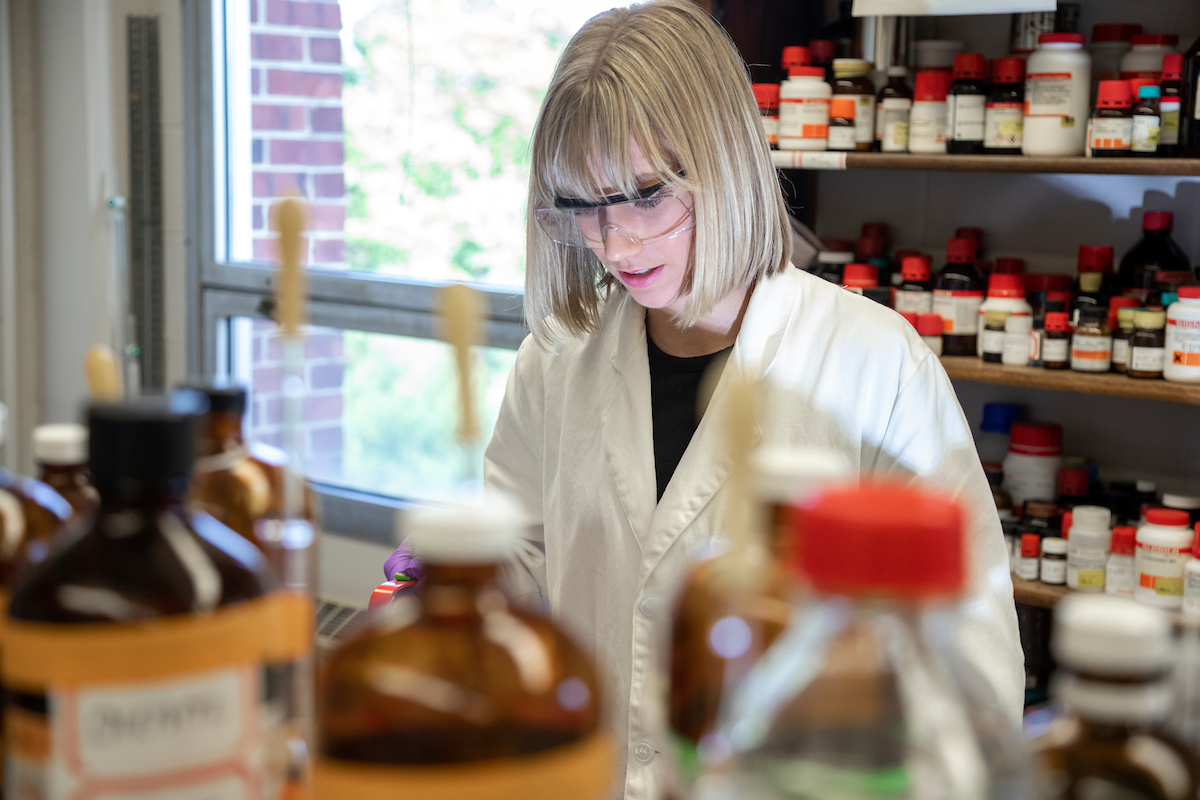
Research & Independent Study Opportunities
A staple of your chemistry experience at F&M is the extraordinary opportunity to engage in research and independent study. You’ll find remarkable opportunities to join your professors’ research projects, allowing you to leave your footprint on what often are years-long endeavors. Many students begin chemistry research during their first or second year at F&M, and continue throughout their time here.
Chemistry faculty are expert researchers working on a wide array of cutting-edge topics, frequently publishing in national and international chemistry journals. F&M’s Chemistry Department has been awarded substantial funding to support these research programs and to enrich the student experience. Student researchers are involved in all aspects of research; mentored closely by your professors, you’ll read scholarly papers to understand the theoretical background, work in the lab to learn new techniques and troubleshoot experiments, and even make your own innovative contributions. You’ll have opportunities to see your work published in leading scholarly journals, as an astounding 85% of our chemistry faculty publications are co-authored by students. Students also have opportunities to present their work at regional and national meetings.
A large number of students are provided a stipend to engage in research with chemistry
faculty members on campus during the summer.
Explore research at F&M
Moore/Schaeffer Mentorships
Highly qualified students interested in studying chemistry at F&M have exciting opportunities
to engage in research beginning the summer before their first year at F&M. Created
by W. Scott Moore, M.D. ’74 and supported by Charles D. Schaeffer Jr., Ph.D. ’70,
candidates are hand-selected to receive up to $3,000 for 3 to 4 weeks of research
with a faculty member. Award recipients are expected to major in chemistry or a related
field and continue doing research throughout their four years at F&M.
For more information, please contact Jen Morford, Charles A. Dana Professor of Chemistry
at jmorford@fandm.edu, or Scott Brewer, Professor of Chemistry at sbrewer@fandm.edu.
Learn more
Honors in Chemistry
Completing research or an independent study could also lead to honors in chemistry.
To be considered for honors, you must first be nominated based on either the results
of your summer research or academic year independent study. Your research must show
results that are publishable, and you must demonstrate independent contributions to
the project, produce a well-written thesis, hold a successful defense of the project
before a faculty committee, and show exceptional commitment and understanding.
Off-Campus Study
For a well-rounded understanding of chemistry research around the world, students
often choose to study abroad. Previous students have visited New Zealand, Scotland,
Ireland, England, Australia, and France.
Explore off-campus study at F&M
Our Facilities
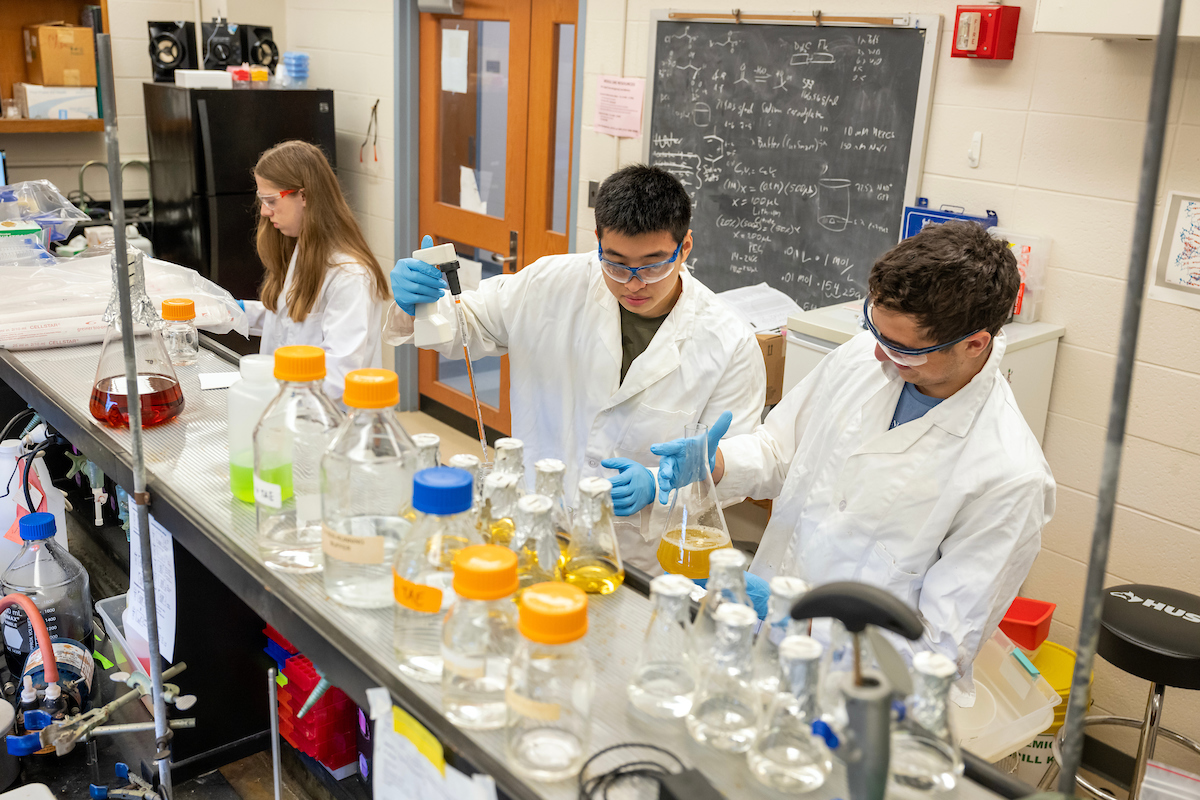
The William M. Hackman Physical Sciences Laboratories
The hub of chemistry at F&M is the William M. Hackman Physical Sciences Laboratories building. Hackman houses six instructional laboratories, 12 student/faculty research laboratories, four instrument rooms, a chemistry lounge and a chemical stockroom, and state-of-the-art instrumentation for faculty and student use, including nuclear magnetic resonance (NMR) spectrometers, mass spectrometers, infrared (IR) spectrophotometers, transmission electron microscope (TEM), and fluorimeter.
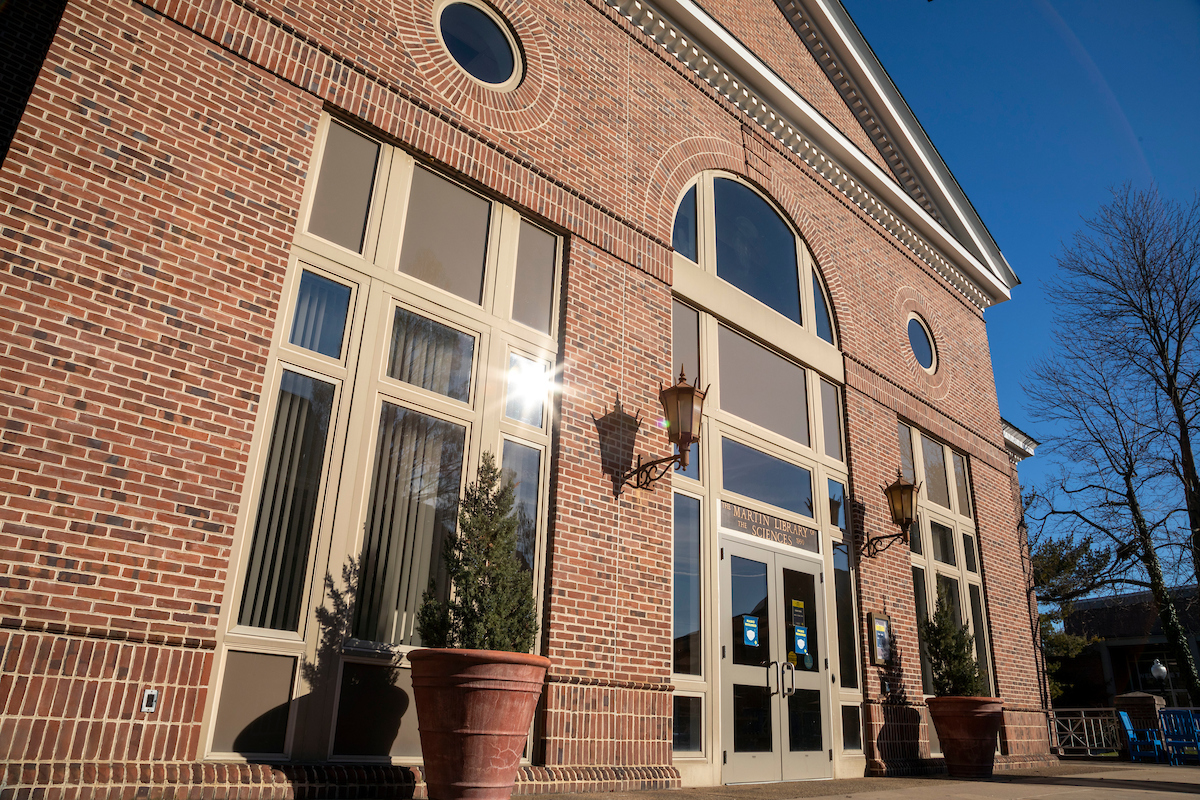
Martin Library of the Sciences
Additional resources for chemistry students include F&M’s two research libraries:
Shadek-Fackenthal Library and Martin Library of the Sciences. Martin is especially
popular among science students, as it contains ample study spaces, electronic access
to nationally and internally renowned scientific journals, and more than 60,000 volumes
in the sciences.
Learn more about the F&M College Library
Success Beyond F&M
You’ve completed your degree and are ready for your next step, but what is it? The confidence and independence you’ll earn studying chemistry allows you to pursue a wide variety of opportunities beyond graduation. The innovative and intellectual activities that make up the work of chemistry — including observing, analyzing, collaborating with others, and objective thought — help you develop useful and productive skills, which are valuable for any post-college plan.
Graduate School
More than 70% of chemistry majors attend graduate school, medical school or law school after graduating from F&M. The skills gained by studying chemistry at F&M — including the ability to reason, analyze data, and understand scientific methodology — make our graduates highly valuable candidates for graduate school. Nearly all majors who apply to graduate school and 94% of majors who apply to medical school are accepted by at least one institution. Many chemistry graduates also pursue advanced degrees in engineering after participating in F&M’s dual degree engineering program .
F&M chemistry graduates have pursued advanced degrees at institutions such as:
- Cornell University
- University of Pennsylvania
- Pennsylvania State University
- Pennsylvania State College of Medicine
- California Institute of Technology (Caltech)
- University of California Berkeley
- University of Wisconsin Madison
- University of Michigan
- Columbia University
Career Paths
Some chemistry graduates choose to begin their chosen careers directly after graduating from F&M. They hold positions with materials science companies such as Dow Chemical and biopharmaceutical companies such as Merck. Many also hold positions in a number of other fields, including healthcare, law, government, engineering, education, and the environment. They hold positions such as:
- Physician
- Dentist
- Veterinarian
- Engineer
- Professor
- Professor of Art Conservation (Winterthur Museum)
- Marketing Manager (Pfizer)
- Clean Chemistry Team Leader (Los Alamos National Laboratory)
- Associate Editor (American Chemical Society)
- Research Space Scientist (NASA)
- Counsel, Intellectual Property
- Reference and Systems Librarian
- Forensic Scientist
Research Spotlight
Research Club Kickstarts Students’ Science Careers
“As I was trying to navigate how to get involved with research on campus, Nanobots stood out as a welcoming and accessible way to enter the research space,” said Hannah Talesnik ’26, co-president of the club. "Being part of Nanobots has shaped my F&M experience by making research more accessible and showing me how important it is to have spaces where people of all skill levels can come together and learn from one another."
Kate Plass, Department Chair and Professor of Chemistry, emphasized how transformative the research experience can be for students, and how useful it can be for them to get that experience as early as possible.
“Once you know you can go into the lab and design an experiment to ask a question about the world that nobody has ever asked before, and then you can answer it—that really changes how you view yourself and your capability,” Plass said. “You can really see it change students’ self-confidence.”
Read More »
Student Spotlight
“F&M is very research-focused, and I knew I could get involved early on.”
“F&M is very research-focused, and I knew I could get involved early on,” said Ulman, a chemistry major with a minor in women’s, gender, and sexuality studies. “I found my community of people and knew I made the right decision.”
As the president of F&M’s student chapter of the American Chemical Society and a tutor at the Writing Center, Ulman has stepped into leadership roles that allow her to give back to the community she found on campus. Her enthusiasm for leadership is one of the qualities that led her to be named the 2025 recipient of the Rouse Scholarship, a leadership-focused, merit-based award.
Read More »
Alumni Spotlight
From Passion to Ph.D.
“Majoring in chemistry at F&M provided me with a robust foundation in the subject,” Zhuo said. “The faculty were not only knowledgeable, but also deeply invested in students' academic and personal growth.”
Read More »
Faculty Spotlight: Jennifer Morford
Explore biological processes at their smallest scale. At its core, Biochemistry &
Molecular Biology at F&M focuses on the structure and function of biomolecules, which
are the metabolic machinery of the cell and control its underlying genetics. Explore critical environmental issues of today through a scientific lens. By studying
earth and environmental science at F&M, you will build the necessary biological, chemical,
and geological foundation you need to study the earth and understand the dynamics
between humans and our environment. Do you want to design and build machines, vehicles, bridges, tunnels, roads, or buildings?
Engineering is available through F&M’s STEM Professions Advising as a supplement to
your chosen major. Related Fields of Study
Biochemistry & Molecular Biology
Earth and Environmental Science
Engineering
F&M Chemistry in Action
June 5, 2026
Colin Presby ’06 Brews Up Beverage Career
Being a brewmaster has taken Colin Presby ’06 around the globe – he even oversaw Carnival Cruise line’s first on-board brewery in 2016. He pivoted to an adjacent career in distilling at Mount Hope Winery & Estate, home to the Renaissance Faire.
February 26, 2026
Carrying a Torch for Inorganic Chemistry
While his uncle was among thousands chosen to carry the Olympic torch to the Milano Cortina Winter Games, Davide Lionetti was in the classroom, enlightening his students about processes of inorganic chemistry
January 28, 2026
Virtual Cadaver Lab to Redefine & Accelerate Health Professions Training at F&M
Franklin & Marshall College is set to transform its pre-health and science curriculum thanks to a generous grant from the George I. Alden Trust. The funding will support the development of a state-of-the-art virtual cadaver lab, bringing high-tech, immersive anatomical study to F&M’s campus.