
A Foundation for Community and Belonging
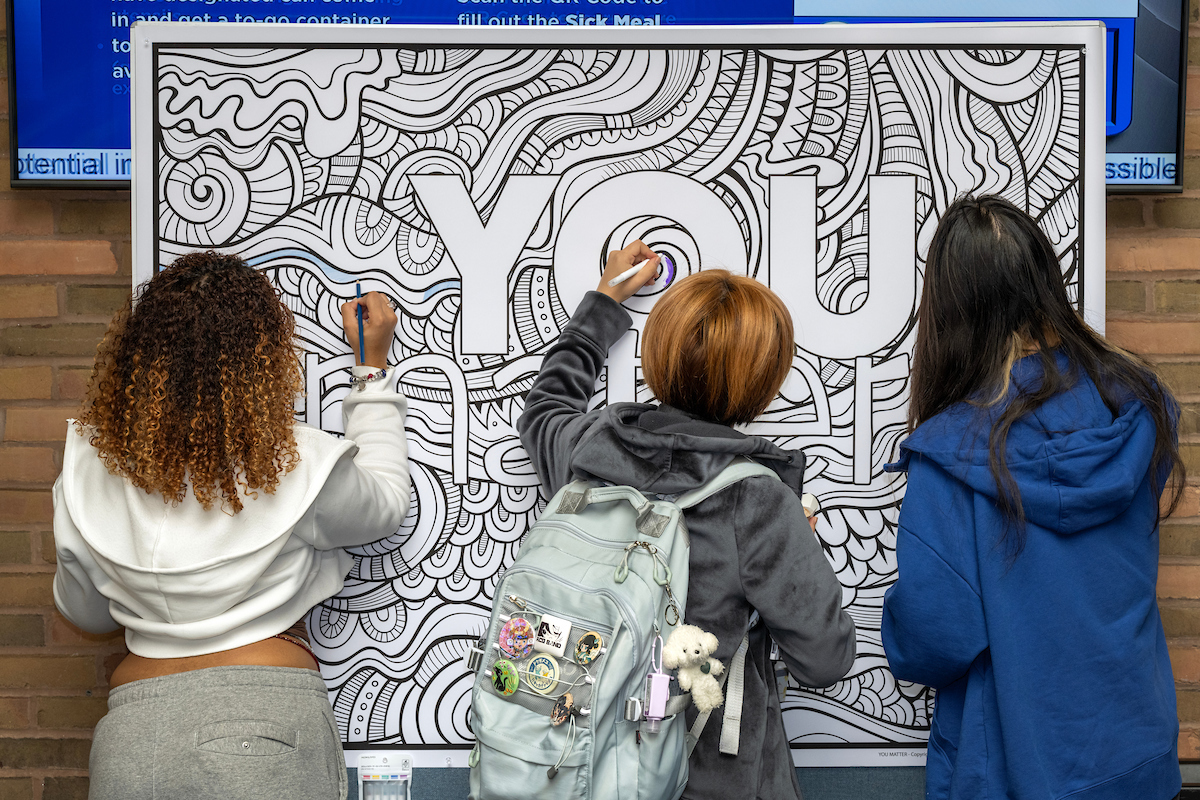
Inclusion Week activities included a communal painting poster in the Steinman College
Center.Office of Campus Community and Belonging
By Christian Perry, Director of campus community and belonging
The Office of Campus Community and Belonging is a welcoming environment where students, faculty, and professional staff can explore their identities while gaining insight into the experiences and backgrounds of others. We believe that by engaging in meaningful dialogue and activities, we can build a more inclusive and empathetic campus culture.
Some of the key features and programs available through the office include:
-
- Campus Inclusion Week: The annual F&M DEI Theme is designed by the Inclusion Week: Day of Dialogue Committee. The 2022-23 theme was “The Intersectionality of Our Identity,” and the 2023-24 theme was “Vitality at F&M: Feeling Value and Worth,” inspired by the inclusion pillar of F&M’s five-part Strategic Plan.
- Identity Exploration Workshops: Interactive sessions designed to help individuals explore and understand their own identities.
- Cultural Exchange Events: Opportunities to learn about and celebrate the cultures
and traditions of various communities.
- Hispanic Heritage Month
- Black History Month
- AAPI Month
- Women’s History Month,
- And much more
- Resource Library: A collection of books, films, and other materials focused on diversity,
equity, and inclusion.
- Anti-Racism Resource Guide
- Lancaster Cultural Resource Guide
- Guest Speakers and Panels: Engaging talks and discussions with experts and community leaders on topics related to intercultural understanding and social justice.
The Department of Religious Studies hosted a week-long creation of a Tibetan sand
mandala by the renowned artist, Losang Samten.Religious, Spiritual and Secular Support

By Joseph Pritchett, Director of Faith and Meaning
The Office of Faith and Meaning strives to ensure that every community member has a place where they can fully live out their religious, spiritual, and secular identity. The office strives to create a place where students can learn from one another about their own identities, the identities of their peers, and engage across differences.
Faith and Meaning supports eight religiously affiliated student groups on campus. Our team works closely with their faculty, staff and volunteer advisors. Our support often entails partnering on programming or helping groups find space and funding to meet their needs. Examples include providing transportation for Muslim Students each Friday to the local Islamic Community Center for prayers, and making Nevin Chapel available to our F&M Catholic student group for Sunday Mass.
Faith and Meaning also encourages these groups to collaborate to create opportunities and programs where student groups from diverse religious identities can come together. Some of these initiatives are student-led and supported by Faith and Meaning, including a regular dialogue series with members from each of the student groups during the 2021-2022 and 2022-2023 academic years. Faith and Meaning will bring back a series called “Common Ground” in the 2024-25 academic year unites students from all religious, spiritual, and secular traditions to discuss ideas and values that matter to all of them. Also, the Office is reestablishing a student Interfaith Council in 2024-25.
Faith and Meaning is responsible for supporting student accommodations related to religious needs. The Office partners closely with dining services, academic affairs, and the housing office. For example, Faith and Meaning:
-
- Works with students who need exemptions to the dining plan based on a religious dietary needs
- Partners with faculty and students to help students who require accommodations in the classroom based on a religious observance
- Collaborates with the housing office to ensure students have the housing they need to practice their religious traditions
Prayer and meditation spaces have been created in College Houses and Steinman College Center to create additional spaces for worship, observance, and reflection. Faith and Meaning also regularly communicates with faculty and staff about major religious observances and how they might impact students, ensuring faculty and staff can plan accordingly to allow students to practice their religious traditions and be successful in and out of the classroom. Lastly, Faith and Meaning has worked closely with Dining Services to bring Halal food to the dining hall and provide expanded services to our students who observe Ramadan.
Faith and Meaning is highly invested in providing students a chance to deepen their understanding of themselves and how they make meaning. This happens in a number of ways. One example is through Spiritual Direction, a one-on-one or group experience where students can safely explore their religious, spiritual, and secular identities. Another example is the creation of “F&M on the Camino,” a yearlong exploration of pilgrimage in partnership with the F&M Mindfulness program. This program allows students to explore questions of meaning and purpose through the lens of pilgrimage. At the end of the academic year, they travel to Spain for a two-week, 200-mile walk along the Camino de Santiago. The walk gives students a multicultural, intergenerational, multilingual, and multi-religious experience while trekking across Spain with people from around the world.
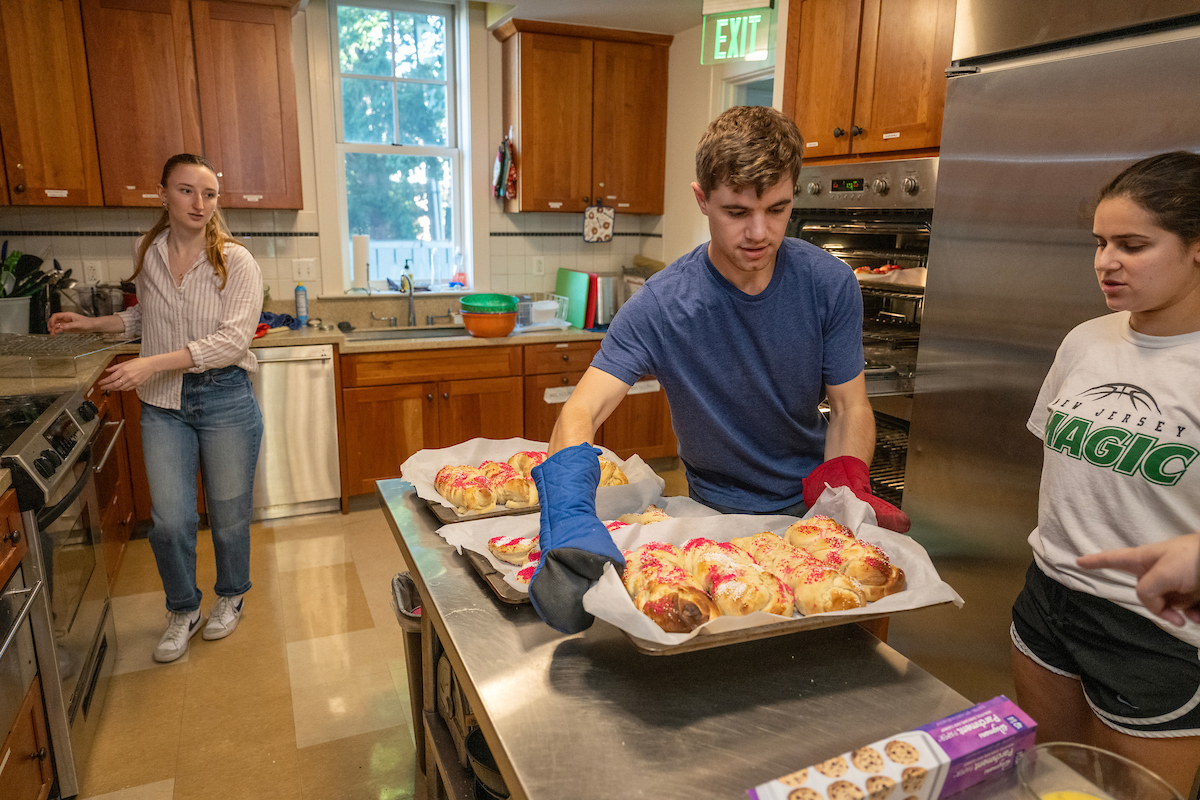
Students make hallah every Friday at the Klehr Center for Jewish Life. One special
occasion, they joined with Colleges Against Cancer and Alice Drum Women's Center to
honor Breast Cancer Awareness Month by making special hallah for Pink Shabbat.A Spiritual and Cultural Hub for Our Jewish Community
By Rachel Singer, Director of the Klehr Center for Jewish Life
The Klehr Center for Jewish Life is committed to DEI work. Over the past four years, the Klehr Center has incorporated DEI into its values and programs by supporting the uniqueness of individuality while embracing a shared Jewish identity. We do this by supporting the diversity within the Jewish community. This includes accommodating different religious denominations and secular lifestyles. A positive example of this is our High Holiday observances. The High Holidays include Rosh Hashanah, Yom Kippur, Sukkot, and Simchat Torah. The Klehr Center supports the celebration of these holiday traditions by offering shuttle service to the local Reform and Conservative congregations in Lancaster and by partnering with F&M Chabad for students who find in-person services meaningful this time of year.
Additionally, we offer holiday meals, text study, craft projects, and opportunities for self reflection for students who are observant, those who aren’t, and those who simply want to learn about Jewish life and culture.
Equity acknowledges diversity, so it is ultimately about giving people what they need. The Klehr Center uses an equitable model created by the Center for Career and Professional Development to recruit and hire student workers. There is also a fair and equitable process to determine and vote for the members of our Hillel Student Board.
The Klehr Center ensures that Jewish spaces are welcoming and open to people of varying identities. Though our space is inclusive to all students — regardless of identity — our primary focus is on making Jewish students feel included. We do this by offering a variety of cultural and educational opportunities that explore the vast scope of Jewish life, traditions, and religious observances. One example is our cooking programs and Shabbat meals that center around the inclusion of Jewish ethnic cuisine. From Ashkenazi (Eastern Europe) food such as brisket and matzah ball soup, to Sephardic (Greece, Spain, and North Africa) food like sumac chicken and stuffed grape leaves, to Mizrahai (Middle Eastern) like falafel and hummus. The inclusion of a variety of cuisines is one way that the Klehr Center works on breaking Ashkenormativity.
The Alice Drum Women's Center hosts Lavender Graduation, which recognizes and celebrates
the accomplishments of graduating LGBTQ+ seniors.Gender and Sexuality Resource Center

By Diosanny Rivera-Placido, Director of the Women’s, Gender, & Sexualities Resource Center
The Alice Drum Women’s Center offers an inclusive space for all on campus. The center features a F&Minist library, gender justice resources, free safer-sex materials, menstruation products, and a student study space. The center also coordinates opportunities for students to develop leadership skills with a focus on community engagement through programming, workshops, and student-led discussions. Popular events include:
-
- Engaging sessions such as speakers, readings, dinners, and workshops exploring topics like feminism, queerness, politics, and gender equality.
- Participation in Take Back the Night, a global initiative dedicated to combating various forms of sexual, relationship, and domestic violence.
- Involvement in events like International Women’s Week, Queer Visibility Week, Bi Visibility Day, Transgender Day of Remembrance, Transgender Day of Visibility, World AIDS Day, Indigenous People’s Day, and Galentine’s Day.
- Interactive Swag Grab Pop-Up events offering stickers, pins, and insights into LGBTQ+ and feminist communities and programs at the Center.
- Tailored Queer Self-Care Workshops aimed at helping queer students explore self-acceptance and community-based care practices.
- LGBTQ+ forums focusing on the experiences and perspectives of LGBTQ+ students at F&M.
- Lavender Graduation, recognizing and celebrating the accomplishments of graduating LGBTQ+ seniors.
The center also collaborates with other campus organizations to host intersectional events that promote diversity and inclusion. Workshops on topics such as body positivity, mental health awareness, and allyship are regularly offered to support students in their personal growth and education.
Perhaps most importantly, the center provides a platform for students to engage in meaningful discussions on current social issues and encourages activism through peaceful protests and advocacy campaigns.
It’s a space where students can access confidential counseling services and referrals to external support networks for survivors of gender-based violence or discrimination; actively engage with the local community through volunteer opportunities, charity drives, and partnerships with organizations that support women’s rights and LGBTQ+ equality; and foster a sense of belonging and empowerment by reinforcing the values of respect, equality, and social justice on campus.