
Community Reflections
Student-athletes and Athletics Department staff alike have engaged in several educational
programs and events. These include contributing to F&M Campus Inclusion Week programming,
participating in the NCAA Diversity and Inclusion Social Media Campaign, holding programming
every year in celebration of National Girls and Women in Sports Day, and more.Academic Equity and Student Success: Athletics in Focus
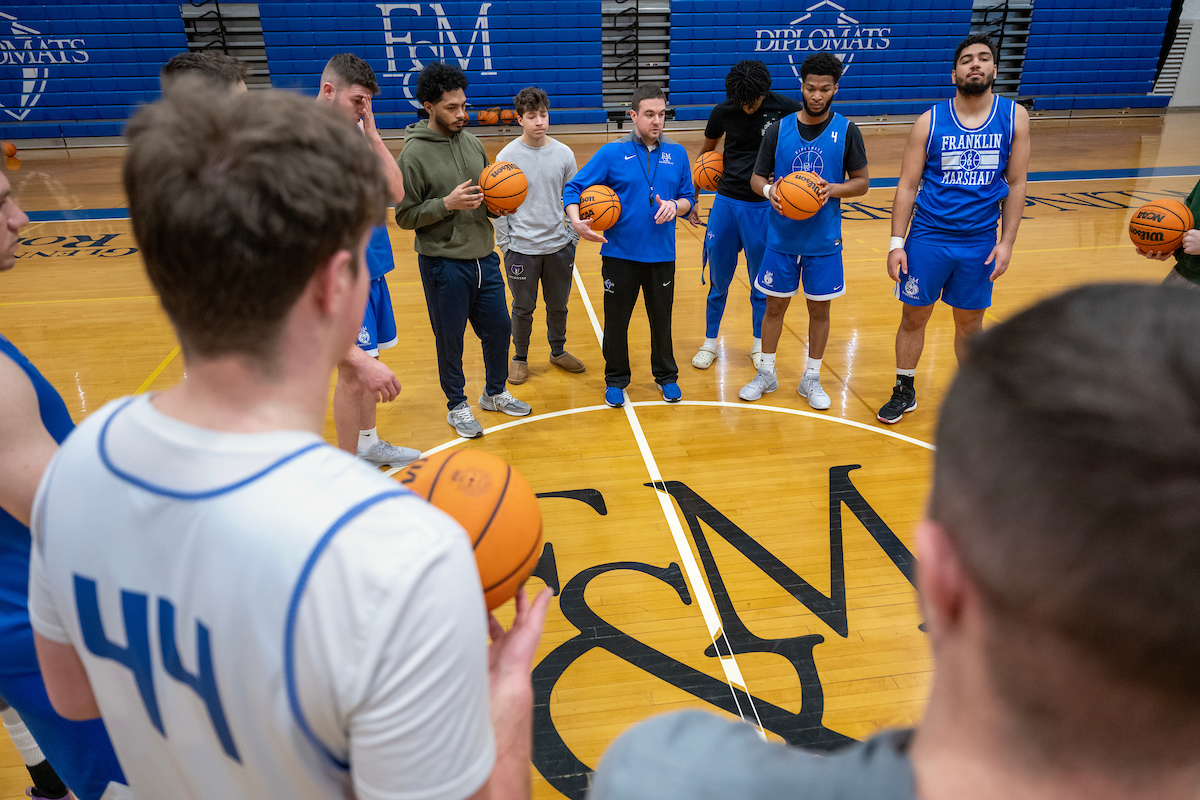
By Jordyn Kamis, Assistant Director of Athletics for Student Success
The Department of Athletics & Recreation developed a three-year strategic plan in summer 2021. The third pillar of F&M’s Strategic Plan centers on inclusion. This pillar states that “we will demonstrate the institutional values of diversity, equity, and inclusion to support all participants as members of a safe, hospitable, integrated and inclusive community.” The inclusion pillar encompasses four activities. Activities A and B focus primarily on department staff, whereas C and D have had more involvement and input from student-athletes.
Activity A sought to redefine our department DEI committee to incorporate perspectives from F&M’s broader community. Christian Perry, Director for Diversity, Equity and Inclusion, is a member of our Athletics DEI Committee, along with four athletics administrative staff, two head coaches, one assistant coach, and two student-athletes.
Activity B’s objective was to increase departmental diversity and create more opportunity for coaches and staff to engage in programming and education. This activity includes diversity training prior to launching new employee searches.
Activity C focuses on Departmental DEI values. This has come to fruition through the work of the Student-Athlete Leadership Council (SALC) working group that focuses on DEI work. The group requires that the College’s inclusion statement and land acknowledgment statement are read aloud prior to every home contest. This group curated a full list of DEI resources, at the campus community and national levels, that is accessible via our athletics website.
Activity D highlights the assessment of what it means to be a Diplomat student-athlete, which is accomplished seasonally through our end-of-season surveys. Those surveys are a space and opportunity for the student-athlete voice to be heard, and helps F&M ensure it is giving student-athletes the best possible experience.
Student-athletes and Athletics Department staff alike have engaged in several educational programs and events. Our student-athletes have participated in the NCAA Diversity and Inclusion Social Media Campaign and contributed programming to the F&M Campus Inclusion Week programming in the 2022-23 and 2023-24 academic years. The SALC working group has partnered with the YWCA for a presentation on Title IX, sexual violence, and consent. SALC and the Athletics Department also hold programming every year in celebration of National Girls and Women in Sports Day. Furthermore, female student-athletes have the opportunity to attend the Centennial Conference’s annual Snell-Shillingford Leadership Symposium; F&M has had student representation in 2021, 2023 and 2024.
Additional programming staff have participated in includes:
-
- Building Community Through Productive Dialogue (October 2020)
- Working with DEI consultants and forming a DEI Working Group within Athletics (Spring 2020-Spring 2021)
- Athlete Ally training (August 2021)
- One Team Training (January 2021)
- Jen Fry Inclusive Excellence (March 2021)
- International Students at F&M — Your Role in Creating A Community of Belonging (January 2022)
- Athletic Trainer Workshop: Ensuring Your Athletic Training Program and Facility are Welcoming to Transgender and Nonbinary Athletes (May 2022)
- Navigating Difficult Conversations with Sarah Pharaon ’00 (February 2023)
Over the last five years, the Office of Admission has remained committed to providing
access to the F&M experience for prospective students from all backgrounds.Admission and Enrollment Management: An Ongoing Evolution
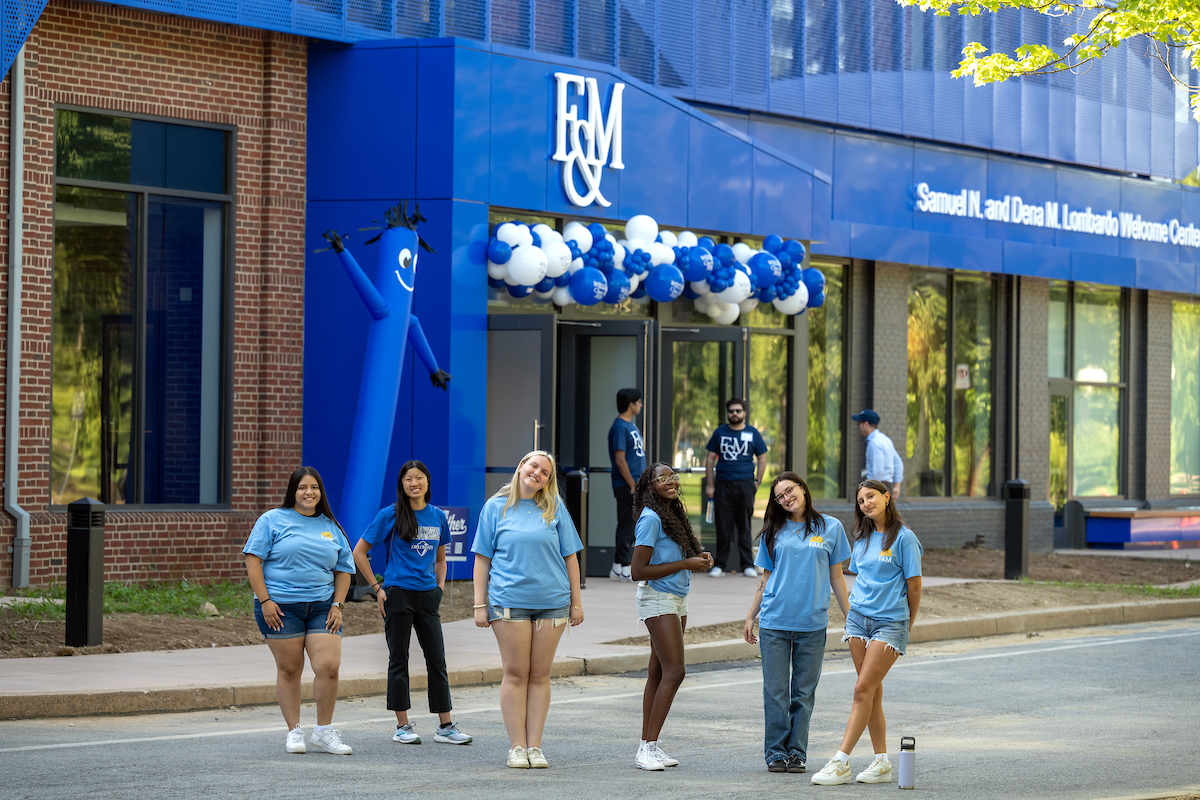
By The staff of the office of Admission
Over the last five years, the Office of Admission has remained committed to providing access to the F&M experience for prospective students from all backgrounds. That half-decade has included some challenges that F&M and the Office of Admission have navigated to ensure we continue to provide access to these deserving students.
The Office of Admission hosted the F&M Collegiate Leadership Summit (CLS) in 2019 (in-person), 2020 (virtually), 2021 (virtually), and 2022 (in-person). CLS invited high school students from diverse backgrounds to campus to explore their leadership as they transition to a college environment. CLS was a two-day program where students interacted with members of the F&M community and experienced life in a selective liberal arts environment as they participated in leadership-oriented workshops, seminars, other group activities, and an admission interview. F&M covered the cost of travel for students who participated in CLS. Due to logistical challenges that presented themselves after the COVID-19 pandemic, F&M CLS was paused after the 2022 year.
In the summer of 2019, Admission played an integral role in the College’s ultimate College Prep program. F&M College Prep is a three-week, pre-college immersion program for rising high-school seniors in underserved communities. Courses are taught by F&M professors and communal life in our residence and dining halls. Students choose two seminar-style courses from a variety of subjects, taught by F&M professors, and share their final work in a project fair. College Prep includes workshops that help students navigate the college admission process and promote their personal development. More than a dozen F&M students serve as program facilitators and continue as mentors through the participants’ senior year in high school. The COVID-19 pandemic placed this program on pause for 2020 and, due to a lack of sustainable funding, F&M College Prep was discontinued in 2021.
In addition to these programs, the Office of Admission has continued its role by working with several community-based organizations (CBOs) across the globe. In 2022, F&M renewed its partnership with the Cooperman Scholars organization, which supports students from underserved communities in northern New Jersey. The College continues its longstanding partnership with the Posse Foundation. Each December, members of the F&M community (including Admission), travel to New York City and Miami to engage with Posse finalists from each city, culminating in the selection of a 10-student cohort from each city. The Office of Admission continues its partnership with A Better Chance, and working relationships with Height Philadelphia (formerly Philadelphia Futures), Say Yes, College Match, Golden Door Scholars, Emerge, IDEA, and several other CBOs.
F&M has a longstanding history of strong international enrollments, which were primarily from China before 2021. The COVID-19 global pandemic presented a significant challenge in continuing to serve students from across the globe — but it also provided an opportunity, as the widespread adoption of virtual programming from 2020-2021 allowed F&M to remain connected to many regions of the world where we had a strong presence. Additionally, that programming helped us to establish connections with other regions where we were not as well known.
In 2021, leadership in Admission, including a newly hired lead international recruiter, brought a renewed intentionality to recruiting high-achieving students of high character from across the globe, while also expanding our global recruitment territories. The fall 2023 applicant pool included students from 129 countries. As of fall 2020, the majority of international students applying to and enrolling at F&M continued to come from China. Three years later, China is still one of the top five countries for enrollments, but it is not outperforming other countries like it did prior to COVID-19.
The legal cases brought by Students for Fair Admission (SFFA), which the Supreme Court (SCOTUS) decided on in June 2023, have introduced new challenges. Those cases, along with the changing socioeconomic makeup of F&M’s applicant pool, require F&M to think differently about how we achieve our commitment to access. In partnership with our colleagues from the Office of Community and Belonging and the broader F&M community, the Office of Admission will continue to identify new ways to expand access to an F&M education to all deserving students.
The College Library’s 2023-2026 strategic plan includes a set of organizational values
that reflect our commitment to community and belonging.The College Library: Redefining Values
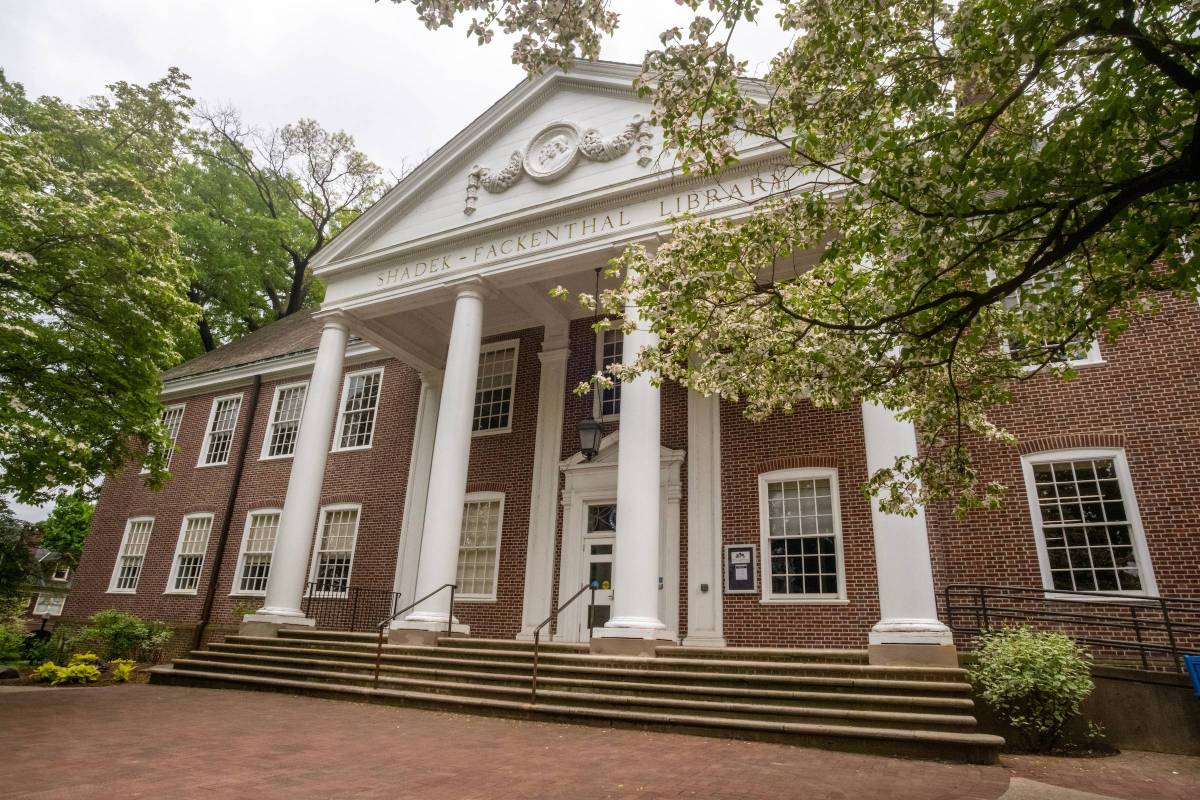
This content was gathered and written by Louise LoBello, Digital & Special Collections Librarian; Jennifer Buch, Research Services Specialist; Christopher Raab, Associate Librarian for Archives & Special Collections; Ryan Nadeau, Research & Student Success Librarian; and Scott Vine, Director of the College Library, with contributions from other College Library employees.
The College Library’s 2023-2026 strategic plan includes a set of organizational values that reflect our commitment to community and belonging. These values clearly state that our organization:
-
- Recognizes the strength and value in the diversity of our students, faculty, and staff
- Acquires, preserves, and provides access to scholarly, diverse collections
- Enables the discovery and dissemination of knowledge in all forms
- Develops welcoming and creative services for our user communities
- Provides safe, inclusive, and adaptable environments for individual and group work
- Advocates for the use of open educational resources and open access to scholarship
In keeping with this and previous commitments, in the past few years we have pursued many related activities in specific areas in support of students, professional staff and faculty at F&M. These include:
Library Spaces and Inclusive Signage
To create more welcoming and accessible spaces, the Library has added welcome signs in multiple languages at the entrance of Shadek-Fackenthal Library and Martin Library of the Sciences. The Library also invests in and displays student-created art, and exhibits original READ posters featuring book recommendations by students, faculty and staff. Restrooms in both libraries have been converted into gender-neutral bathrooms.
Scholarly Content and Services
Lowering the financial barrier to academic resources is an ongoing goal for the College Library. We do this by advocating with faculty and others for the use of open or library-provided educational resources, and ultimately lowering the average cost of course materials for students. This work has led to surveying faculty and students about the costs of course materials and initiating a course-materials review on Canvas to help focus our advocacy efforts.
Similarly, the College Library supports Open Access (OA) initiatives through a variety of OA options supported by the allocation of funds from our Scholarly Resources Budget, and in our negotiations with vendors when possible.
To provide more seamless access to material and course texts, the College Library directly provides ebooks and streaming films as course materials and has made EZBorrow and Interlibrary Loan lending policies more flexible. We have also added KIC scanners (self-service scanning stations) in both libraries to provide high-quality optical character-recognition scans to increase accessibility to content
The College Library also frequently reviews national lists of challenged/banned titles and ensures that those that fit our curriculum and campus interests are available in our collections.
People
In order to broaden the applicant pool to more diverse communities, the College Library sends open position advertisements to local organizations and nonprofits. Library employees also fill formal and informal leadership roles with student organizations and campus cultural activities. College Library employees have also hosted an internal DEI Discussion Group for College Library employees, and one campus-wide on the book “White Fragility.”
Events, Education, and Community
The College Library aims to offer safe spaces and host programs that promote DEI initiatives. This has included organized programming and provision of spaces for campus-wide Days of Dialogue and Inclusion Week, and hosting multiple Human Library and #RandomCoffee events designed for students, faculty and staff to spend time with and learn from each other. The College Library has also sponsored well-attended Campus Hours and Common Hours (weekly community-wide lectures) on neurodiversity, book challenges and bans, and hosted Dr. Hilary Green, an F&M alumna and African-American historian and specialist in the legacy of slavery on college campuses.
College Library staff have also participated in both years of the DEI-sponsored IDEA course, both as students and teachers. In 2020, librarians created an Anti-Racist resources research guide with links to resources and organizations about anti-racist education.
Archives & Special Collections
The Archives & Special Collections (A&SC) unit of the College Library is currently undertaking a long-term Inclusive Archives Initiative, which was first developed in 2020. The initiative’s goals include developing trust with communities on campus and highlighting college histories of underrepresented groups. Since then, A&SC has hosted campus presentations on the history of Black Students at F&M (2020) and Native Americans at F&M (2021). Staff have also supported independent student projects looking into marginalized groups on campus and sharing new and more inclusive historical timelines and projects on the A&SC website. Some examples include a “Visual Black History Timeline” by student Laura Bedoya, a “History of International Students” by Sebastian Yusong Deng ’22, and an LGBTQ+ history timeline and documentary by PJ Howard ’21.
By design, A&SC has also been involved in the Legacy Project since its inception through staff involvement and assistance with archival research, hosting the Legacy Project Report on the library Digital Collections site, processing and preservation of the Legacy Project Oral History project, attending the Public History Institute hosted by the CIC and the Gilder Lehrman Center at Yale University, and the development of an exhibit on Legacy Report major findings and Trustees of Color. Additionally, A&SC prioritizes digitization projects and publishing on the Digital Collections website to improve accessibility to archival material and college scholarship for all users and learners.
From the start at Writers House, we have sought to create and support a literary community
that is as at least diverse in race, ethnicity, and gender and sexuality as the student
body of the whole College.From Equity Talk to Equity Walk at the Writers House
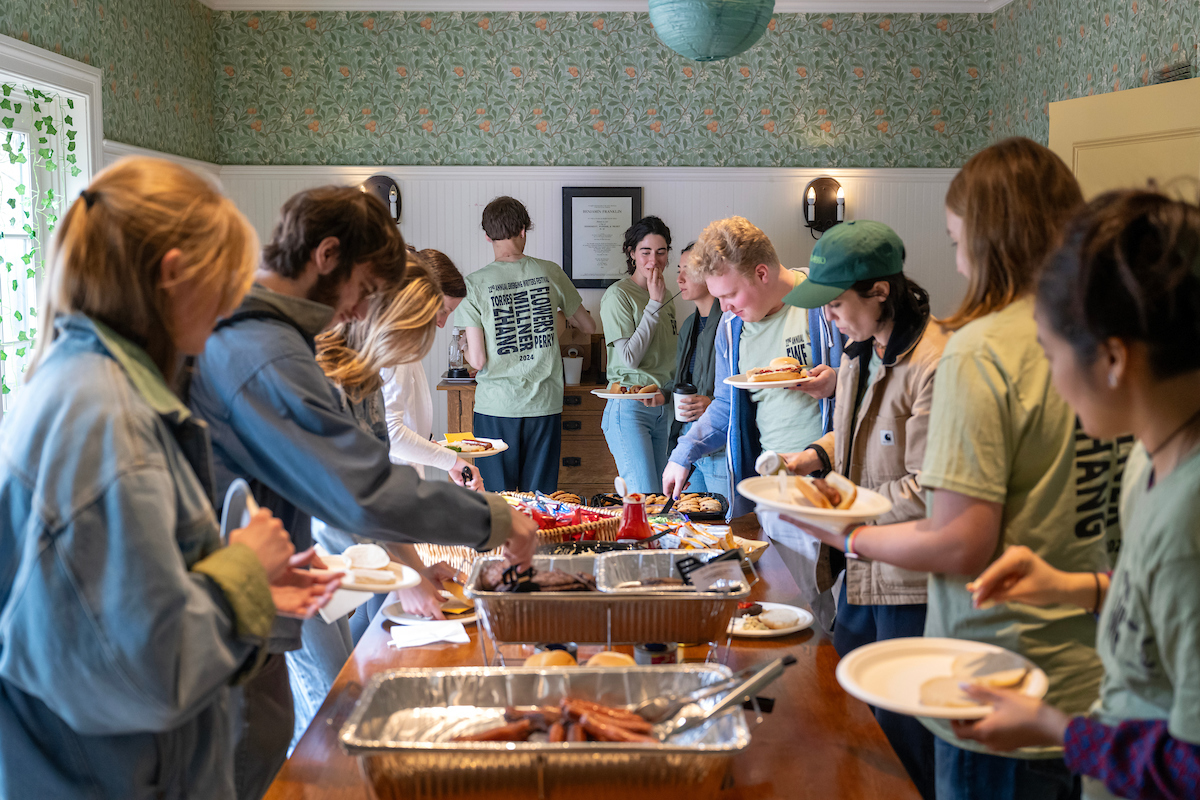
BY Kerry Sherin Wright, Director, Philadelphia Alumni Writers House and Senior Teaching, Professor, English
Since its founding in 2003, the Philadelphia Alumni Writers House has been charged with nurturing student writers and readers not just from English, but from all academic departments at the College. We are both a performance and classroom space and a “home-base” for writers and readers from across the campus, and we have always sought to create and support a literary community that is as at least as diverse in race, ethnicity, and gender and sexuality as the student body of the whole College. From the start, our readings and speaker series, volunteer opportunities, student hiring, and collaborations with other departments and student groups have been guided by a keen awareness of how important it is for the Writers House to host visitors and serve students of diverse race, ethnicity, gender, nationality, sexuality, and other identities.
For many years, we assessed how well we reached these goals using narrative-based evidence: student and alumni testimonials, student exit interviews, and anecdotal evidence gathered at periodic faculty, staff and student community retreats. Repeatedly, these methods showed that we had created a space that the F&M community saw as welcoming, inclusive, and equitable, but overall, the assessment was not as specific as we would have liked.
Then, in the spring of 2021, during a virtual presentation by Tia McNair of the American Association of Colleges and Universities — an event we’d been invited to co-host by Gretchel Hathaway, Vice President for Community and Belonging — we realized what we’d been missing. In her lecture, McNair talked most about the importance of using data to assess specific high-impact learning practices (HIPs). HIPs are opportunities for students to engage actively in their own learning in ways that promote retention and student success. While the Writers House might appear to be primarily a literary event space, we realized from McNair’s description that nearly all of our programs fit the category of HIPs. Students who enter the Writers House find opportunities to take free writing workshops led by accomplished visiting authors; attend and also host informal Q&As with professional writers, editors, agents, and scholars; teach creative writing to local school children; publish their own and other students’ writing and art; introduce visiting writers; and plan and run most of the Writers House’s big events. Nearly all of our programs deliberately give students ways to put their passion for writing, reading, storytelling, editing, and teaching into action.
But were our HIPs actually serving a truly diverse mix of F&M students? McNair recommended gathering a range of disaggregated data on participants — not merely data on white participants versus participants of color, but also on gender, ethnicity, major, minor, etc. From this baseline, we could begin to see more precisely who the Writers House supported and when, and we could begin to move toward creating more targeted programming, both to reach more specific groups of students and, crucially, to increase the diversity of all of our participants within specific HIPs.
We are now in our fourth year of collecting this data. Each summer, we provide the names of all of our participants to Chris Alexander, Director of Institutional Research at F&M, and she connects the names to students’ demographic information in a way that preserves their privacy while giving us the results we seek. She provides a spreadsheet that tabulates all of the data points we are legally able to track. At this point, given the data that F&M as a whole collects, we can parse our participants according to legal sex; race and ethnicity (which includes nationality); and major affiliation. Overall, the numerical data bear out the earlier narratives we’d collected: for the past three years, our programs and writing-related opportunities have attracted over 400 individual participants each year, and these participants come from all class years, many nations and ethnicities, both legal sexes, and all majors and minors at the College. Having this data also has encouraged us to be much more intentional about our programming. For example, it has led to exciting recent collaborations with a range of student groups, including the International Student Advisory Board, the Gaming Society, and Mi Gente Latina, among others. We are grateful to Gretchel Hathaway, Chris Alexander, and Tia McNair and her co-authors, for guiding our efforts.
Over the past five years, the Office of International Programs has expanded its work
to more intentionally include equity and inclusion initiatives.Joseph International Center: A Welcoming Home

BY Sue Mennicke, Associate Dean of International Initiatives
The Joseph International Center — known to students, faculty and professional staff simply as JIC — has become a "home base" for all-things-international over the past several years. The Office of International Programs occupies the JIC, and our work is deeply intertwined with DEI efforts on campus as we strive to create an environment that truly welcomes and embodies a global community.
Over the past five years, the Office of International Programs has expanded its work to more intentionally include equity and inclusion initiatives. Most importantly, we added an Assistant Dean of International and Multilingual Student Success. This person adds a critical layer of support for international students as they enrich F&M’s brand of liberal arts. The Assistant Dean does much more than simple ESOL (English for Speakers of Other Languages) work. Her work is meant to evoke all the globally, culturally rich gifts that our international students bring to the College. F&M is unusual among small liberal arts colleges in both the number and diversity of our international population (17 percent of our students are international), allowing us to call ourselves a truly global community.
The last 3-5 years have seen a growing sophistication of the International Student Advisory Board (ISAB). Everyone on campus now knows what ISAB is, and they have come to associate the group with dynamic programming, sincere efforts at advocacy on behalf of international students, and genuine collaborative partners for the advancement of equity and inclusion at F&M.
Off-campus study is also part of International Programs, and the last five years (while significantly disrupted by the pandemic) have seen the development of a study-abroad population that mirrors the student population at F&M. This is important — most colleges still struggle to send a diverse population abroad — and also represents deep and intentional work to engage and welcome all F&M students to consider off-campus study.
Lastly, our International Coffee Hour program has become a weekly celebration of the best of F&M. The coffee hour has become very popular and is a genuine gathering space for all kinds of students — international and domestic — who are excited about F&M's global community. The coffee hour represents a global liberal arts college at its finest, and every Friday represents an opportunity for our community to build genuine and deep connections. The event is organically popular, meaning that students themselves drive the programming and encourage their peers to participate.
The Phillips Museum exhibition, “Spectra: Exploring Neurodiverse Art in Franklin &
Marshall College,” celebrated the artwork of students on campus who identify as neurodivergent.DEI and Art at The Phillips Museum

BY Lindsay Marino, Director of the Phillips Museum of Art
The Phillips Museum of Art is a thriving teaching museum that works to advance the educational objectives of F&M through exhibitions and programs that support the curriculum, the acquisition of objects and works of art, and the opportunity for faculty and students to research and study in the collections. To achieve these goals, it has been imperative for the museum to adopt tenets of inclusive practices.
The museum’s focus on artistic expression that speaks to global culture and history are at the core of shaping the organization’s new direction. Using the phrase “Reimagining the Museum,” the PMA’s staff, committees, volunteers, and student employees are committed to both turning the museum’s focus outward through consideration of the global, and connecting with the local by engaging the campus and surrounding communities. Doing so makes both the museum’s permanent collection and rotating exhibits places where visitors can have experiences that invite connections between artistic expression and contemporary events. Further, as the demographics of the College and community shift, the museum is committed to hosting art and artists who represent our diverse communities.
In addition to inclusive exhibitions, some of the initiatives that have embraced the ideas behind DEAI have been focused on how the artwork in the permanent collection is discussed. Understanding that many items in the museum’s collection were collected or created through the Colonialist structure, it is important to be transparent and open to frank discussions with our students and visitors.
The museum staff members continue to educate themselves by participating in activities such as Conflict Mediation Training, Circle Training, F&M DEI Committee, Professional Staff IDEA Certification Course, and the Committee on Equitable and Inclusive Practices. The museum has embraced the College’s Land Acknowledgement stance, and has the statement prominently displayed at its front door. In addition, the labeling and placement of objects takes into consideration visitors with low vision, and adheres to ADA standards. Detailed, thorough labels allow visitors of all backgrounds to feel comfortable in the space, as the museum has found accessibility to be the key to a successful exhibition.
The past fiscal years have ushered in a significant shift in how the museum engages with the campus and regional communities. These positive changes are made possible by a professional museum staff that is committed to collaborating with artists from around the world to bring their work here. Importantly, these collaborations have led to an increase in performances, panels, and lectures, as well as an uptick in visitors interested in attending these events and exhibitions.
The Faculty Center at Franklin & Marshall College aims to promote diversity, equity,
inclusion, and access for students and faculty.Overview of Faculty Center work on DEIA
BY Lee Franklin, Interim Faculty Center Director
The Faculty Center at Franklin & Marshall College aims to promote diversity, equity, inclusion, and access for students and faculty. Over the past five years, this aim has informed our programming in many different ways, which can be divided into two main categories.
The first includes efforts to support faculty as teachers. In this sphere, we seek to empower faculty as they pursue learning and success for all students, for an ever more diverse body of F&M students. These efforts, often developed collaboratively with Senior Instructional Designer Kelly Miller of the College’s Office for Instructional and Emerging Technology, have included course design institutes centered on the principles of Universal Design for Learning; seminars and colloquia with invited speakers such as Royel Johnson, Kevin Gannett, Kelly Hogan, and Viji Sathy on different aspects of inclusive pedagogy; and focused workshops on strategies and practices that promote student belonging and learning, such as the use of scaffolding, revising syllabi through an anti-racist lens, trauma-informed pedagogies, or how to pronounce Chinese names.
Finally, we partner frequently with other offices on campus, such as the Office of Student Accessibility Services, DipCares, and others in the Student Support Hub to enable faculty to collaborate with others on campus to promote equitable student success.
The second set concerns support for faculty as they come to F&M and proceed through the faculty career trajectory. These begin with New Faculty Orientation, which starts in the summer months before the start of the fall semester, and proceeds through the entire first year of a faculty member’s time at F&M. Providing support and guidance in a range of ways, our efforts are consistently informed by recent literature on the experience of minoritized faculty.
In 2023, the College established an institutional membership in the National Center for Faculty Diversity and Development, which offers a multitude of resources (boot camps, webinars, consultants, etc.) tailored to support all faculty, but especially those from historically underrepresented backgrounds in academia. In 2023-24, the Faculty Center partnered with Assistant Dean for DEI Mena-Ali to earn a $10,000 grant from the PA Council for the Liberal Arts to improve mentoring for faculty in the first decade of the tenure stream career — a constituency that is significantly more diverse than F&M’s faculty overall. These efforts have led to increased engagement in affinity groups supporting faculty of color, and the formation of an advocacy and support network for faculty in the first decade of their careers, the First Decade Collective.
In 2024-25, the Faculty Center will support IET’s Plus One Pedagogy program, promoting small pedagogical changes that improve student access and engagement, and develop its own programming to support faculty in cultivating student attention and focus. We are also actively exploring next steps in improving mentoring for faculty across the career. According to one author, teaching is inclusion — helping all students learn is what a teacher must do. The same can be said about promoting faculty excellence and professional flourishing. Accordingly, the Faculty Center always has, and always will, pursue equity, inclusion, and access as core tenets of our mission.
Listening to and learning from those
who see and have experienced the world differently can challenge each of us with a
broader perspective, the mission of a liberal arts education.Reflections on the I.D.E.A. Committee of the Board of Trustees

BY Ken Mehlman and Shawn Jenkins
Attracting diverse perspectives, backgrounds and experiences can enhance Franklin & Marshall’s commitment to student learning. Listening to and learning from those who see and have experienced the world differently can challenge each of us with a broader perspective, the mission of a liberal arts education.
Over the past 15 years, Franklin & Marshall has substantially increased the diversity of our student body. Under the leadership and direction of Eric Noll, President of the F&M Board of Trustees, the Board established a new committee that would be future-focused on supporting the College’s efforts to promote diversity and inclusion across all operations, with a vision of creating a more diverse and inclusive board.
The I.D.E.A. (Inclusion, Diversity, Equity, and Accessibility) Committee of the Board was established in 2021. As chairs of the committee, our focus is on ensuring that all board committees ensure Franklin & Marshall College’s mission is furthered by enhancing diversity among students, faculty, staff and the board, including resiliency among first-generation students and viewpoint diversity and open expression throughout campus.
The board members also intentionally consider inclusion and equity in their work and commitment to the College. The committee developed some initial key metrics that will be regularly reported to the board, heard from the study on the legacy of slavery, and invited consultants to educate the board on the benefits of an inclusive approach. inclusive pedagogy and board governance.
In the past four years, inviting board members who are diverse in experience, ideology, culture, age, gender, etc. has allowed for more voices to be heard, opinions to be considered and opportunities to flourish.
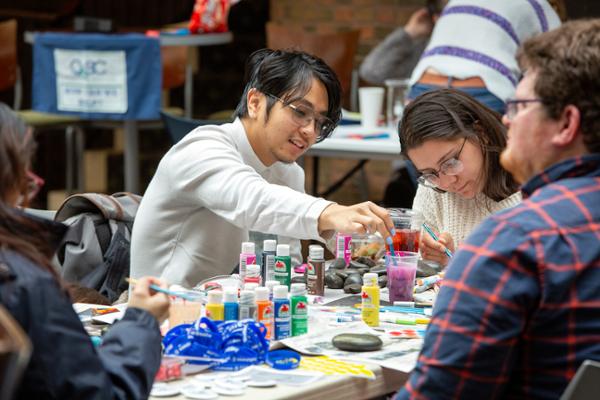
Diplomatic Congress routinely hosts events to build community among students, such
as the annual Wellness Fair.A Diplomatic Congress Built on Belonging
BY Michael Vasquez ’25 and Mia Aaronson ’26
The Diplomatic Congress of Franklin & Marshall College was established in 2007 to unite and represent students from all corners of campus. The Congress serves as the governing body for the student population, providing a space each week for students to hear from members of the College’s staff and faculty, address current issues on campus, and advocate for one another's concerns. Embedded in the mission of Congress is a continuous commitment to “combating racism and all forms of discrimination throughout the Franklin & Marshall College community and to actively being an anti-racist organization that prioritizes diversity, equity, and inclusion.” Over the past five years, Congress has made significant strides toward embodying this mission to its fullest, recognizing the need for structural changes that facilitate a culture of inclusion, empathy, representation, and transparency.
In 2019, upon reviewing Congress’ Governing Documents and observing a disconnect between the organization and other student coalitions on campus, the 14th Diplomatic Congress proposed that the Black Student Union and Mi Gente Latina — two multicultural organizations at F&M — be inducted as agencies of Congress. As established by the constitution, Agencies of Congress have designated speaking time during weekly meetings and can vote on any proposals heard before Congress. In recognizing these organizations and granting them agency status, the 14th Congress paved the way for other identity empowerment organizations to become members of the General Assembly. The current agencies of the 17th Diplomatic Congress include the Black Student Union, Mi Gente Latina, First-Generation Diplomats, Asian-American Alliance, Sexuality and Gender Alliance, International Student Advisory Board, Muslim Students Association, African-Caribbean Association, and Hillel.
In diversifying the General Assembly, Congress has strived to encourage students to advocate on behalf of their community, engage in discourse with other students, foster an environment of inclusive celebration, and encourage collaboration.
Spring 2020 brought with it further change to Congress. It was during this time that the official role of the Executive Officer for Social Justice and Equity (EOSJE) was introduced to Congress, sitting amongst the Executive Board of Congress (which includes the president, vice president, communications director, parliamentarian, and treasurer). TheEOSJE acts as a liaison between multicultural agencies in Congress, its executive board, and senior members of the F&M’s faculty and staff. In contributing to a culture of consistent and transparent communication among the agencies and administration, the EOSJE serves as an advocate for, and celebrator of, the wants, needs, and work of marginalized communities on F&M’s campus. The EOSJE facilitates spaces where community members and administrators can engage in honest conversations — such as the Multicultural Administrative Summit and All Agency Meeting — ensuring that Congress upholds an ethos of inclusive, community celebration, and transparent advocacy.
In addition to paving the way for structural diversity, equity, and inclusion initiatives, members of Congress have worked tirelessly to address relevant concerns on campus. In the face of anonymous social media apps (YikYak, Fizz), Congress started conversations with members of the administration and the Office of Community and Belonging to prioritize student safety and ability for expression. Congress has created time during weekly meetings and during panel-facilitated events for students to discuss the Protest Tree, in terms of both policy and purpose. In recent years, the Protest Tree has been a focal point of campus. Congress has recognized this, created space for students to discuss how it impacts the culture of campus, and advocated for the importance of Freedom of Expression, a principle upheld by the College’s mission.
Congress also has been a critical contributor to the development and success of the Bias Incident Report Team, a safeguard created for victims of bias-related incidents. In light of relevant current events, such as the Black Lives Matter Movement, and international conflicts, including Russia’s invasion of Ukraine, Congress has published statements supporting peace and condemning unnecessary conflict and violence.
Congress engages in conversations regarding student retention, shared governance, the budget priorities of the College, and the state of the institution holistically. By involving students from diverse pools of our community, and embodying different identities, experiences, and passions, Congress has set an example of advocacy, inclusion, transparency, and celebration of belonging.