
F&M Stories
Innovative Workshop Fosters Dialogue about Importance of AI Literacy
As generative artificial intelligence continues to impact teaching and learning on college campuses, Franklin & Marshall is pioneering inventive ways to help students build critical literacy skills they need to compete and excel in an AI-infused society.
During the fall semester, Associate Professor of Sociology Caroline Faulkner and Senior Instructional Designer Kelly Miller offered a four-part workshop for faculty to help them guide students navigating AI for a wide variety of academic purposes. The series, “Beyond Abstinence Only: What Our Students Need to Learn About AI,” focused on topics such as AI hype, AI literacy frameworks and cognitive concerns, the ethical components of AI literacy, and a look at future opportunities and challenges of AI.
Faulkner said feedback to the series was positive, with faculty saying they came away with a better understanding of how to help students critically engage with AI as a tool that can add value to F&M’s approach to the liberal arts, which develops critical skills in reading, writing, thinking, analyzing, debating, and active listening.
“We can’t say what the world will look like in five years, but I tell my students that whatever world they enter, they are going to have to be able to say that they can do something that AI can’t do,” Faulkner said. “So, it’s helpful for them to have skills to use AI with our guidance and help them understand and articulate how they add value beyond that.”

During the fall semester, Associate Professor of Sociology Caroline Faulkner and Senior Instructional Designer Kelly Miller offered a four-part workshop for faculty to help them guide students navigating AI for a wide variety of academic purposes.
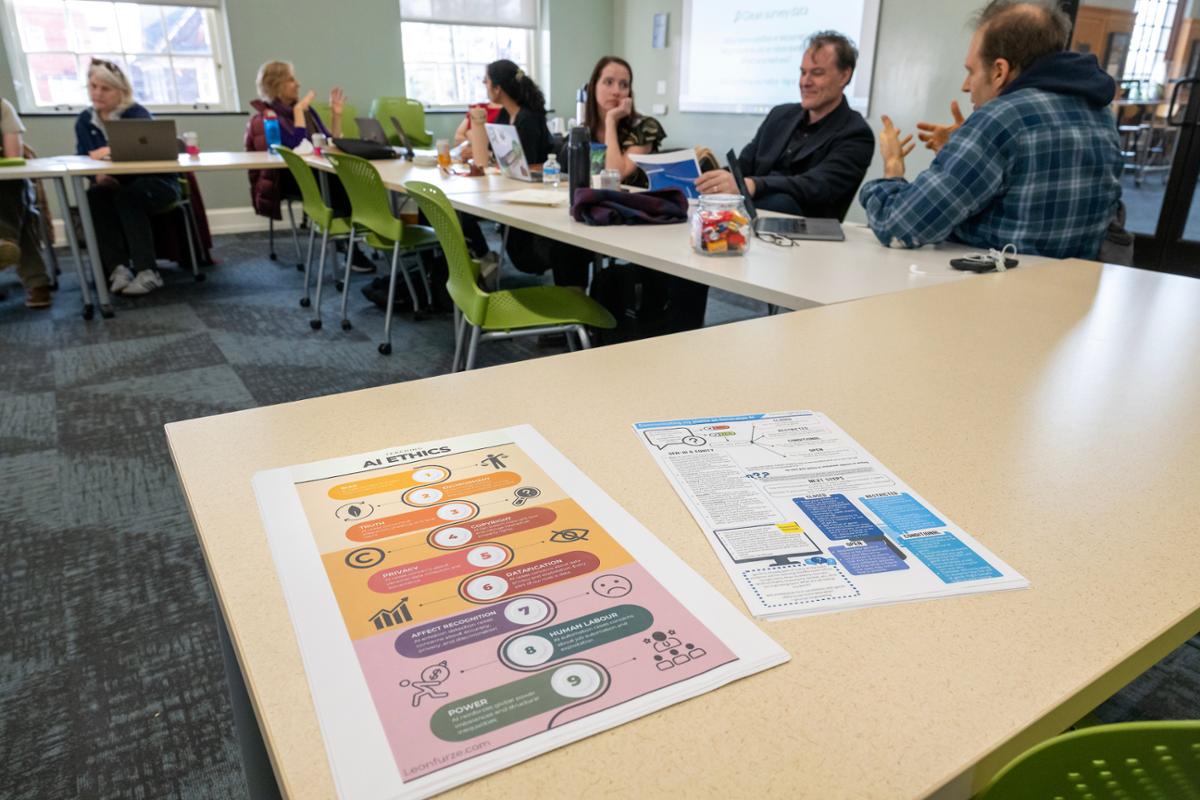
The series, “Beyond Abstinence Only: What Our Students Need to Learn About AI,” focused on topics such as AI hype, AI literacy frameworks and cognitive concerns, the ethical components of AI literacy, and a look at future opportunities and challenges of AI.
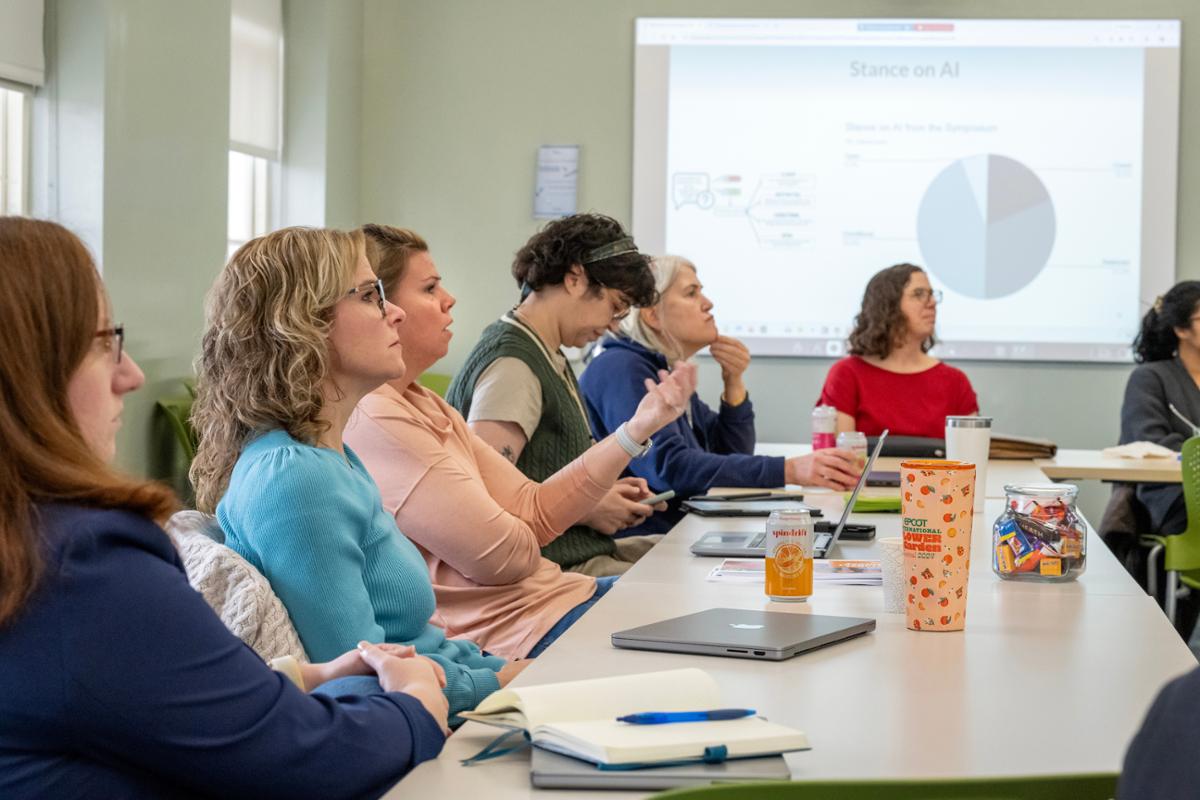
Faculty said they came away with a better understanding of how to help students critically engage with AI as a tool that can add value to F&M’s approach to the liberal arts, which develops critical skills in reading, writing, thinking, analyzing, debating, and active listening.
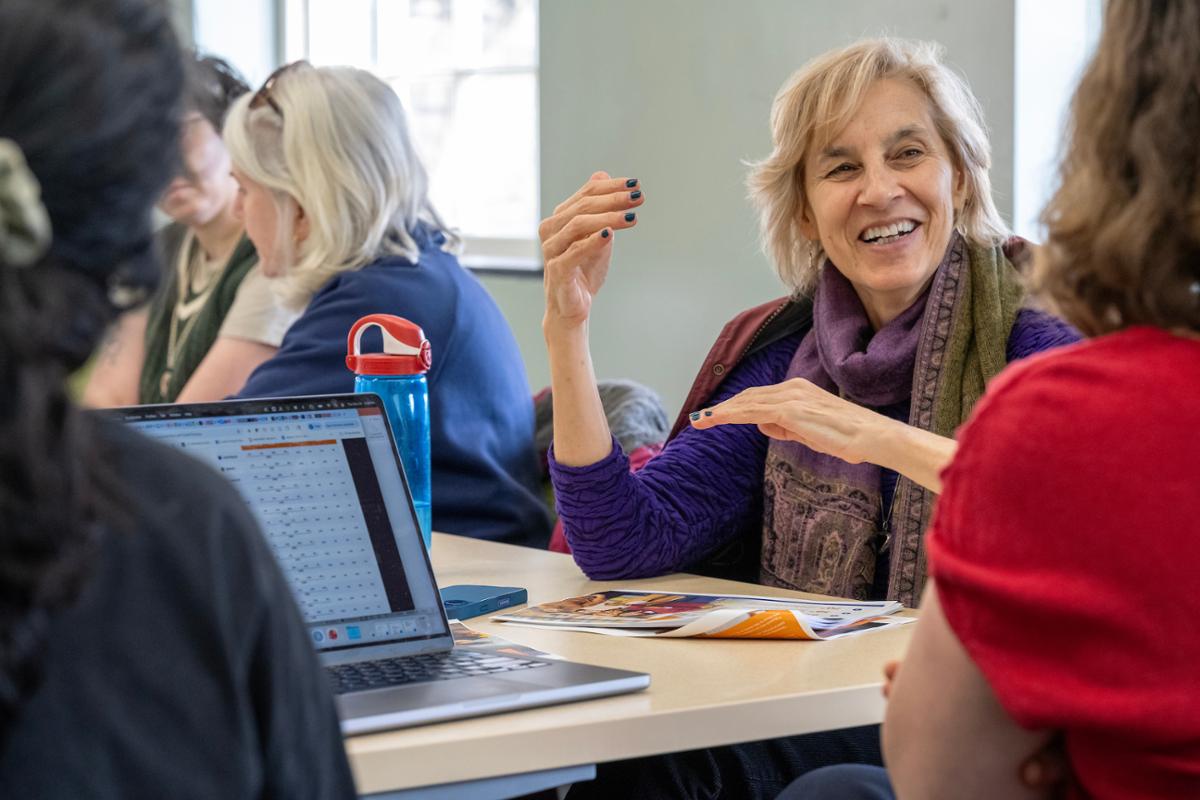
Faculty said they came away with a better understanding of how to help students critically engage with AI as a tool that can add value to F&M’s approach to the liberal arts, which develops critical skills in reading, writing, thinking, analyzing, debating, and active listening.
Miller characterized the sessions, each of which drew 20-30 professors, as “healthy conversations” about AI and its role in supplementing the hands-on model of teaching and learning that is a hallmark of the F&M student experience. She pointed to World Economic Forum data, which tracks the skills employers value the most among employees.
“All the skills that they say they want are the skills that we give our students, skills that help them bypass entry-level jobs or climb the ladder faster or set them apart from other candidates,” she said.
Faulkner emphasized that the goal of the sessions was to nurture a constructive dialogue between faculty and students about the importance of understanding the benefits and limitations of AI as a tool.
“Critical AI literacy is something that is essential for all people,” Faulkner said. “We are moving into a world where AI is embedded in everything we do and is always an option — a fallback, or even the first option. Let’s center attention around AI ethics and provide students with opportunities to think and talk about how to use it and what they can get out of it.”
Industries, sectors, and cultures are shifting faster than ever, and cutting-edge
technological innovations like generative AI are poised to handle many entry-level
duties. Top-tier employers are increasingly seeking college graduates with the skills
and perspectives that only a liberal arts degree can offer. That’s why human-centered
thinking has become indispensable now more than ever. This is the enduring hallmark
of an F&M education.“Critical AI literacy is something that is essential for all people. Let’s center
attention around AI ethics and provide students with opportunities to think and talk
about how to use it and what they can get out of it.”
F&M Is Made for This Moment
Related Articles
September 18, 2026
Lessons in Leadership: Entrepreneur Lynn Greenberg ’14
Lynn Greenberg ’14, founder and CEO of Pivt Enterprise, recently returned to F&M to share wisdom and kick off a lecture series at F&M presented by The Mehlman Leadership & Performance Institute. “F&M is the perfect place to lead you into entrepreneurship,” she said.
September 2, 2026
‘I Find It Important and Necessary’: Uncovering Lancaster's Hidden History
For Frances Taylor ’27, the Lancaster Vice project checked all the right boxes: collaborating with a faculty mentor, exploring how their two majors converge in the real world, and unearthing stories the city had forgotten. “I enjoy learning about hidden history that popular culture often overlooks,” Taylor said.
August 18, 2026
Biology Professor Brews Up New Beer Science Course
F&M Professor of Biology Rob Jinks concocted the first course of its kind this summer: Brewing Science. The one-month intensive course and corresponding labs introduced students to the science and art of crafting beer from four fundamental ingredients: water, malted grain, hops, and yeast.