
F&M Stories
Humanity in Medicine: Dr. Neil Farber ’72 on Rebuilding Trust and Communication in Healthcare
A new book by retired internist and medical researcher Dr. Neil Farber ’72 addresses
what he sees as one of the most urgent crises in American healthcare: a breakdown
in human connection.
Farber arrived at F&M in the footsteps of his late older brother, Dennis Farber ’60,
and earned his degree in biology. He recalls conversations with guidance counselors
about the College’s reputation as a pre-med powerhouse, and he was pleased to see
the experience lived up to the hype. His lifelong love of research began at F&M, with
late nights spent in the lab researching how algae metabolized sugar under different
lighting conditions.
Farber earned his medical degree from the University of Pennsylvania and completed
a residency in internal medicine. He spent 28 years practicing in Philadelphia area
hospitals before serving 12 years as a professor of clinical medicine at the University
of California, San Diego. Over his career, he was named a San Diego Top Doctor five
times, served on the FDA Non-Prescription Drug Advisory Committee, and published more
than 60 papers.
"I knew that there had to be a better way to sensitively and empathically give bad
news to patients and their loved ones."
For decades, Farber researched and taught patient-physician communication. He gave practitioners guidance on how to coax information from those seeking care, helping to uncover information that can more clearly inform a diagnosis and treatment plan. It was a useful strategy for the physician, but not one that prioritized the patient experience. He experienced a dramatic change of perspective after experiencing one of his life’s most difficult moments.
In 1997, Farber’s late wife, Terry, was diagnosed with brain cancer. The cold, impersonal way the initial news was delivered deeply distressed them, and he realized that his previous approach to patient communications was limited. Years later, his own serious health scare reaffirmed his belief that physicians and patients needed tools and support to mitigate serious problems disrupting the healthcare industry: physicians’ hyperfixation on insurance protocols, reduced patient interaction due to billing and paperwork commitments, and communication failures that prioritizes efficiency over empathy.
“I knew that there had to be a better way to sensitively and empathically give bad news to patients and their loved ones,” Farber said, reflecting on his career pivot to teaching healthcare professionals how to deliver difficult diagnoses with compassion.
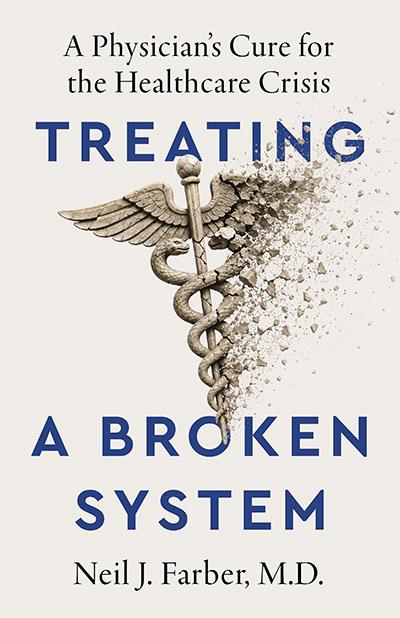 In Treating a Broken System: A Physician’s Cure For the Healthcare Crisis (2026, Boyle & Dalton), Farber draws on more than four decades of medical practice,
research, and education to examine how physician burnout and poor communication delay
care and erode patient trust. He shares how a decades-long push toward efficiency
and maximizing profits resulted in a system of what he calls “assembly-line medicine”
that leads to physician burnout, high error rates, and delays in patient care.
By introducing patient stories and framing their experiences with data, he explores how the American healthcare system arrived at this point — and what he feels is necessary to teach patients how to advocate for themselves and guide physicians and healthcare administrators to adopt programs that reduce practitioner burnout.
Farber is optimistic that empowering patients, building communication programs into
physician training curricula, and more open collaboration in healthcare systems can
turn the tide for the benefit of every constituent.
“We have everything we need to solve these problems,” says Farber. “We just have to
agree to work together to do it.”
Farber is donating all proceeds from the book to the Academy for Communication in
Healthcare and the Patient-Centered Outcomes Research Institute, organizations dedicated
to improving communication between physicians and patients.
Related Articles
November 11, 2026
From Getting Back on Track to Giving Back: Josh Brown ’28
For Josh Brown ’28, repeated trips to his hometown sports medicine physician gave him more than a path back to competition. They gave him a path toward his future. Now a biology major at F&M, Brown is working toward becoming a physician assistant (PA). “I wanted to be able to make that same difference in people’s lives,” Brown said.
November 9, 2026
From Lancaster Streams to Canadian Lakes: Stephanie Sexton ’27 Puts Science into Action
When she arrived at F&M, Stephanie Sexton ’27 knew she wanted to study environmental science and engage in hands-on fieldwork. This summer, she turned that ambition into action, helping drive cutting-edge initiatives in F&M’s backyard while contributing to a multi-year research project abroad.
November 4, 2026
Raise Our Game Secures Record Support for Diplomat Athletics
This October, Franklin & Marshall alumni, parents, students, and fans raised a record-breaking $685,000 during Raise Our Game, F&M’s annual campaign to support Diplomat Athletics and our student-athletes.