
F&M Stories
Students Make Waves as Susquehanna River Watchdogs
On any given day this summer, Roselyn Ovalles ’26 and Grace Uwezukwe ’26 found themselves wading thigh-high into the waters of the Susquehanna River and its many local tributaries.
The Franklin & Marshall seniors spent several weeks interning with Lower Susquehanna Riverkeeper Association (LSRA), a watchdog nonprofit dedicated to improving the ecological health of the Susquehanna River watershed and the Chesapeake Bay.
"I am a strong believer that all communities deserve access to swimmable, fishable
and drinkable waters."
At F&M, you don’t have to travel far for immersive research experiences. The College is located about 12 miles from the nearest access point to the Susquehanna (Columbia), and even closer to its many tributaries. Headquartered in nearby Wrightsville, LSRA protects waterways spanning from Selinsgrove, Pa., to the Chesapeake Bay in Havre De Grace, Md. The territory is roughly 8,527 square miles.
Both students were tasked with community engagement and monitoring of bacteria levels. Ovalles and Uwezukwe teamed up with LSRA staff and volunteers for weekly collection of water samples at 22 sites along the Susquehanna.
Roselyn Ovalles and Grace Uwezukwe collect water samples in the Little Conestoga Creek
near Marietta Ave. in Lancaster, Pa. (Photo by Deb Grove)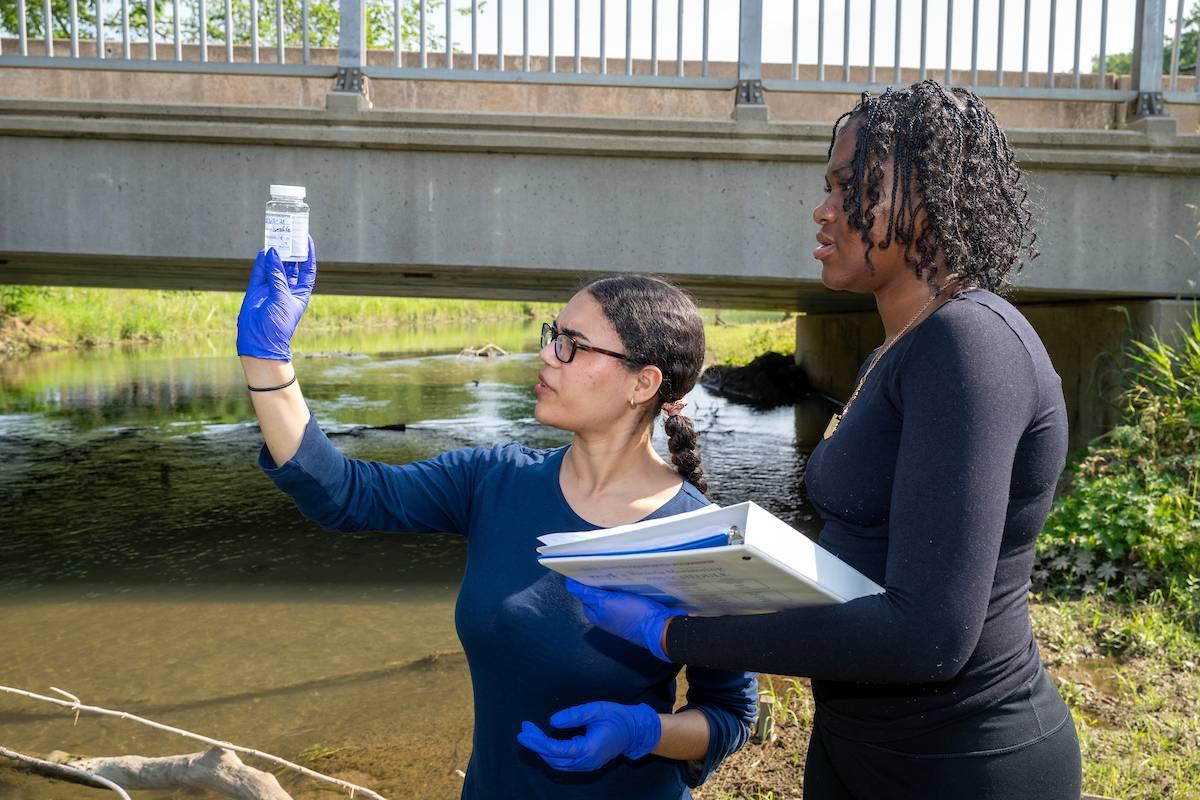
“I'd go to the first site at 8:30 a.m., put on my thigh-high waders and start entering the date, time and location on data sheets and water sample jars,” said Uwezukwe, a double major in business, organizations and society and government with a minor in environmental studies.
Samples were prepared and incubated for at least 18 hours before being tested the next day under UV light. The interns would review entries and outcomes for final approval before determining whether the sample sites were safe for recreational activity.
Bright lab coats are worn so that if fibers are found in water samples, researchers
can know whether or not they came from lab coats. (Photo by Deb Grove)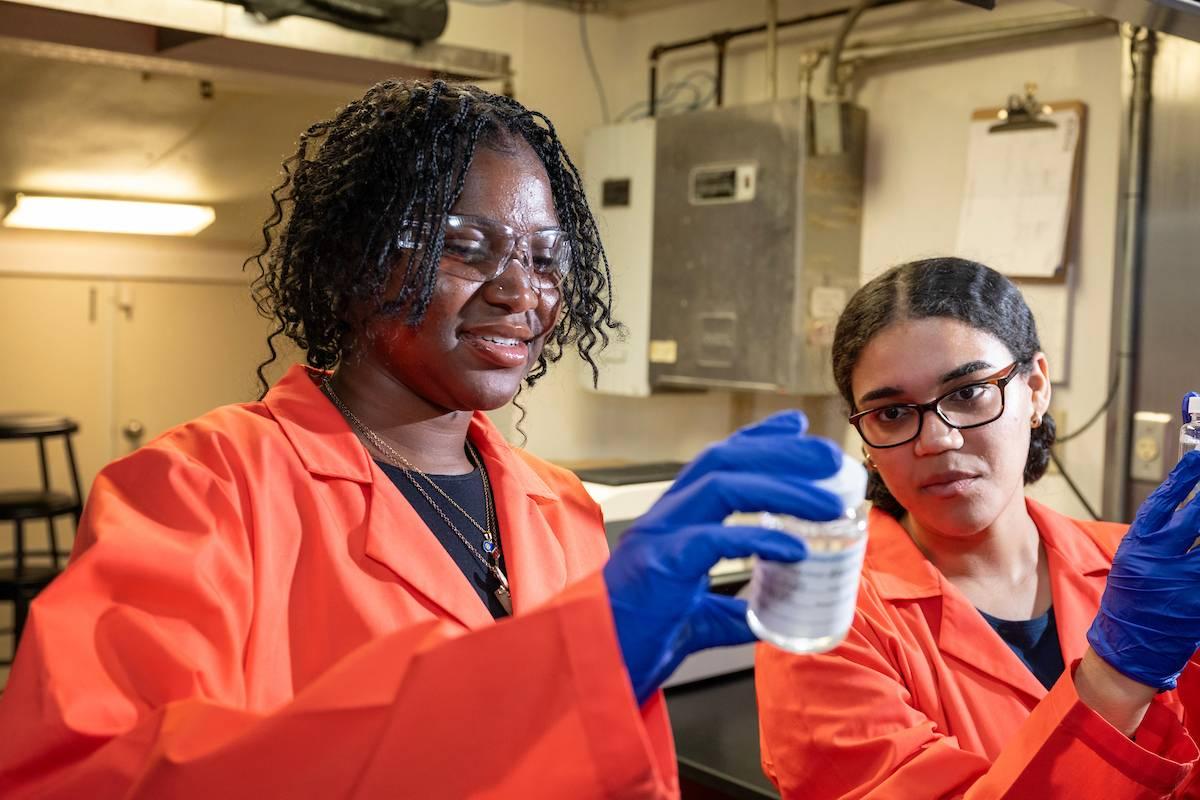
Other tasks included riverside cleanups, macroinvertebrate studies and community kayaking trips. Both students found meaning in the work that extended beyond their majors.
“I was involved in the Spanish translation process, ensuring that members of the nearby Hispanic communities were able to easily access information and healthy swimmable recreational waters,” Ovalles said.
"It was eye-opening to learn personally how environmental circumstances quickly affect
public health."
“It was eye-opening to learn personally how environmental circumstances quickly affect public health,” Uwezukwe said, noting how much E. coli levels can fluctuate in just one week due to weather conditions.
Uwezukwe found a surprising link to her career ambitions in finance: advocating for environmental sustainability among corporations.
“I now have a greater understanding of how enterprises, organizations and industries affect the environment, particularly through climate change.”
Roselyn Ovalles collects water samples in the Little Conestoga Creek near the Landis
Mill Covered Bridge in Neffsville, Pa. (Photo by Deb Grove)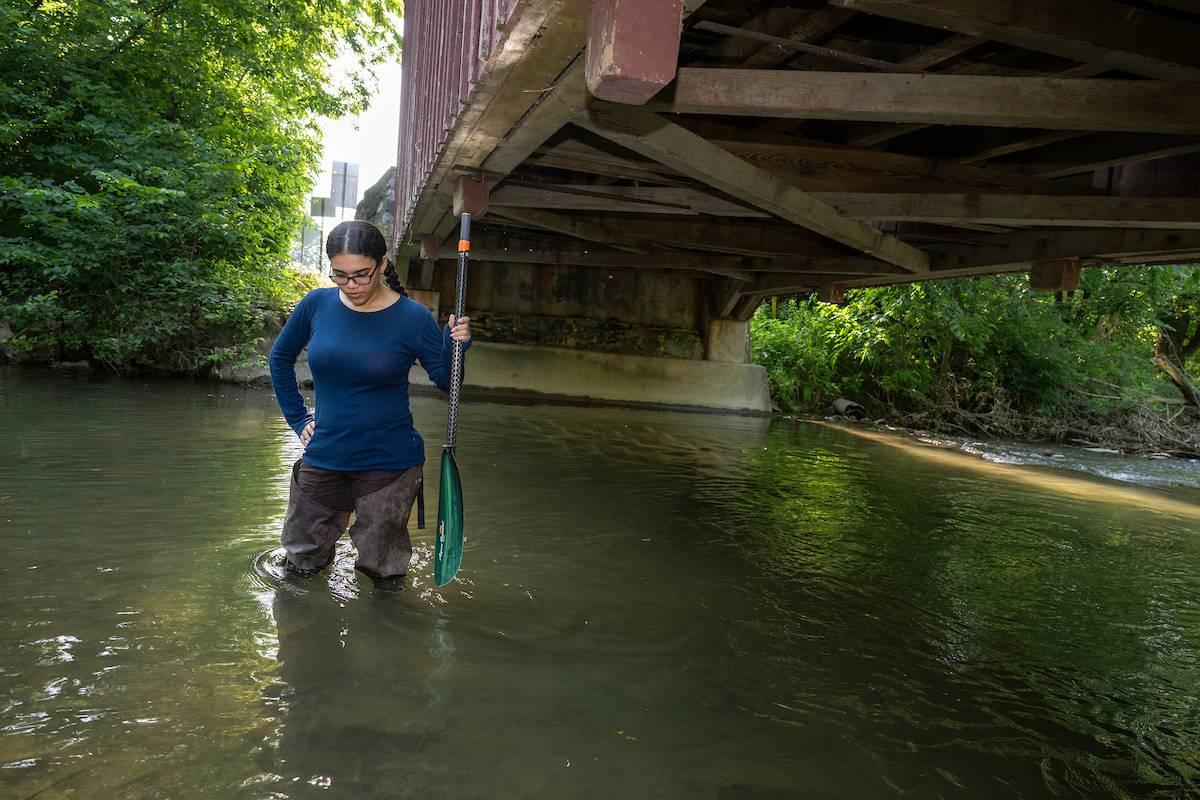
Roselyn Ovalles '26
- Double major: Earth and environmental science, Spanish
- Hometown: York, Pa.
How has F&M prepared you for this internship?
The earth and environmental science department provides an interdisciplinary approach to the sciences, ensuring that students are prepared for all sides of our real-world experiences – from making connections with the community to retaining knowledge from class and applying it to the outside world. It has also allowed me to feel more confident approaching environmental issues and has allowed me to carry myself with pride.
Grace Uwezukwe observes the Little Conestoga Creek near Marietta Ave. in Lancaster,
Pa.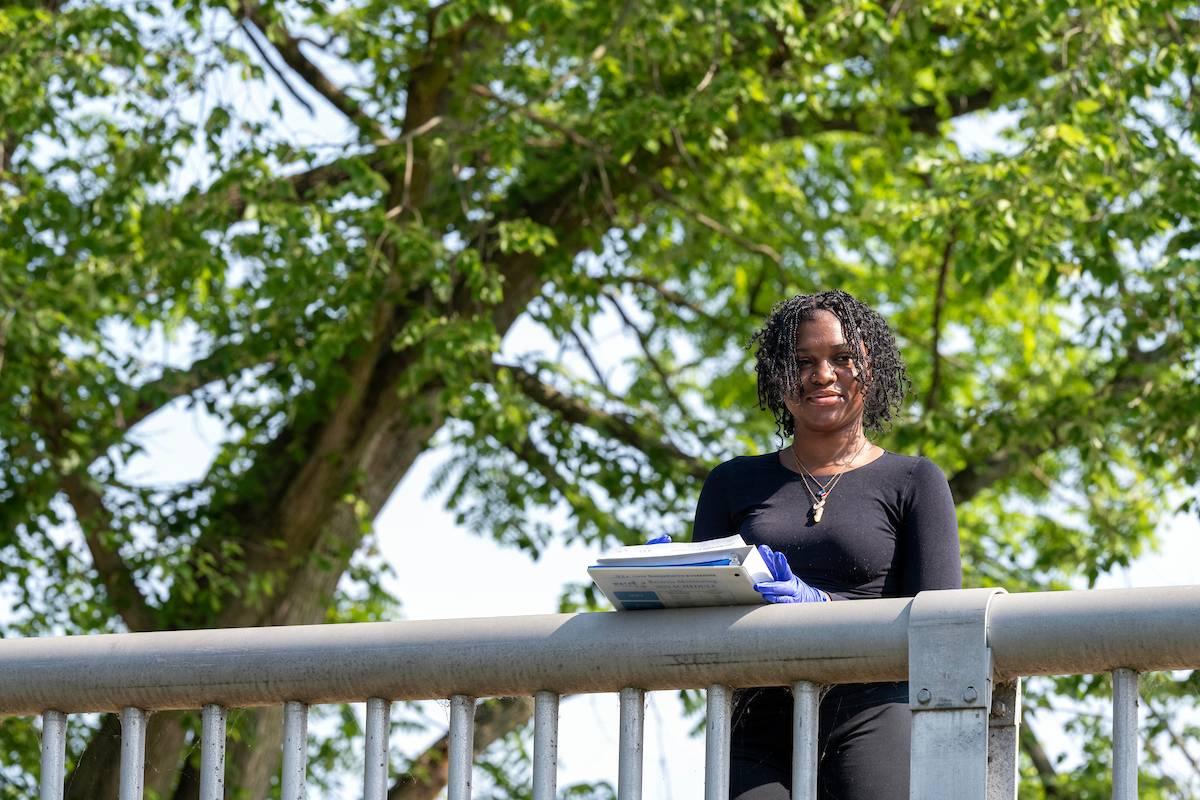
Grace Uwezukwe '26
- Double major: Business, organizations and society, government
- Minor: Environmental studies
- Hometown: Newark, N.J.
How has F&M prepared you for this internship?
My education at F&M, particularly my environmental studies minor, thoroughly prepared me for this experience. Courses such as “Environment and Human Values” helped me build a solid foundation in environmental sustainability and the public health hazards posed by bacterial pollution in streams. Lab-based training helped me learn lab safety, bacterial testing methodologies and responsible management of environmental data.
Related Articles
September 30, 2026
Patricia E. Harris '77 to Receive Inaugural Benjamin Franklin Distinguished Innovator Award
This fall, Franklin & Marshall College will debut a new honor and celebrate the career and leadership of one of its most accomplished graduates: Patricia E. Harris '77, Bloomberg Philanthropies CEO, former first deputy mayor of New York City, and Trustee Emerita.
September 24, 2026
F&M Poll: Economic Concerns Shape Voter Attitudes in Pa. 7th and 10th Districts
The preferences of registered voters living in Pennsylvania’s 7th and 10th Congressional Districts show patterns that are similar to state and national data that favor Democratic candidates, according to the latest Franklin & Marshall College Poll.
September 23, 2026
F&M Joins Project Pericles, Amplifying Community Partnerships in Lancaster
Franklin & Marshall has been selected to join Project Pericles, an honor that underscores the College’s commitment to fostering meaningful impact in its home city of Lancaster.