
iF&M Academics
The iF&M Academic Experience
- Learning Location: The ASE Study Center — Nelson House — is located in the heart of Bath, within 20 minutes’ walking distance of all of our student residences. And many of our residences are just a block or so away from the center.
- Class size: All classes will have 14 or fewer students
- Study and prep work: Approximately 6 hours per week per course
- Hours spent in direct learning: 48 per course (192 hours total)
- Assessment: You will be graded based on written papers, quizzes, and in-class participation, and a final exam for some classes.
- Credits: 1 per course (4 total)
- All credits are fully approved by Franklin & Marshall College and count toward your 4-year F&M degree.
Your Onsite Faculty Mentor
The onsite faculty mentor for Fall 2027 is Dan Ardia, professor of biology. Professor Ardia teaches courses on animal behavior, urban ecology, and conservation biology. His research investigates how animals respond to a rapidly changing environment, both close to home and around the world. Professor Ardia and his students investigate the impact of urbanization, climate change, land management, and human recreation on birds and mammals.
Course Selection
Like all first-year students at F&M, you will participate in a core course that introduces you to the critical thinking and writing skills you will need to be successful throughout your F&M education. That Connections course will be taught by your onsite faculty mentor, Dan Ardia, professor of biology.
Each of the iF&M courses has an “Exploration” designation, indicated by a letter or acronym following the course title (A, H, S, or NSP). Exploration requirements constitute F&M’s general education program, and every student is required to fulfill these courses as part of the degree program. Exploration courses are designed to expose you to a broad range of disciplines and forms of intellectual inquiry, regardless of the major you ultimately choose. The iF&M program allows you to complete several Exploration requirements, keeping you on track for graduation and in step with your peers on the Lancaster campus.
The letter designations following each of the course titles indicate the course types:
A: Arts
H: Humanities
S: Social Sciences
NSP: Natural Science in Perspective
Take a look at our tentative schedule for the Fall 2027 semester:
Connections Course: Animals, Nature, Empire, and Human Identity
Dan Ardia, professor of biology
This course examines how humans have understood, used, and assigned meaning to other animals, and how political and cultural power have shaped those relationships. Drawing on history, art, literature, philosophy, and ecology, students will trace how European empire determined which animals were named, studied, and valued, as well as whose knowledge of the natural world was ignored. Field excursions to natural history collections and wildlife sites around Bath bring those questions into direct contact with the landscape.
Nature in the City: Urban Ecology and Human-Environment Relations (NSP)
Dan Ardia, professor of biology
This course examines how cities function as ecological systems and how people perceive, use, and assign meaning to the natural world around them. Students engage with the science of urban ecology alongside urban planning, environmental psychology, and landscape history, asking how human decisions shape biodiversity, green space, and access to nature. Bath and the surrounding region provide an exceptional range of field sites, from designed landscape gardens to active rewilding projects.
UK-US Comparative Politics and Government (S)
ASE Faculty
The United States and the United Kingdom share assumptions about freedom, democracy, and the rule of law. Yet political and historic evolution, institutions, and constitutional choices have led to very different regimes in the two countries. This course will examine these contrasting systems of democratic government and, through a comparison of the two constitutions and sets of institutions, explore their contemporary politics.
Landscape and Literature (H)
ASE Faculty
This course will introduce you to the wide variety of English literature across the centuries. From the Medieval period to Modernism, from the Romantics to the contemporary, you'll explore written forms that include poetry, prose, plays, and essays in relation to their wider social, historical, linguistic, and cultural contexts. The course will teach you how to perform a detailed close textual analysis and it will also provide an introduction to critical theory.
Art and Architectural History (A)
ASE Faculty
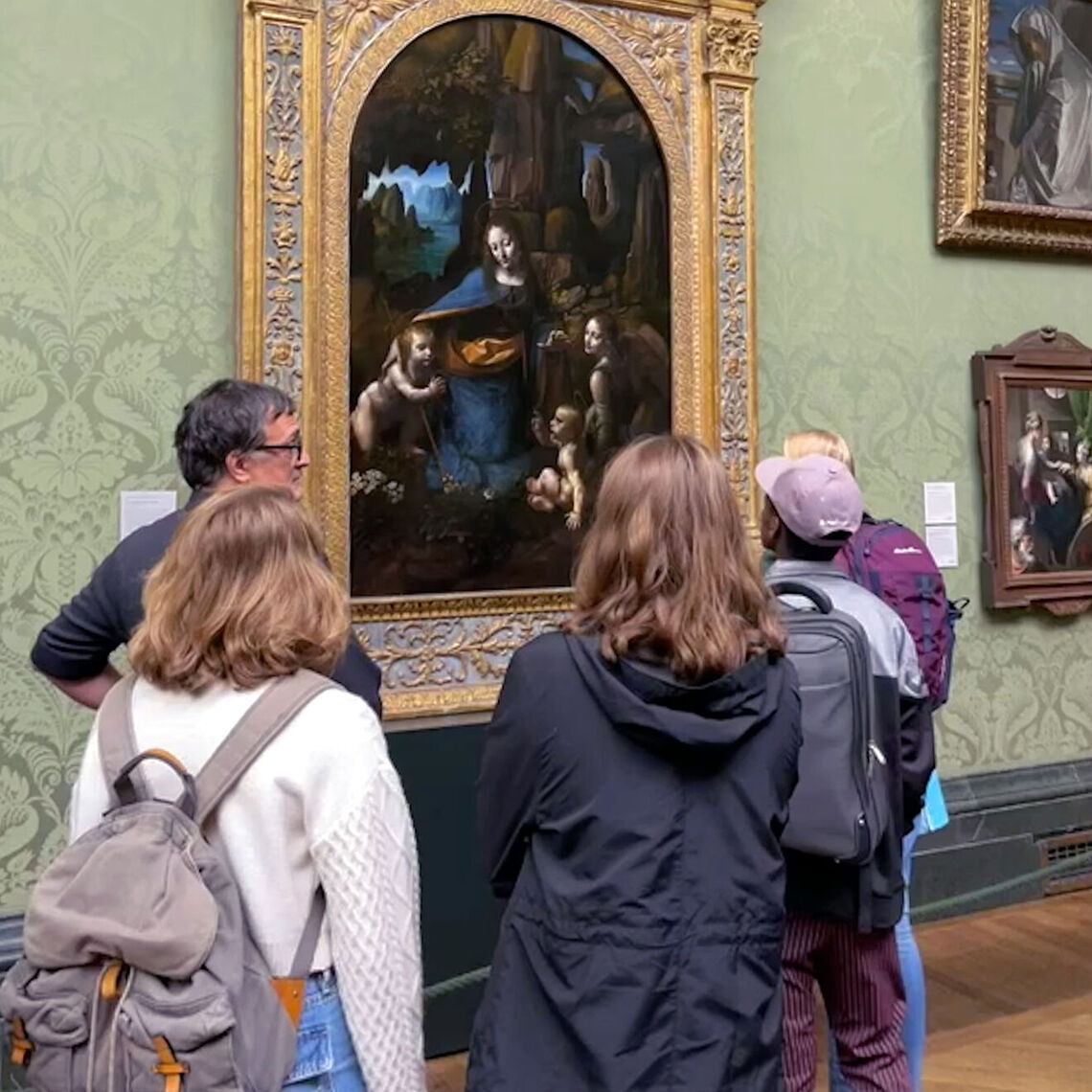
This course offers an overview of art and architectural history from Classical times through to the twentieth century. We will make full and extensive use of your stay in the UNESCO-World Heritage city of Bath to explore the museums, art galleries and architecture of this beautiful city. Local galleries and visits to the Ashmolean Museum (Oxford) and the National Gallery (London) will help to focus our learning, and the course will provide a general introduction to western art and teach you methods of approaching and analysing visual culture, techniques for writing about art and architecture, and develop research skills.
The Life and Literature of Jane Austen (H)
ASE Faculty
Jane Austen’s works, although relatively few, are crammed with details about her world, her experience and her ideas. Far from being simply ‘marriage plots’, they speak volumes about Georgian England. Here you will find war, economics, class struggles, consumerism, country houses, urban landscapes, enlightenment ideals, gender rights and myriad unforgettable characters. Through the close study of Austen’s work, this course will examine these themes and much more - all against the backdrop of the historic city of Bath itself.