
F&M Stories
From Passion to Podcast
Senior Mia Gwirtzman has always been an artist.
But after a semester at Franklin & Marshall College, she began to realize the broader implications of art.
"Franklin & Marshall has such an awesome liberal arts program and a flexible sort of curriculum that I was able to customize my learning," she said.
That enabled Gwirtzman to create a joint major in art history and public health. Thanks to funding from the Marshall Fellows Program, she traveled to London over spring break to complete research for a podcast focused on both fields.
After returning, Gwirtzman recorded the audio on campus with a podcast kit available for any F&M student to rent. A media studio in Old Main provided a sound-proof space.
Below, learn how Gwirtzman's academic passions led her to London.

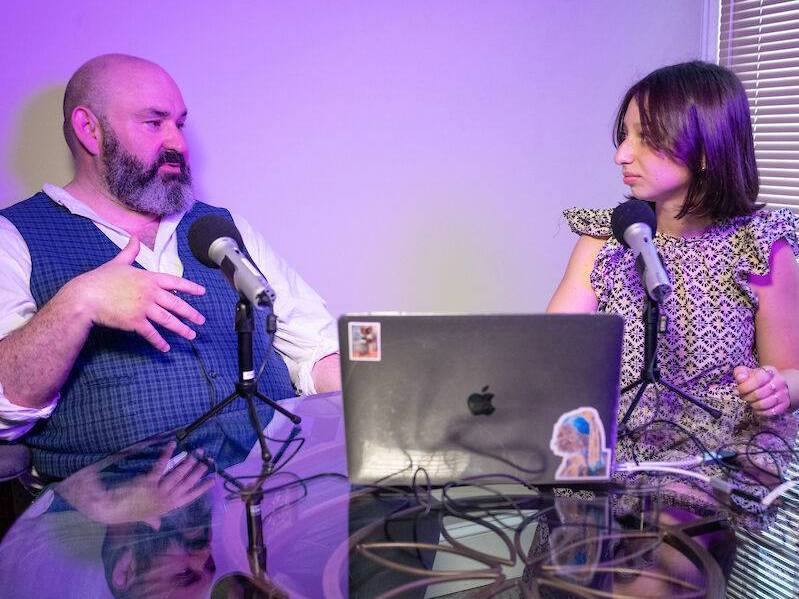
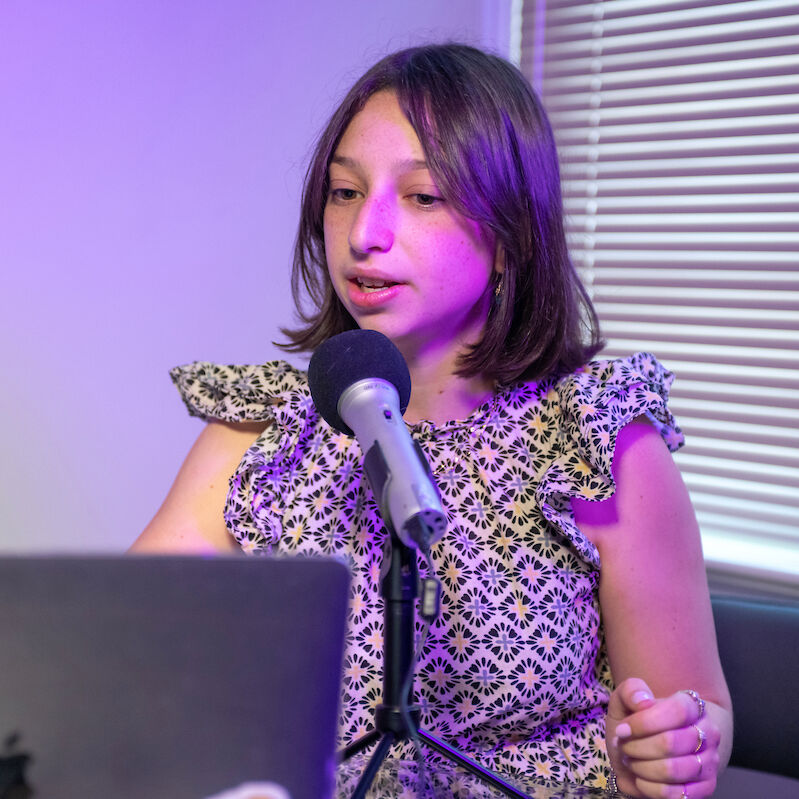
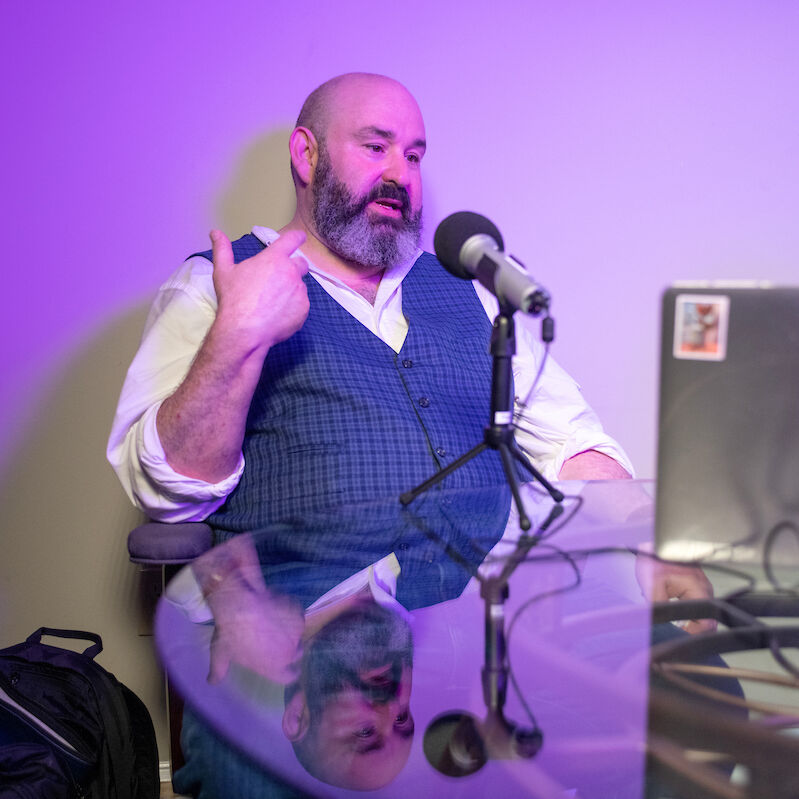
Mia Gwirtzman '24
- Hometown: Hewlett, N.Y.
- Major: Art history & public health (joint major)
- See her art: Instagram.com/throwingemshade
Tell us about your Marshall project.
This spring, I had the most amazing opportunity to travel to London on the Marshall Fellowship. London is home to the Wellcome Collection, a vast library filled with primary and secondary medical sources.
During my trip, I focused my research on the larger ethical question of displaying medical information through the lens of the HIV/AIDS epidemic. When I got back to the states, I consolidated my research into an episode of a podcast.
How did you combine art history and public health for this project?
I took an art history course at F&M — "Survey of Art History" — and I fell in love. I was always a creative person. I love trying out new mediums: drawing, painting; I do it all. So I thought art history would be a great way to carry out my passion while learning about a historic time period.
[Marshall funding] gives you a lot of freedom to make a meaningful project. Originally, my plan was to do an art installation. Before public health, before everything, I'm an artist.
That all changed when I was driving back to campus one day, listening to a public health podcast. They were talking about the history of epidemics. And meanwhile, I was taking my first public health class, "Public Health in the United States," with Nicholas Bonneau [adjunct assistant professor of history].
It was that moment on the Pennsylvania Turnpike where I had this brilliant idea: What if I make a podcast? What if I combine my two interests — history and public health?
Why did you choose F&M?
It was honestly love at first sight. I had never felt so connected to a school. When I was walking the campus, I really did see myself here. I knew that I was going to thrive here.
I could not have ever expected this amount of support and research opportunity as a humanities scholar, as a public health student. I wish I could go back and tell my younger self, "Although you're excited, get more excited about how much you'll learn, change and adapt."
"F&M has such an awesome liberal arts program and a flexible sort of curriculum that I was able to customize my learning."
Related Articles
September 30, 2026
Patricia E. Harris '77 to Receive Inaugural Benjamin Franklin Distinguished Innovator Award
This fall, Franklin & Marshall College will debut a new honor and celebrate the career and leadership of one of its most accomplished graduates: Patricia E. Harris '77, Bloomberg Philanthropies CEO, former first deputy mayor of New York City, and Trustee Emerita.
September 2, 2026
‘I Find It Important and Necessary’: Uncovering Lancaster's Hidden History
For Frances Taylor ’27, the Lancaster Vice project checked all the right boxes: collaborating with a faculty mentor, exploring how their two majors converge in the real world, and unearthing stories the city had forgotten. “I enjoy learning about hidden history that popular culture often overlooks,” Taylor said.
August 10, 2026
‘For the Love of People and Art’: F&M Student Interns at the Mount Gretna Art Show
Layla Beyer ’27 is getting a firsthand look at how communities unite through a shared love of the arts. Beyer, who studies history of art and architecture and theatre, is interning with the Mount Gretna Outdoor Art Show. “It is really inspiring to see this kind of work get done for the love of people and art,” she said.