
F&M Stories
Tackling the Impacts of Ocean Climate Change Through High-Performance Computing
Pennsylvania may be landlocked, but geography is no barrier for this Franklin & Marshall marine biochemist. By leveraging a powerful supercomputer, Peter Fields and his student researchers are tackling ocean climate change from the heart of F&M’s home city of Lancaster.
Fields, the Dr. E. Paul & Frances H. Reiff Professor of Biology, researches how marine organisms adapt to extreme environmental conditions. For the past decade, he has been investigating coral bleaching, the phenomenon where corals eject their symbiotic algae in response to environmental stress.
“This happens especially often in response to high temperatures,” Fields said. “As the ocean warms, reef-building corals are bleaching and dying, leading to the loss of reef ecosystems in the tropics. I would like to understand better why bleaching happens, and whether the symbiosis can evolve to better withstand high temperatures.”
F&M’s High-Performance Computing (HPC) cluster is a critical tool in Fields’ research, acting as a virtual laboratory where he and his student researchers conduct biological “stress tests” on proteins essential to coral survival. The cluster’s graphic processing units (GPUs) generate visual simulations of these proteins, which allow the team to track the movement of every single atom to see how they react under heat.
“It’s very much like a frame-by-frame movie of how the atoms in a protein move around over time,” Fields said. “These simulations involve an insane number of calculations. In order to create our complete trajectories, we need a computer powerful enough to recalculate the position of hundreds of thousands of atoms 50 to 100 million times.”
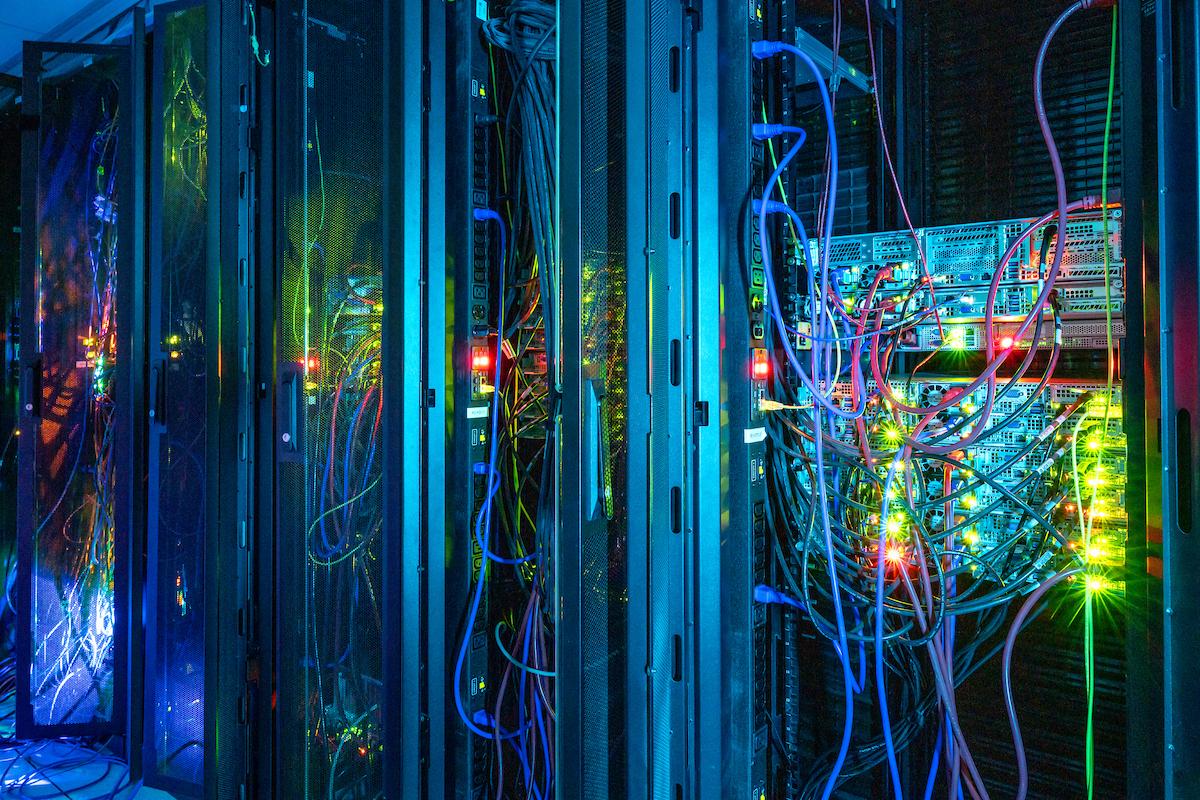
F&M’s High-Performance Computing (HPC) cluster is a critical tool in Peter Fields’ research, acting as a virtual laboratory where he and his student researchers conduct biological “stress tests” on proteins essential to coral survival.
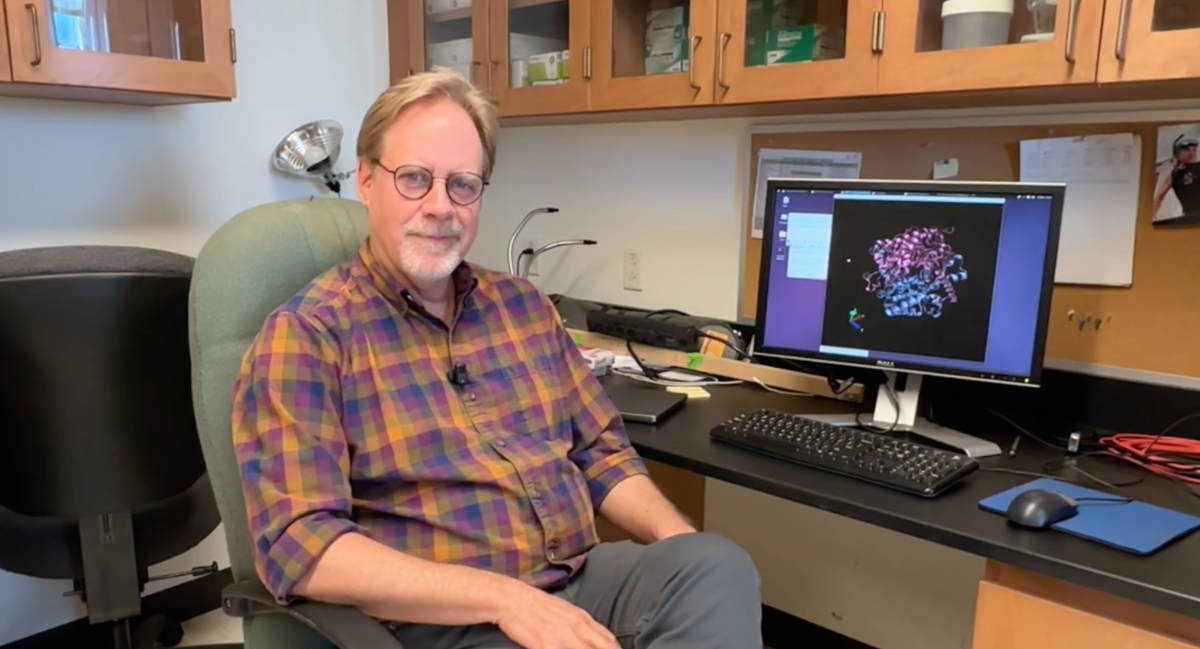
Fields researches how marine organisms adapt to extreme environmental conditions. For the past decade, he has been investigating coral bleaching, the phenomenon where corals eject their symbiotic algae in response to environmental stress.
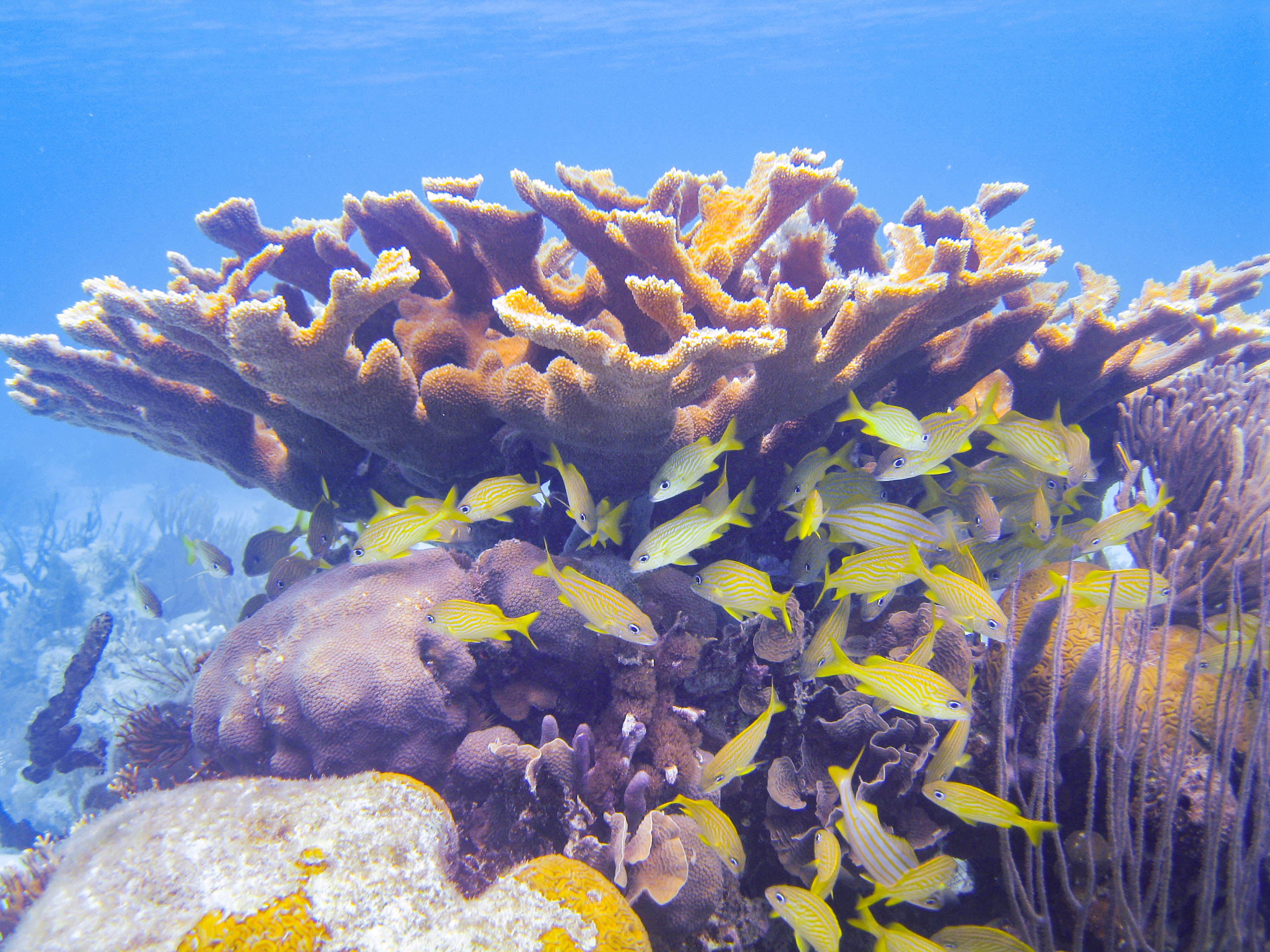
“This happens especially often in response to high temperatures,” Fields said. “As the ocean warms, reef-building corals are bleaching and dying, leading to the loss of reef ecosystems in the tropics. I would like to understand better why bleaching happens, and whether the symbiosis can evolve to better withstand high temperatures.”
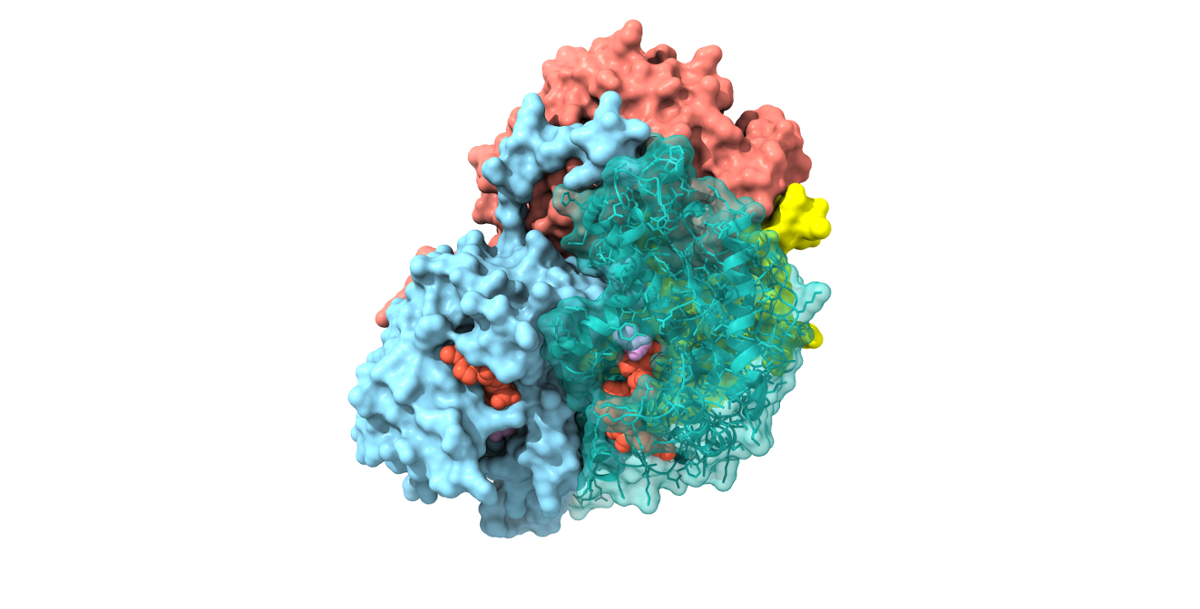
The cluster’s graphic processing units (GPUs) generate visual simulations of proteins essential to coral survival. This specific simulation features Lactate dehydrogenase, an important metabolic enzyme, from the very cold-adapted Antarctic icefish Caenocephalus aceratus.
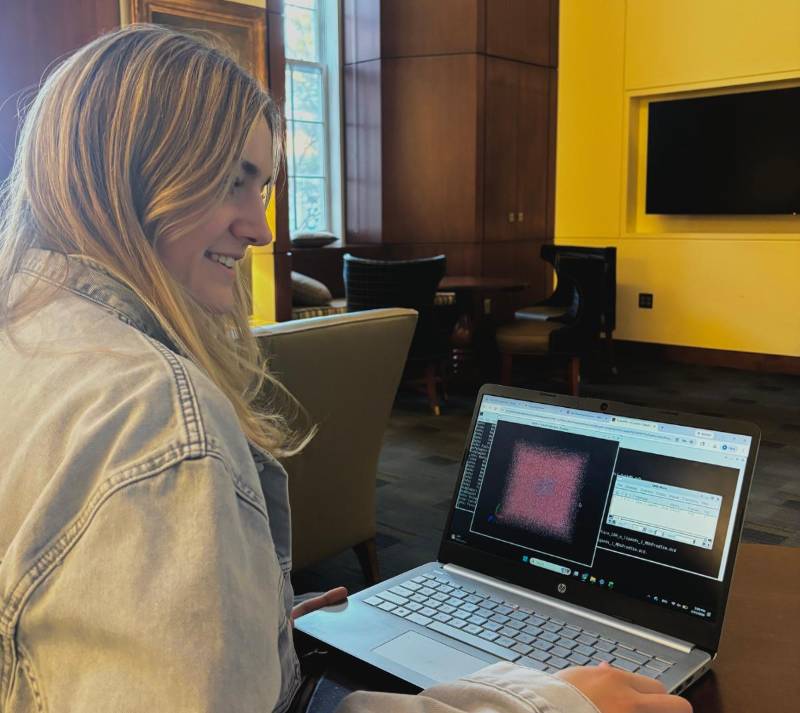
Kelly Kaltenhauser ’26, a biology major, studied how warm- and cold-adapted fish evolved to function at extreme temperatures. “F&M’s research computing cluster has made my research run much more smoothly and efficiently,” she said.
For Sydney Rosato ’27 and Kelly Kaltenhauser ’26, the cluster’s immense processing power unlocks the distinctive opportunity to test—in a virtual environment—how processes at the molecular level impact survival. Rosato, a biology and Spanish double major, examined whether genetic tweaks can prevent coral bleaching. Kaltenhauser, a biology major, studied how warm- and cold-adapted fish evolved to function at extreme temperatures.
“F&M’s research computing cluster has made my research run much more smoothly and efficiently,” Kaltenhauser said. “It has allowed me to manage large simulation files and analyze enzyme dynamics without the limitations of my personal computer.”
Rosato noted the cluster was integral to efficiently gathering experimental data.
“Preparing each data-heavy simulation requires an incredible amount of computing power and can take weeks to complete,” she said. “The computing cluster was able to handle the computing requirements of creating additional simulations, and it significantly shortened the completion time, making it easier for me to gather sufficient data within a single semester.”
This type of high-caliber research empowers F&M students to unleash their curiosity while learning proper research techniques from expert, published researchers—experiences typically reserved for graduate students.
“The most fascinating aspect of research at F&M is the close collaboration between students and professors,” Kaltenhauser said. “Professors truly value students getting hands-on experience, which creates a supportive environment that encourages active learning and partnership.”
Rosato added that the autonomy to test her own theories, backed by the steady mentorship of a faculty expert, strengthened her ability to independently recognize and develop branching research questions and methods of data analysis.
“Professor Fields served as a great mentor by actively addressing any questions I had and filling the gaps in my knowledge in order to prepare me for conducting research,” she said.
How do you find a needle in a galactic haystack? Fronefield Crawford is harnessing
the computational strength of F&M’s High-Performance Computing (HPC) cluster to pinpoint
the location of rotating stars in our neighboring galaxies. (Image credit: NASA)Mapping the Cosmos with F&M’s Supercomputer
Related Articles
September 2, 2026
‘I Find It Important and Necessary’: Uncovering Lancaster's Hidden History
For Frances Taylor ’27, the Lancaster Vice project checked all the right boxes: collaborating with a faculty mentor, exploring how their two majors converge in the real world, and unearthing stories the city had forgotten. “I enjoy learning about hidden history that popular culture often overlooks,” Taylor said.
August 18, 2026
Biology Professor Brews Up New Beer Science Course
F&M Professor of Biology Rob Jinks concocted the first course of its kind this summer: Brewing Science. The one-month intensive course and corresponding labs introduced students to the science and art of crafting beer from four fundamental ingredients: water, malted grain, hops, and yeast.
July 20, 2026
F&M Experts Weigh in on Wildfire Air Quality
As Canadian wildfire haze blanketed the mid-Atlantic last week, local news sources turned to experts at F&M for air quality and public health insights. Professor of Geosciences Robert Walter '75 has been monitoring Lancaster’s air-quality index via a sampler machine atop of the Alumni Sports & Fitness Center.