
F&M Stories
Mapping the Cosmos with F&M’s Supercomputer
How do you find a needle in a galactic haystack? Fronefield Crawford is harnessing the computational strength of F&M’s High-Performance Computing (HPC) cluster to pinpoint the location of rotating stars in our neighboring galaxies.
“Radio pulsars are compact rotating stars that emit radio waves as pulses that can be detected with large radio telescopes,” said Crawford, the Charles A. Dana Professor of Physics and Astronomy. “These signals are generally very faint, and sophisticated analysis packages must be applied to detect them.”
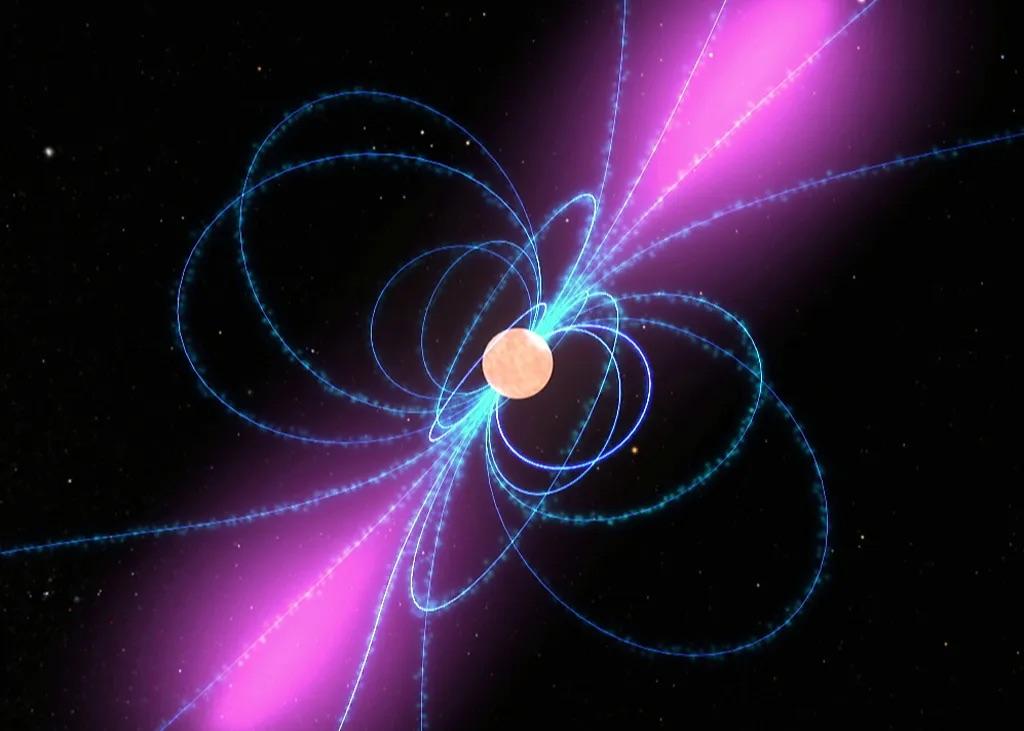
An artist's illustration of a pulsar, a compact rotating star that emits radio waves as pulses. (Image credit: NASA)
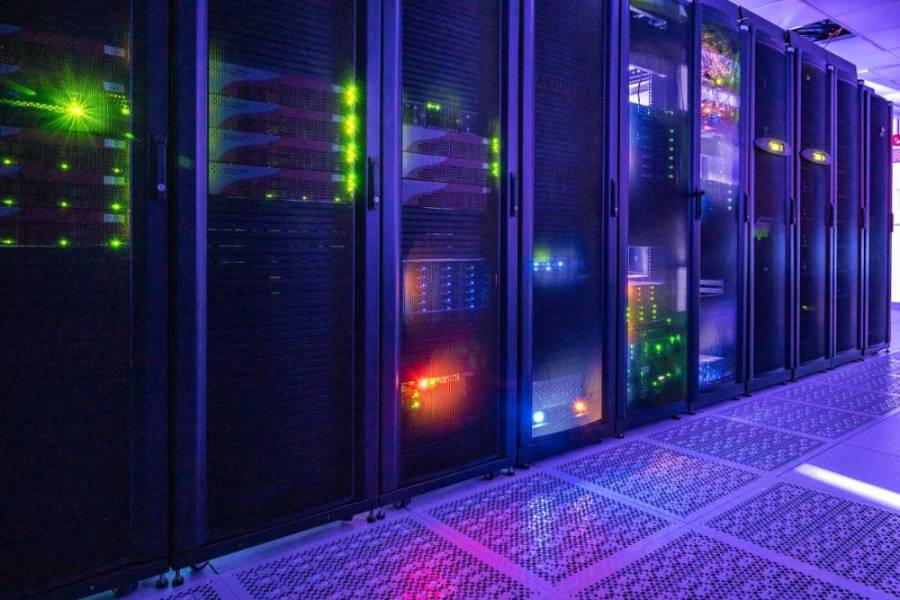
F&M’s High-Performance Computing (HPC) cluster provides the vital capacity for Crawford to process the massive datasets required to find these signals. This technology completes in a single week a task that once spanned months.
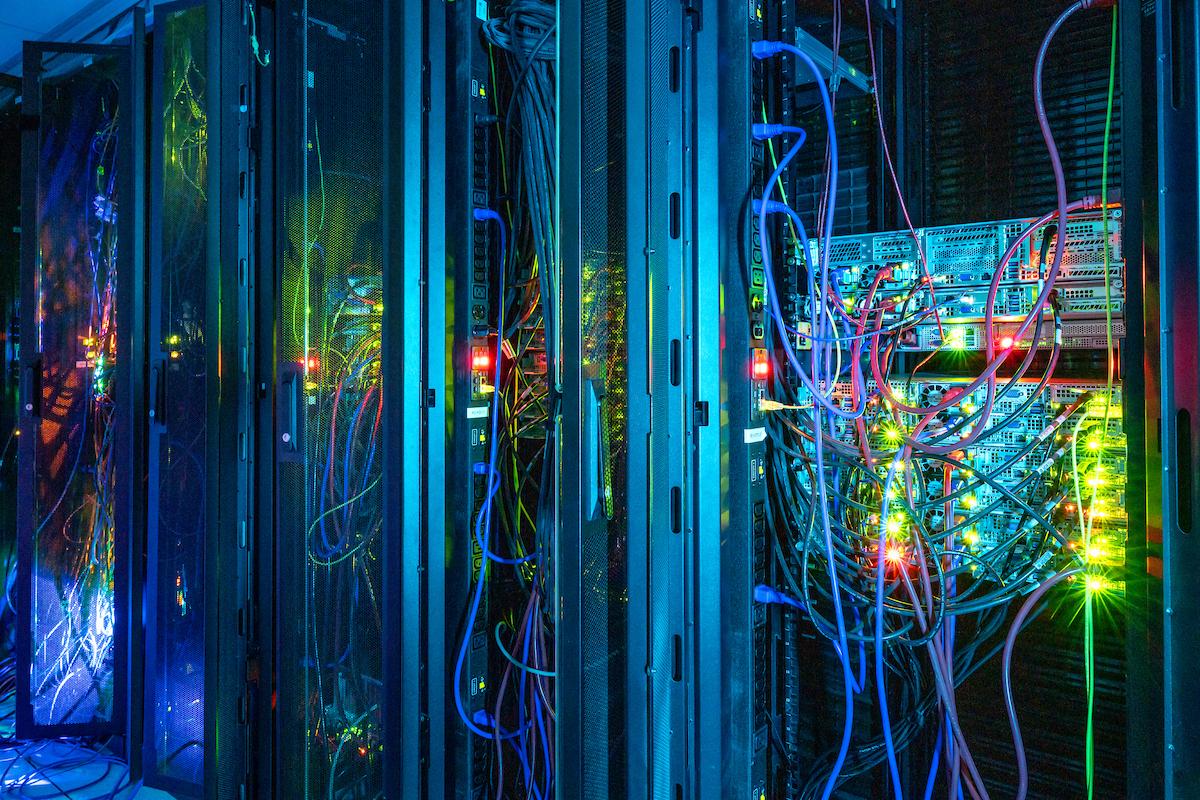
“These are deep, sensitive observations that are quite long and require a lot of computational time to analyze,” Crawford said. “The cluster has greatly sped up the time it takes to do this sort of searching.”
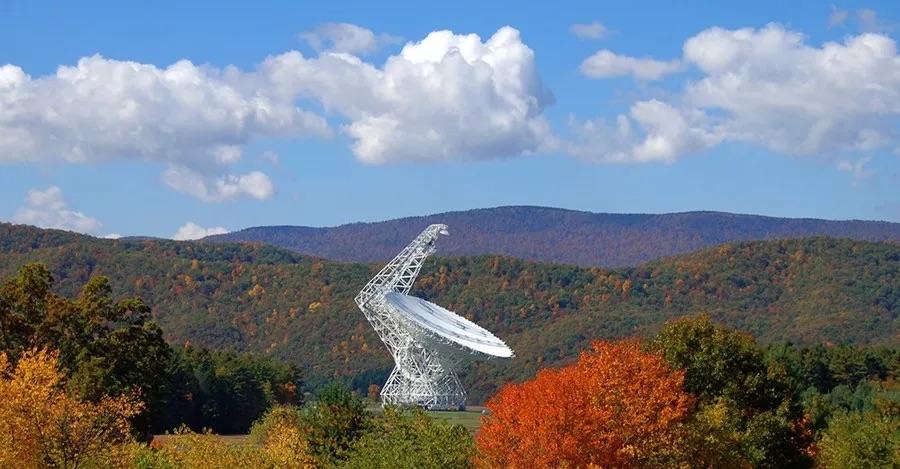
Crawford and his students collect data via the Robert C. Byrd Green Bank Telescope, which is the largest fully steerable telescope in the world. It is located at the Green Bank Observatory in West Virginia. (Image credit: GBO/AUI/NSF)
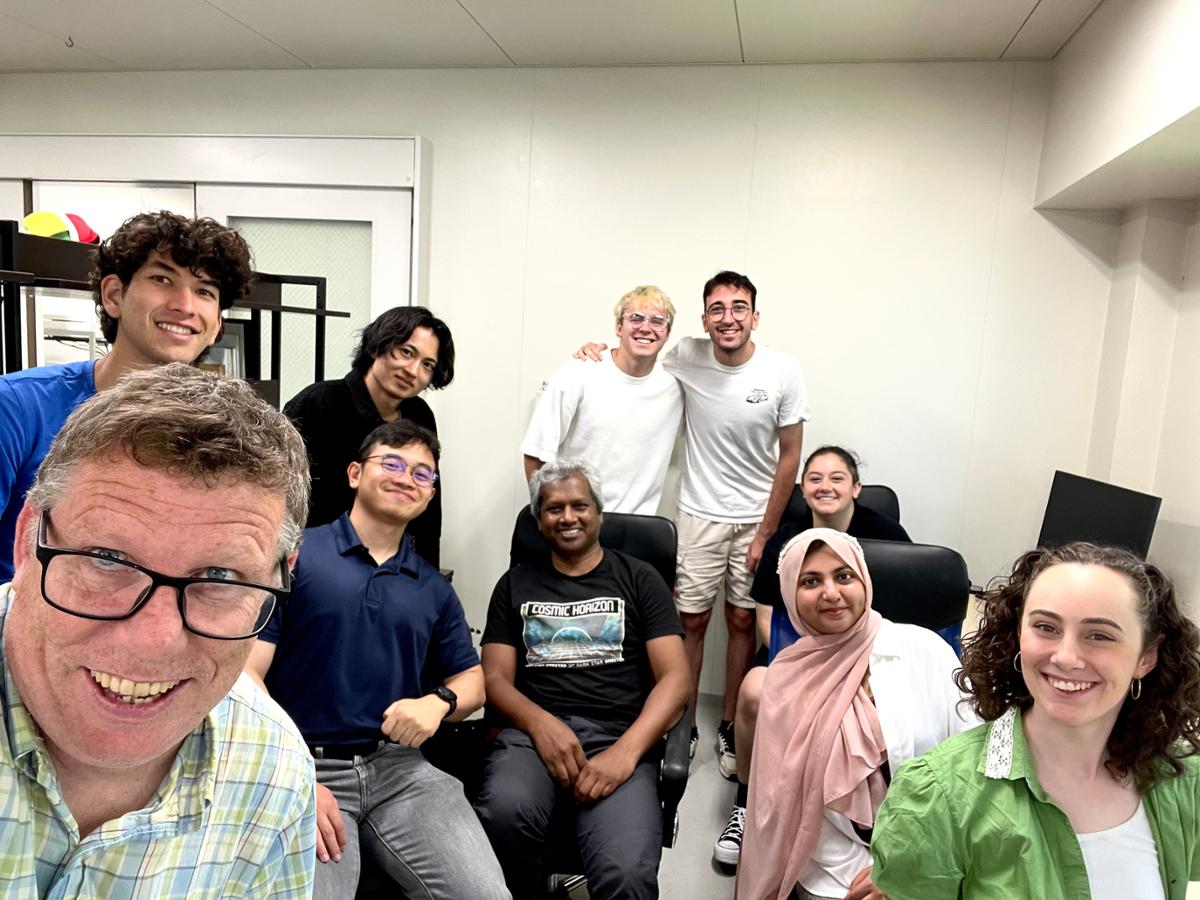
Crawford’s (left) galactic exploration went global when he took Haunah Thomas '27 (right) and a team of student researchers to Japan to collaborate with peers at Kumamoto University in Kumamoto.
F&M’s HPC cluster provides the vital capacity for Crawford to process the massive datasets required to find these signals. This technology completes in a single week a task that once spanned months.
“These are deep, sensitive observations that are quite long and require a lot of computational time to analyze,” Crawford said. “The cluster has greatly sped up the time it takes to do this sort of searching.”
Crawford enlists students on his quest to map the cosmos, offering his undergraduate mentees a distinctive opportunity to experience innovative technology firsthand while researching alongside a faculty expert. Students like Haunah Thomas, a double major in astrophysics and English (creative writing), sift through the cluster’s processed data to locate promising signals. Crawford’s galactic exploration even went global when he took Thomas and a team of student researchers to Japan to collaborate with peers at Kumamoto University in Kumamoto.
“It’s been exciting to see what science actually looks like,” Thomas said. “Not just in textbooks and manufactured labs, where there’s a result you’re supposed to get. It’s exciting to see that we don’t know exactly what the data is going to reveal.”
Student Research at F&M
At F&M, you’ll work and learn side-by-side with faculty to test your ideas — not just read or talk about them. We prioritize the transformative power of hands-on learning to enhance your professional development experiences, including opportunities to participate in groundbreaking research.
Explore research at F&M »Related Articles
September 2, 2026
‘I Find It Important and Necessary’: Uncovering Lancaster's Hidden History
For Frances Taylor ’27, the Lancaster Vice project checked all the right boxes: collaborating with a faculty mentor, exploring how their two majors converge in the real world, and unearthing stories the city had forgotten. “I enjoy learning about hidden history that popular culture often overlooks,” Taylor said.
August 18, 2026
Biology Professor Brews Up New Beer Science Course
F&M Professor of Biology Rob Jinks concocted the first course of its kind this summer: Brewing Science. The one-month intensive course and corresponding labs introduced students to the science and art of crafting beer from four fundamental ingredients: water, malted grain, hops, and yeast.
July 20, 2026
F&M Experts Weigh in on Wildfire Air Quality
As Canadian wildfire haze blanketed the mid-Atlantic last week, local news sources turned to experts at F&M for air quality and public health insights. Professor of Geosciences Robert Walter '75 has been monitoring Lancaster’s air-quality index via a sampler machine atop of the Alumni Sports & Fitness Center.