
F&M Stories
Winging It: F&M Supercomputer Powers Biologist’s Local Conservation Efforts
For this Franklin & Marshall biologist, every bird song and flap of wings is essential data. With the support of the campus supercomputers, Dan Ardia and his student researchers are decoding the language of nature to better understand how Lancaster’s biodiversity and community can thrive together.
“My research seeks to understand how human impacts and environmental change affect bird and mammal populations,” said Ardia, Associate Dean of the Faculty and Charles A. Dana Professor of Biology. “The research is done in partnership with a range of community partners as part of their environmental stewardship.”
By using acoustic sensors and trail cameras at F&M’s Spalding Conservancy and the nearby Sunnyside Peninsula, Ardia and his student researchers get a behind-the-scenes look at how wildlife responds to the presence of humans. The team relies on F&M’s High-Performance Computing (HPC) cluster to translate these vast amounts of field data into actionable insights that guide local leaders in managing our parks.
“Without F&M's computational resources, we would be unable to store, manage, and, most importantly, process these data,” Ardia said. “It is rare to have such high-end processing and storage capacity at a college of this size.”
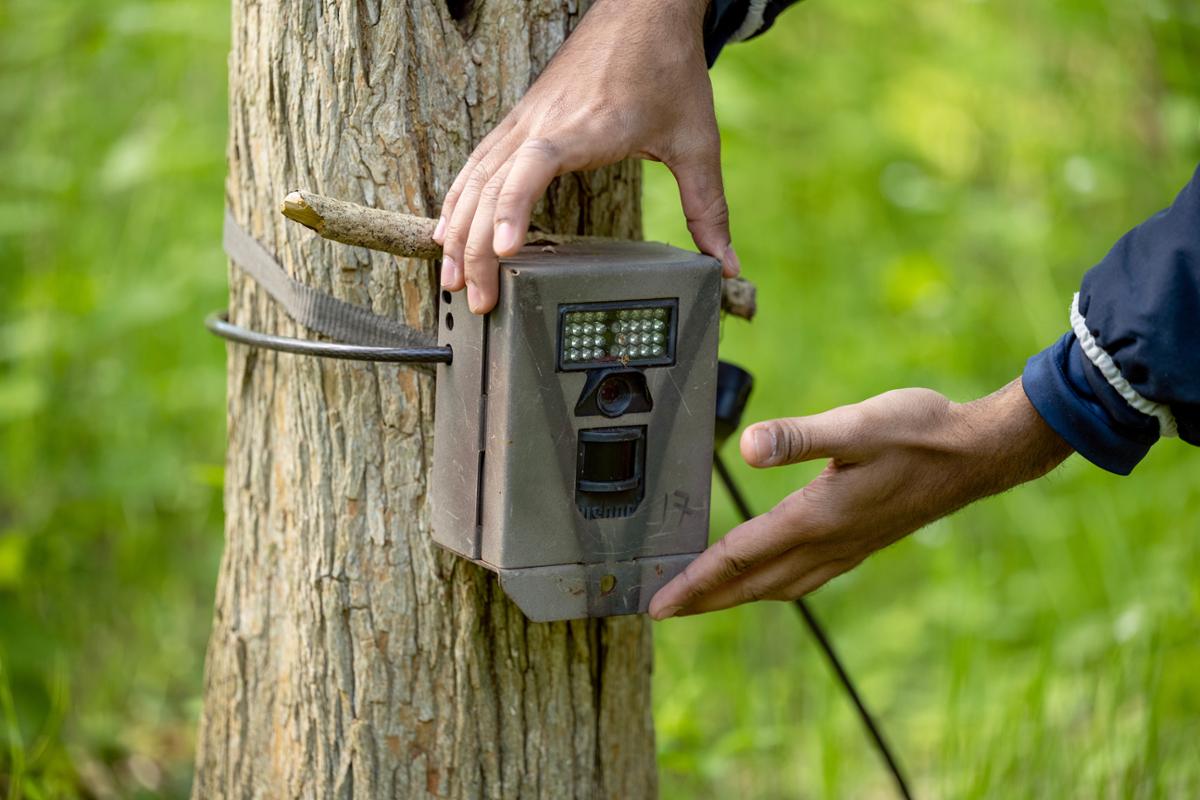
By using acoustic sensors and trail cameras at F&M’s Spalding Conservancy and the nearby Sunnyside Peninsula, Dan Ardia and his student researchers get a behind-the-scenes look at how wildlife responds to the presence of humans.
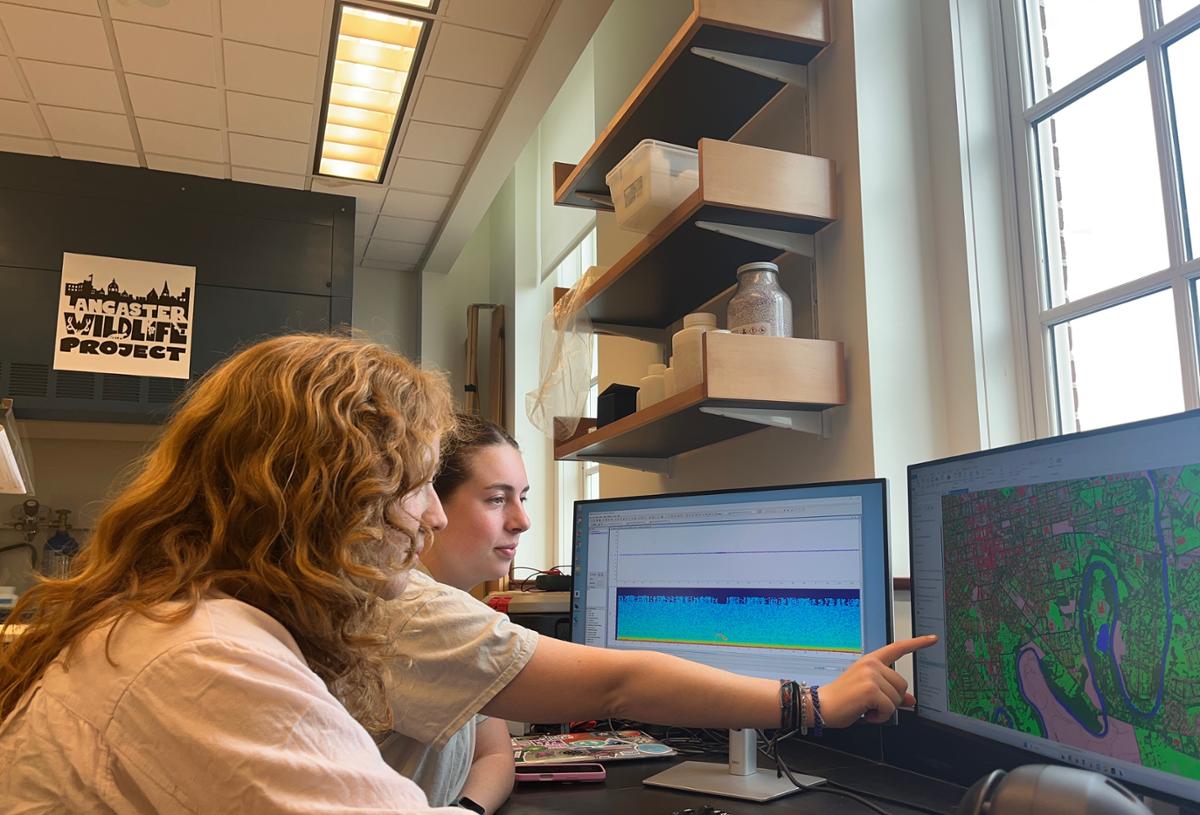
The team relies on F&M’s High-Performance Computing (HPC) cluster to translate these vast amounts of field data into actionable insights that guide local leaders in managing our parks.
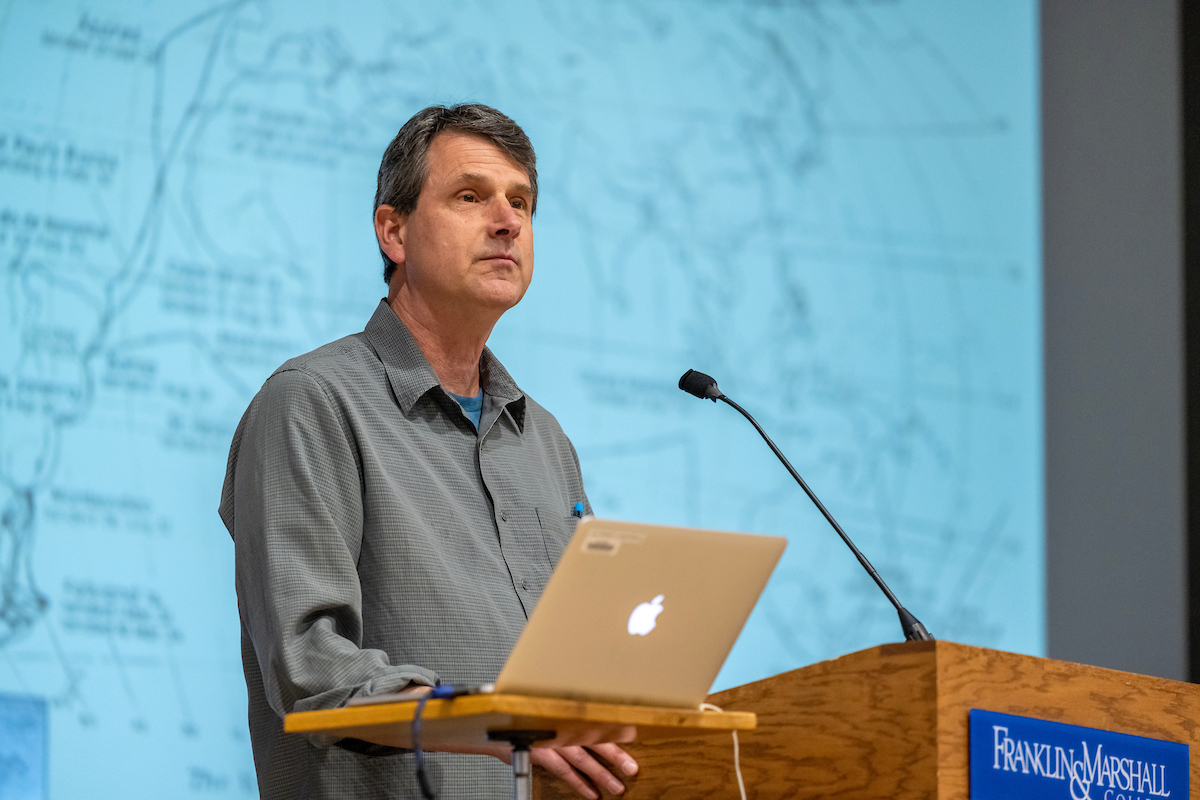
“Without F&M's computational resources, we would be unable to store, manage, and, most importantly, process these data,” Ardia said. “It is rare to have such high-end processing and storage capacity at a college of this size.”

This sophisticated toolkit offers student researchers Skyler Houghton ’26 and Lizzie Motch ’26 a distinctive opportunity to blend hands-on field experience with the use of innovative technology.
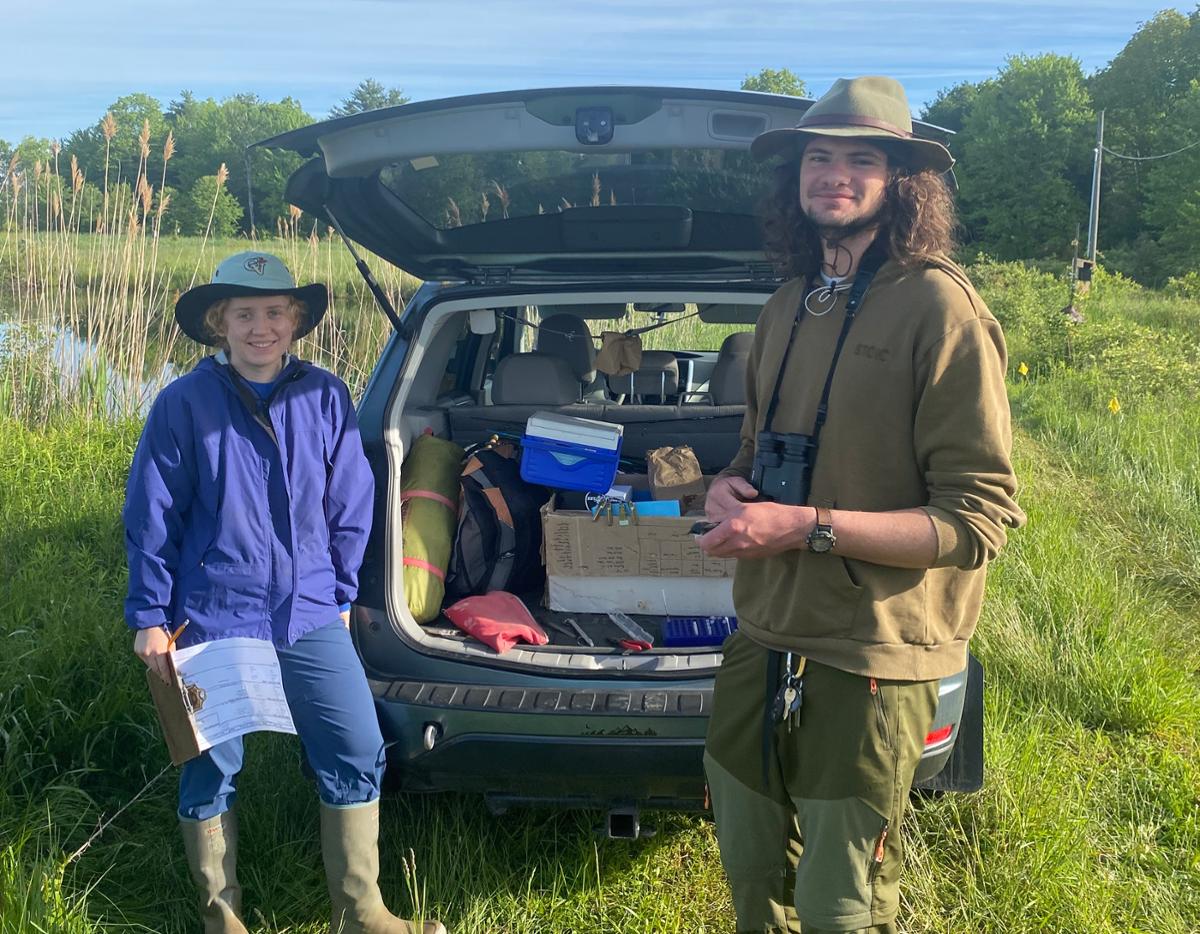
Houghton (pictured left), an earth and environmental science major and environmental studies minor, is using specialized software to analyze acoustic recordings of birds and bats collected by previous student researchers.
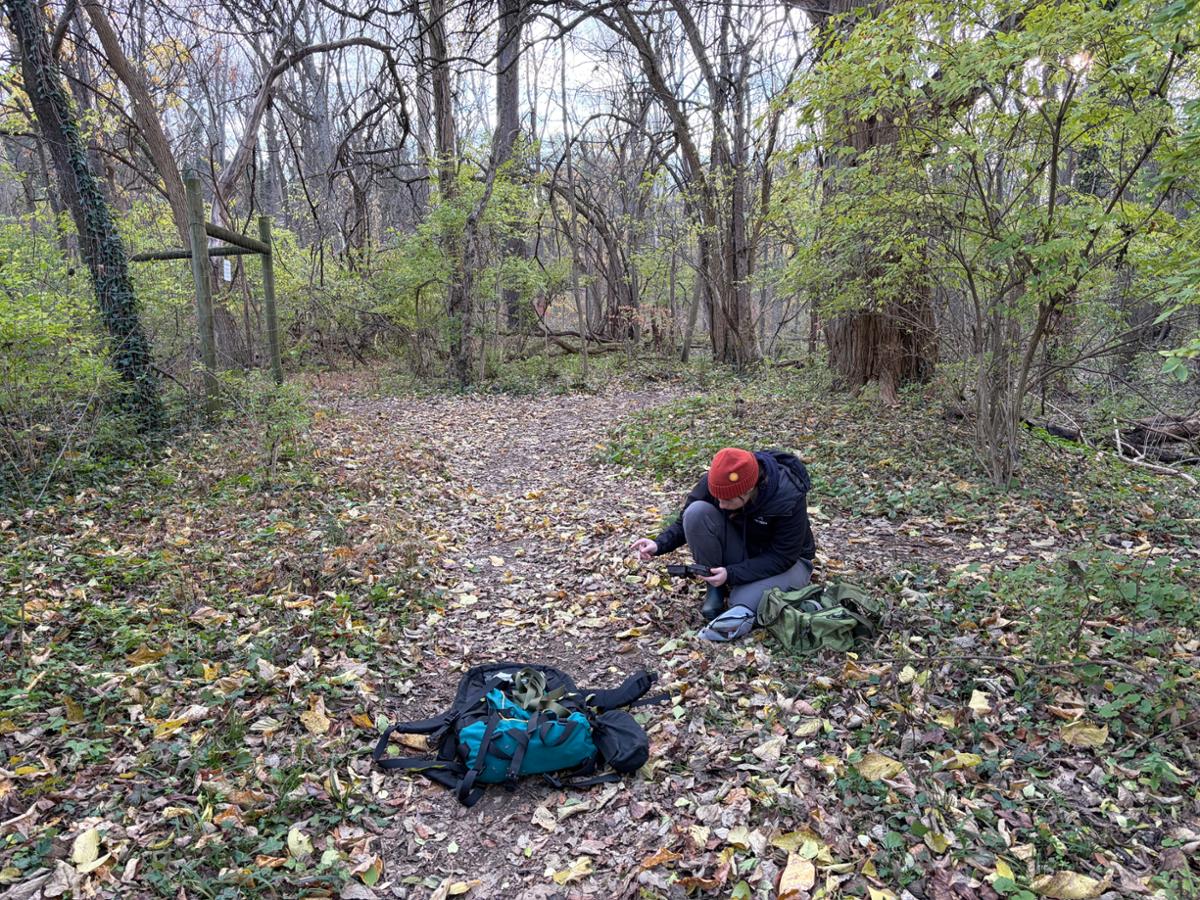
Motch, an animal behavior studies major and environmental studies minor, is utilizing machine learning detectors to sort and classify images of mammals captured by trail cameras. Motch emphasized that the sheer volume of data would be unmanageable without the support of F&M’s HPC cluster.
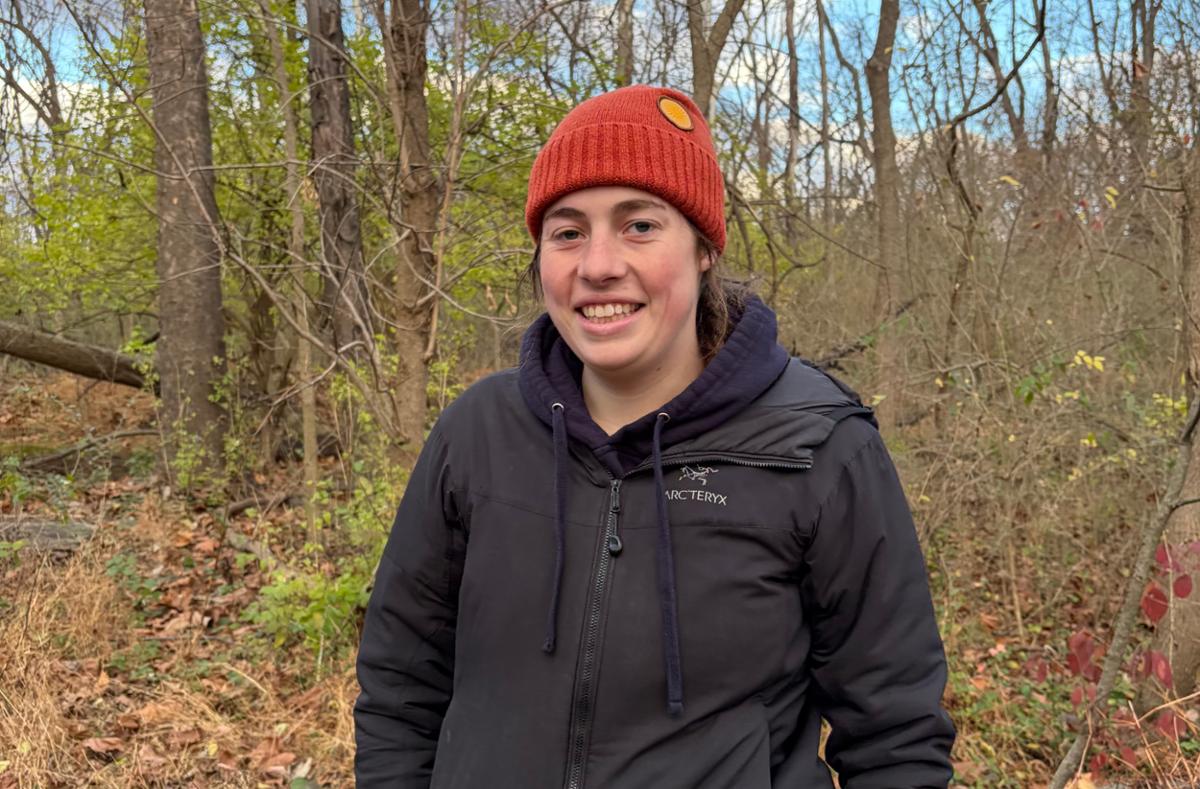
“This project has 120 camera placements which produce over 500,000 images. These images then must be classified and sorted so the data they contain can be evaluated. Going through that many images by hand would be impossible,” Motch said. “The machine learning algorithm helps me automate the step of the initial classification so I can focus my time and knowledge on the science.”
This sophisticated toolkit offers student researchers Skyler Houghton ’26 and Lizzie Motch ’26 a distinctive opportunity to blend hands-on field experience with the use of innovative technology. Houghton, an earth and environmental science major and environmental studies minor, is using specialized software to analyze acoustic recordings of birds and bats collected by previous student researchers. Motch, an animal behavior studies major and environmental studies minor, is utilizing machine learning detectors to sort and classify images of mammals captured by trail cameras. F&M’s high-powered computing allows the team to process terabytes of data through sophisticated AI models, identifying and classifying bird, bat, and forest mammal species at an unprecedented scale.
“The scale of my research around bird species would not be possible in the span of this school year, without the presence of the past work done using the computing cluster to process audio recordings,” Houghton said. “I can now focus my time on analysis and synthesis of the collected data, to answer ecological questions about my study sites and provide insights and recommendations to land managers.”
Motch emphasized that the sheer volume of data would be unmanageable without the support of F&M’s HPC cluster.
“This project has 120 camera placements which produce over 500,000 images. These images then must be classified and sorted so the data they contain can be evaluated. Going through that many images by hand would be impossible,” Motch said. “The machine learning algorithm helps me automate the step of the initial classification so I can focus my time and knowledge on the science.”
Houghton added that F&M’s location provides the perfect landscape for studying local biodiversity. This proximity encourages students to take their learning out of the classroom and into the community, turning F&M’s backyard into a living laboratory dedicated to solving real-world problems.
“I think it is fascinating how many research opportunities are present just within the local area of Lancaster, and how many F&M professors have taken advantage of what Lancaster has to offer to conduct collaborative research with students across departments,” Houghton said.
Pennsylvania may be landlocked, but geography is no barrier for this Franklin & Marshall
marine biochemist. By leveraging a powerful supercomputer, Peter Fields and his student
researchers are tackling ocean climate change from the heart of Lancaster.Tackling the Impacts of Ocean Climate Change Through High-Performance Computing
Related Articles
September 2, 2026
‘I Find It Important and Necessary’: Uncovering Lancaster's Hidden History
For Frances Taylor ’27, the Lancaster Vice project checked all the right boxes: collaborating with a faculty mentor, exploring how their two majors converge in the real world, and unearthing stories the city had forgotten. “I enjoy learning about hidden history that popular culture often overlooks,” Taylor said.
August 18, 2026
Biology Professor Brews Up New Beer Science Course
F&M Professor of Biology Rob Jinks concocted the first course of its kind this summer: Brewing Science. The one-month intensive course and corresponding labs introduced students to the science and art of crafting beer from four fundamental ingredients: water, malted grain, hops, and yeast.
July 20, 2026
F&M Experts Weigh in on Wildfire Air Quality
As Canadian wildfire haze blanketed the mid-Atlantic last week, local news sources turned to experts at F&M for air quality and public health insights. Professor of Geosciences Robert Walter '75 has been monitoring Lancaster’s air-quality index via a sampler machine atop of the Alumni Sports & Fitness Center.