
F&M Stories
National Research Computing Honor Goes to F&M’s Tony Weaver
One of the research computing community’s highest honors has been awarded to Franklin & Marshall College's Tony Weaver, who was named the 2026 Globus Community Contributor of the Year at GlobusWorld, the premier annual conference for the research computing and data community.
Weaver, research computing programmer at F&M, helps to manage the College’s High-Performance Computing cluster. He uses Globus — research cyberinfrastructure developed and operated as a not-for-profit service by the University of Chicago — to streamline and automate processes involving large amounts of data generated by faculty research. One of those researchers is Associate Dean of the Faculty and Charles A. Dana Professor of Biology Dan Ardia.
“I was completely shocked that I was this year’s recipient. Personally and professionally, it is an honor to receive this award,” Weaver said. “Globus is used for research collaboration at universities and laboratories (such as National Oceanic and Atmospheric Administration and the U.S. Department of Energy) around the world, so to be recognized given all the great work that is happening at other places is very meaningful.”
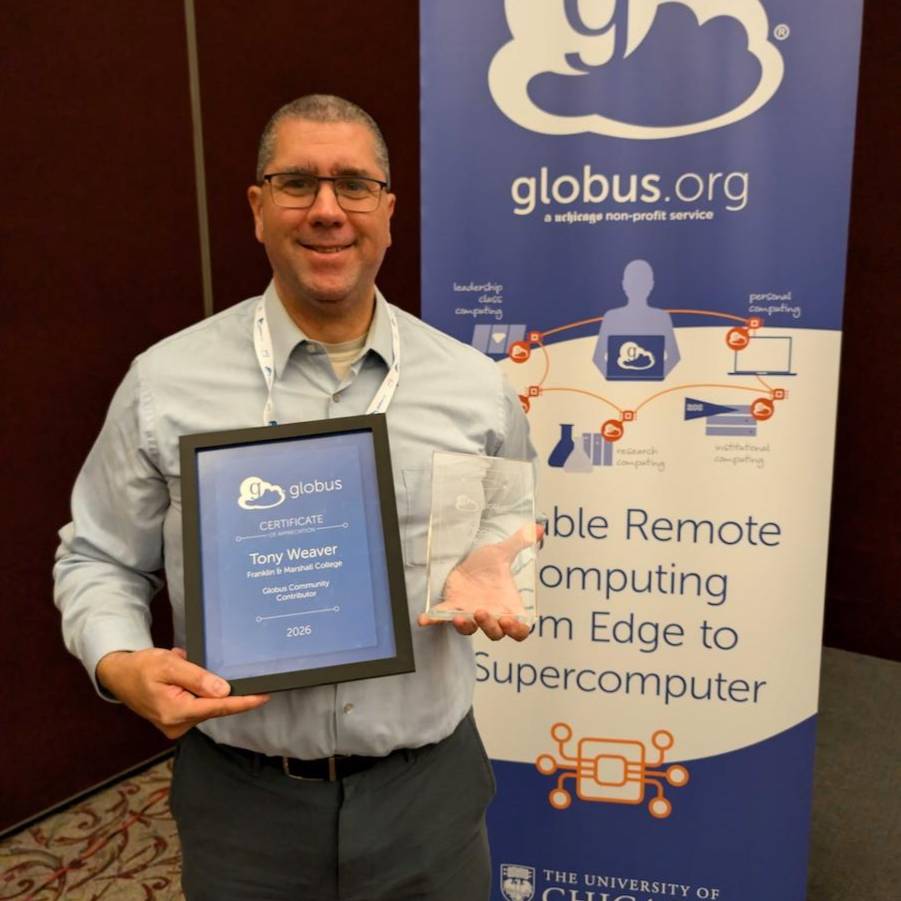
One of the research computing community’s highest honors has been awarded to Franklin & Marshall College's Tony Weaver, who was named the 2026 Globus Community Contributor of the Year at GlobusWorld, the premier annual conference for the research computing and data community.
"We’ve been able to obtain three National Science Foundation grants that have allowed F&M to grow a fairly robust research computing infrastructure. As far as we are aware, no other peer institution has accomplished that," Weaver said of F&M.
Below, learn more about Weaver’s work and research computing at F&M.
For readers who aren't familiar with research computing, what do you do at F&M?
The short answer is that we assist researchers and their students who have computational and/or storage needs related to research which exceeds what a typical desktop or laptop can handle. That might mean moving their research to local or national resources that can cut computational times down from weeks to days or even hours. It might involve finding alternative software options that run more efficiently. It might involve working with researchers to effectively store, share, and backup their research data. Finally, we work with researchers as they write grants, helping them navigate equipment costs and write data plans.
Small liberal arts colleges aren't always associated with advanced research computing. What makes F&M different?
Two things make F&M different. First, buy-in from folks in key positions. In one form or another, Jason Brooks [director of research computing] and I have been doing research computing for 15-plus years here at F&M. People such as Carrie Rampp [vice president and chief information office], Dan Ardia, and others understood how having research computing can set us apart from our peer institutions by positively impacting faculty and student recruitment and retention.
Second, we’ve been able to obtain three National Science Foundation grants that have allowed F&M to grow a fairly robust research computing infrastructure. As far as we are aware, no other peer institution has accomplished that.
How has this work changed what’s possible for F&M faculty and students?
It has allowed faculty to more quickly and easily have students participate in their research. Specifically, some of this work has been in conjunction with Dan Ardia and his nature conservation research. Because we were able to streamline his research so much, not only was he able to quickly onboard students into his research, but he’s starting to brainstorm ways he could engage citizen scientists in his research.
Also, it has allowed faculty and students to more easily share their research data among themselves and with collaborators. This is especially true for 1) large amounts of data (think 100s of gigabytes or more) and 2) research data created by scientific equipment. In the latter case, we can do time-based automatic transfers of data, meaning researchers/students no longer have to carry around USB drives to move their data off of scientific equipment to other locations like their laptops.
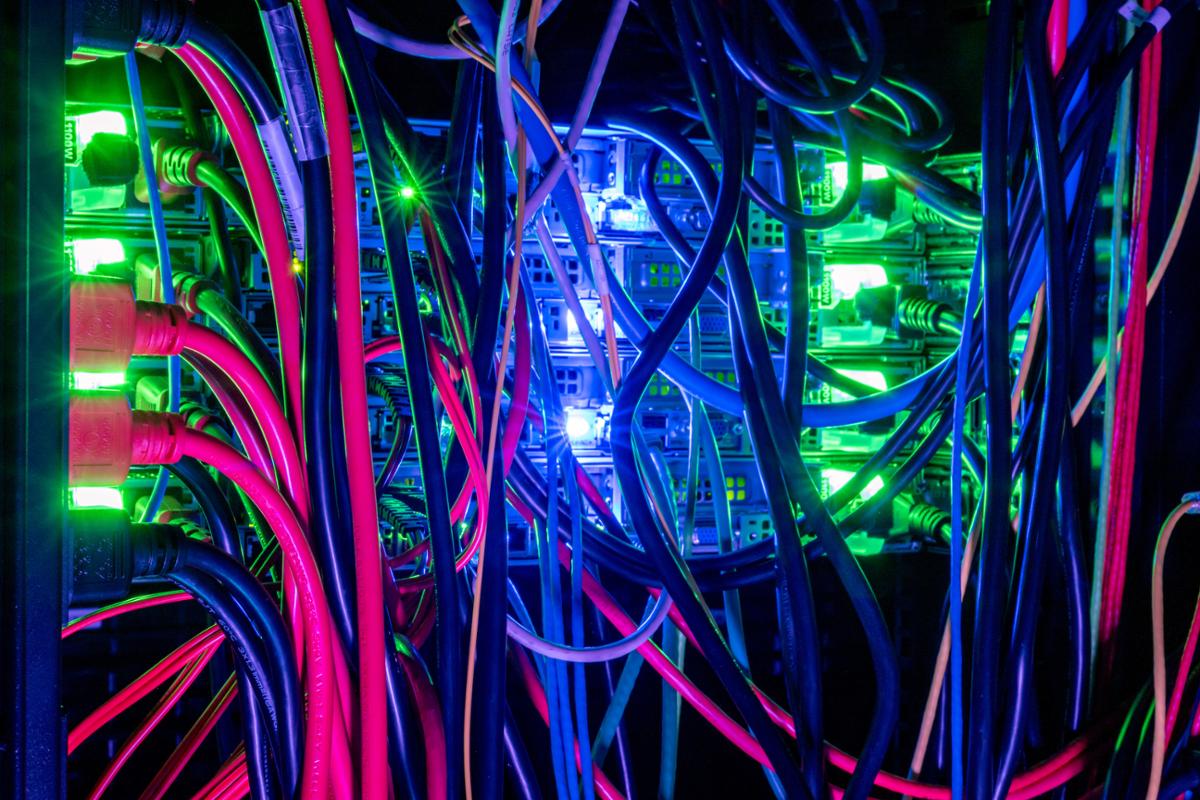
Imagine 1,600 computer processors combining power toward one task. This is the engine
driving innovation at F&M. Called a High-Performance Computing (HPC) cluster, this
elite shared resource accelerates discovery, empowers large-scale research, and fuels
the collaborative spirit that defines the F&M experience.Powering Innovation: Inside F&M’s Campus Supercomputer
Related Articles
September 2, 2026
‘I Find It Important and Necessary’: Uncovering Lancaster's Hidden History
For Frances Taylor ’27, the Lancaster Vice project checked all the right boxes: collaborating with a faculty mentor, exploring how their two majors converge in the real world, and unearthing stories the city had forgotten. “I enjoy learning about hidden history that popular culture often overlooks,” Taylor said.
July 20, 2026
F&M Experts Weigh in on Wildfire Air Quality
As Canadian wildfire haze blanketed the mid-Atlantic last week, local news sources turned to experts at F&M for air quality and public health insights. Professor of Geosciences Robert Walter '75 has been monitoring Lancaster’s air-quality index via a sampler machine atop of the Alumni Sports & Fitness Center.
July 16, 2026
Decoding the Genome: F&M Public Health Alum Investigates Hantavirus
Anna Catherine Grady ’19 arrived at F&M with veterinary school aspirations. A few public health courses later, she discovered a love of research and a holistic approach to the discipline that reoriented her career path.