
F&M Stories
Endowment Brings Environmental Studies to Life
In her time on campus, Roselyn Ovalles ’26 has worn many Diplomat hats: NATO researcher. Susquehanna River scientist. Junto Honors Society member. Symphonic wind ensemble musician. Ben’s Underground manager.
Her story began with generous donors to Franklin & Marshall.
“As a first-generation college student, I decided on F&M for meeting my financial needs as well as its amazing earth and environmental science program,” said Ovalles, of York, Pa. She is a double major in earth and environmental science and Spanish while also completing an F&M certificate in sustainability planning.
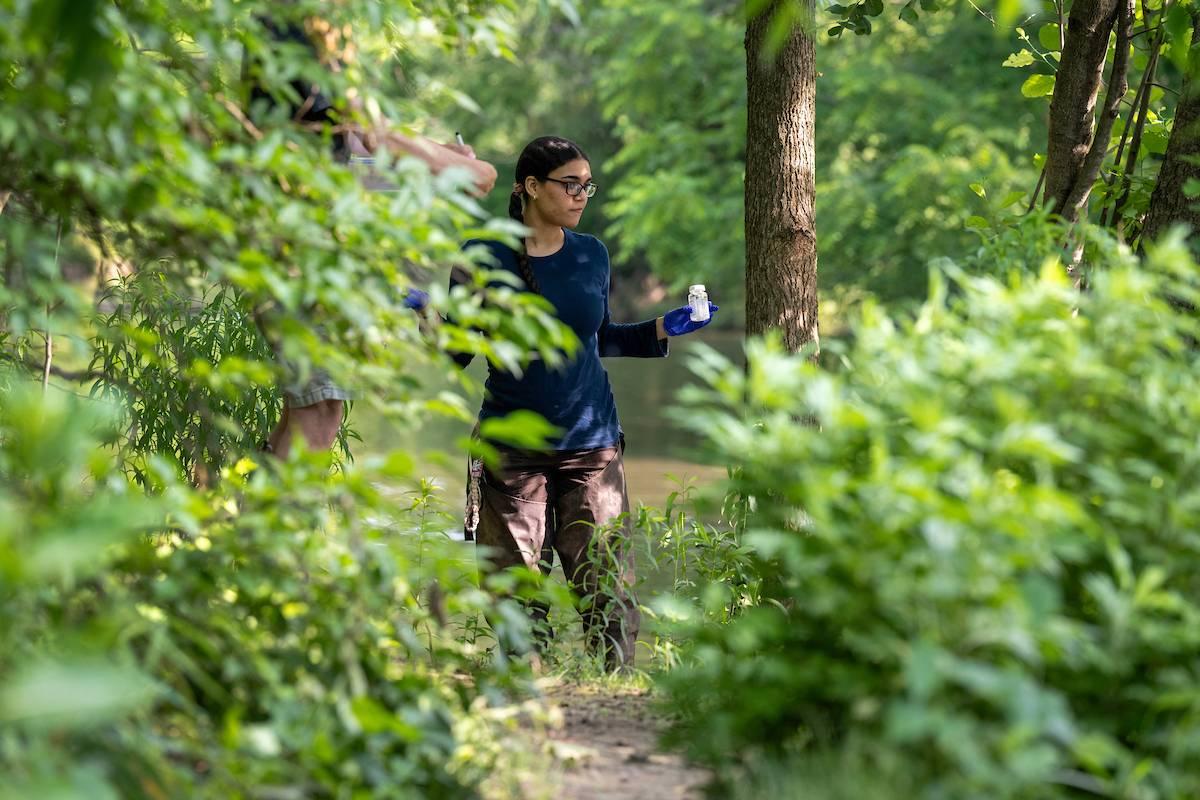
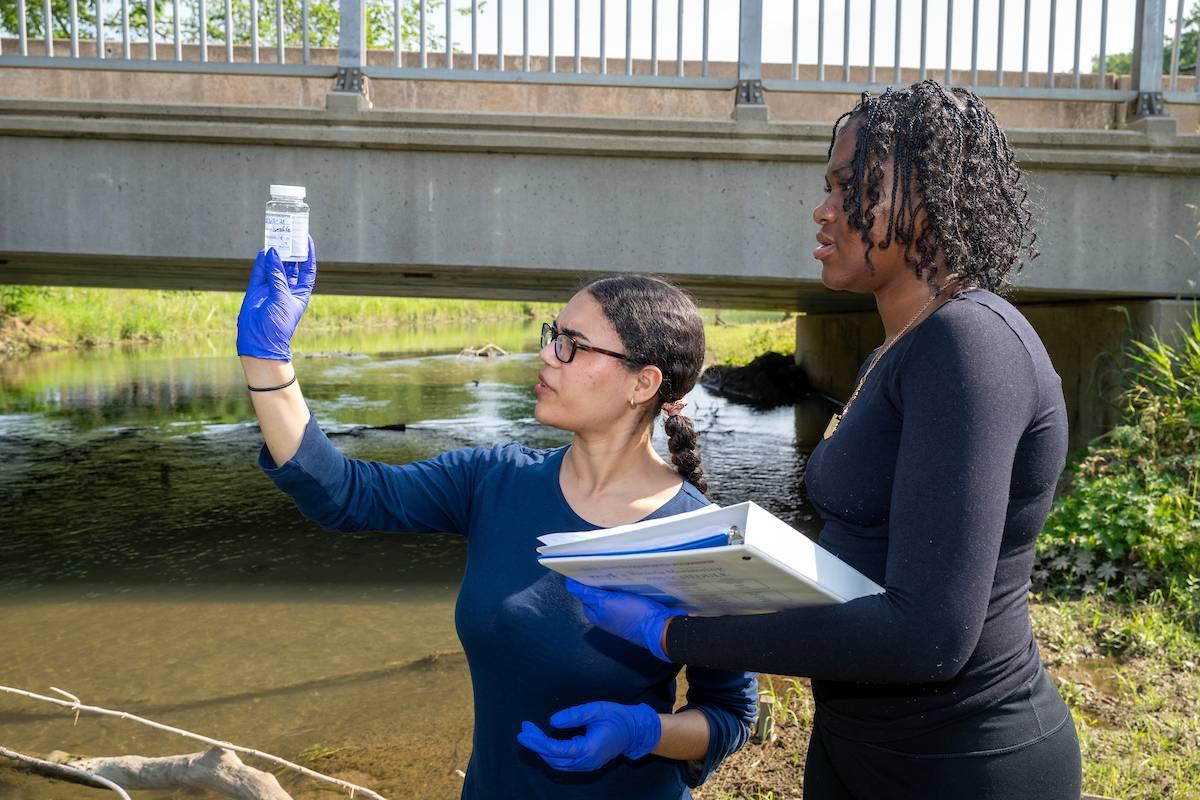
Ovalles took her scientific studies to a new level thanks to the Schapiro-Cadwell Internship Endowment, which funded a five-week internship with the Lower Susquehanna Riverkeeper Association (LSRA).
Generously founded by Mary Schapiro, Esq. ’77, P’16, P’18, and her husband, Charles
P'16, P'18, the endowment supports students in unpaid or minimally paid internships
in non-profit or public sectors with a focus on public policy, sustainability, conservation
or the environment.
"This internship was the perfect opportunity to contribute to meaningful water quality
monitoring, engage in citizen science, and apply my academic experience in the real-world
field and lab settings."
Headquartered in Wrightsville, Pa., LSRA is a watchdog nonprofit dedicated to improving the ecological health of the Susquehanna River watershed and the Chesapeake Bay.
“I am very interested in how climate change intersects with public health, international relations, community engagement and conservation,” Ovalles said.
Ovalles and fellow student Grace Uwezukwe ’26 teamed up with LSRA staff and volunteers for weekly collection of water samples at 22 sites along the Susquehanna and its many local tributaries.
“This internship was the perfect opportunity to contribute to meaningful water quality monitoring, engage in citizen science, and apply my academic experience in the real-world field and lab settings,” she added.
Other tasks included riverside cleanups, macroinvertebrate studies and community kayaking trips. Ovalles was also excited to leverage her Spanish language skills, a role she said “makes me feel more connected to my culture and heritage.”
“I was involved in the Spanish translation process, ensuring that members of the nearby Hispanic communities were able to easily access information and healthy swimmable recreational waters,” she said.
In previous semesters, Ovalles has contributed to a NATO-funded land-mine detection project led by Tim Bechtel, director of F&M science outreach and senior teaching professor of geosciences.
Ovalles credits the College’s focus on experiential learning for priming her to succeed in academic endeavors on and off campus.
“The field-based learning opportunities that the earth and environmental science department prioritizes help me feel more connected with nature and allow me to witness what is taught in a classroom setting, in the real world,” she said.
Related Articles
September 28, 2026
Alum’s $1 Million Gift to Construct The Arnold Family Track
For Michael “Mike” Arnold ’08, the track where he competed as a Franklin & Marshall student-athlete reflects the transformative power of Division III athletics programs at scholar-focused institutions — and the kind of lasting impact he hopes to create for future generations of student-athletes.
September 8, 2026
Lancaster Internship Shapes Pre-Law Path
Molly DeBrandt ’28 transformed academic curiosity into career conviction. As an intern with the Office of the Public Defender of Lancaster County, she stepped directly into the daily realities of public defense and discovered a passion for law. “I now intend to apply to law school following my graduation from F&M,” she said.
September 5, 2026
Larry and Pat Shadek Give $5 Million to Build New Varsity House
Emeritus Trustee and Hall of Fame Inductee Larry Shadek ’72 and his wife, Pat, have made a $5 million gift to support the construction of Shadek Varsity House at the College’s Shadek Stadium.